
Key points
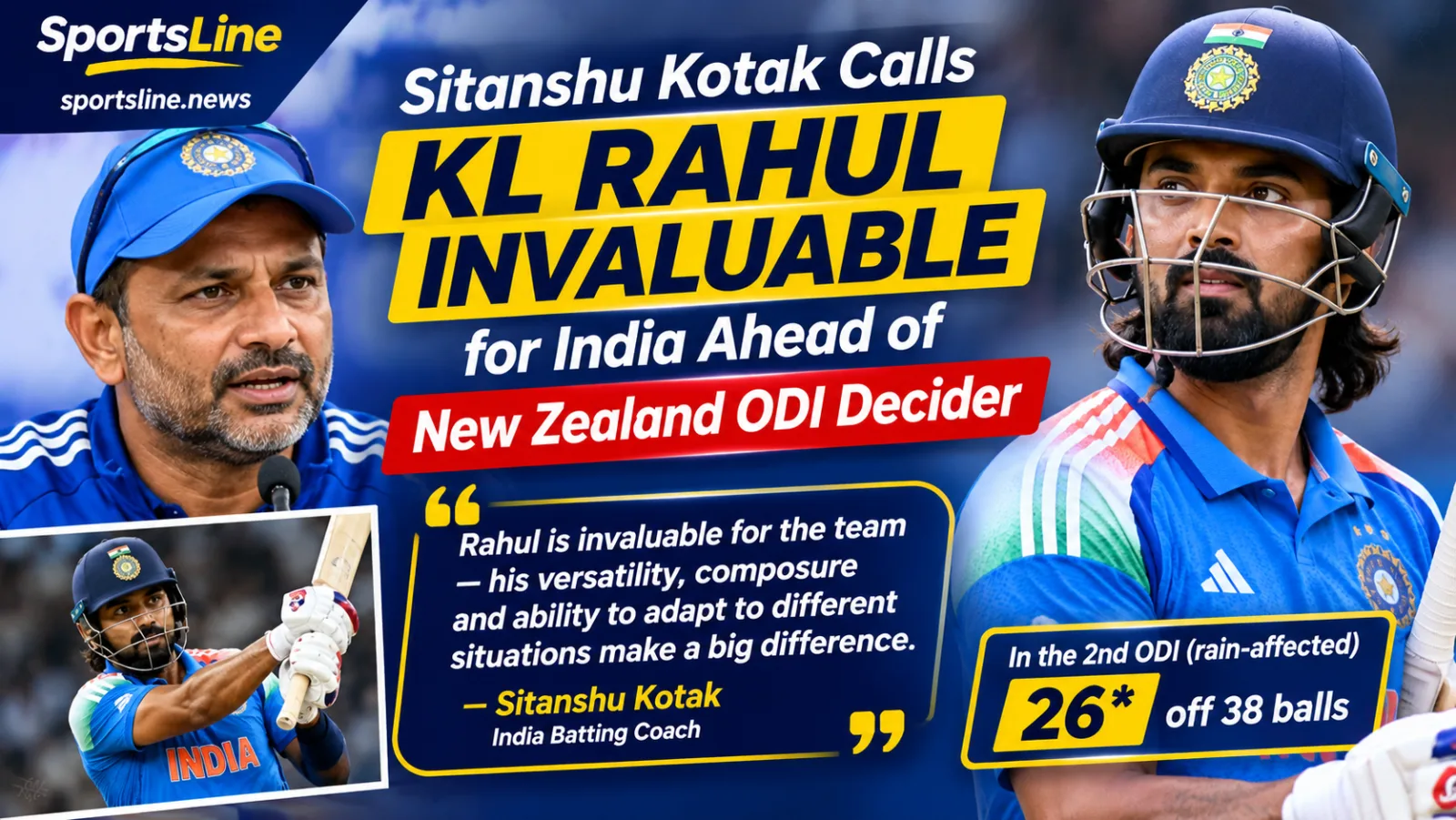
- India assistant coach Sitanshu Kotak described KL Rahul as an invaluable player because of his ability to adapt to different batting roles.
- Rahul can open in Test cricket, bat in the ODI middle order and accelerate in the final overs when required, Kotak said.
- Rahul scored an unbeaten 26 off 38 balls, with two fours and two sixes, in the second ODI at Wellington.
- India reached 113/7 in 26 overs before rain interrupted the second ODI; India won by four runs under the DLS method.
- Kotak praised Rahul’s calm temperament, strike rotation and ability to hit boundaries and sixes according to the situation.
- The third ODI against New Zealand is scheduled for November 10 at Seddon Park in Hamilton.
India batting coach Sitanshu Kotak has described KL Rahul as an invaluable member of the national team, praising the wicketkeeper-batter’s adaptability, composure and ability to perform according to the team’s needs. Kotak’s comments came ahead of the third ODI against New Zealand in Hamilton, after Rahul’s unbeaten 26 helped India negotiate a difficult chase in the rain-affected second match at Wellington.
Rahul made 26 not out from 38 deliveries, hitting two fours and two sixes as India reached 113 for seven in 26 overs before rain interrupted play. India eventually secured a four-run victory under the Duckworth-Lewis-Stern method. Kotak said the innings was another example of Rahul’s value in situations where conditions make batting difficult.
Kotak highlights Rahul’s flexibility across formats
One of Rahul’s biggest strengths, according to Kotak, is his ability to move between roles without losing sight of the team’s requirements. He can open in red-ball cricket, bat in the middle order in ODIs and adjust his approach when only a few overs remain in an innings.
“I think KL Rahul's biggest advantage is that he can open in red-ball cricket and bat in the middle order in white-ball cricket. Whenever required, he can also go with five overs left. His record there is also very good. So, he plays according to the team's needs,” Kotak said.
The coach also underlined Rahul’s reliability when he gets an opportunity to bat. Kotak said he could not recall many occasions since joining the coaching set-up when Rahul had been given a chance and failed to contribute. He described the batter as someone who has played important innings without appearing unsettled by the situation.
Calm temperament and finishing ability
Kotak’s praise extended beyond Rahul’s batting positions. He pointed to the player’s temperament, ability to rotate strike and capacity to change gears as the innings develops. In Kotak’s assessment, Rahul can build an innings through singles, find boundaries when required and clear the ropes when the team needs a late surge.
“I've never seen KL under pressure. You always see him looking very stable,” Kotak said, adding that Rahul’s experience and range of scoring options make him a valuable player for India.
The second ODI offered a recent illustration of that quality. With wickets falling on a challenging Wellington surface, Rahul remained unbeaten and helped India reach a total that proved sufficient in a match shortened by rain. His 26 was not a high-scoring innings, but its value lay in the circumstances and the role he played in keeping the chase together.
Why Rahul’s batting position matters
Kotak also discussed the thinking behind Rahul’s place in the middle order, including the use of Axar Patel higher up the order in some ODI situations. He identified the left-right batting combination as one factor and Rahul’s ability to finish games as another. He also noted that Axar has experience of batting at number five and is capable of taking on that responsibility.
The coach acknowledged that batting-order decisions are often judged by the outcome. A promotion that produces runs can be praised as a tactical success, while an unsuccessful move can attract criticism. His explanation indicated that India’s choices are based on match circumstances and the different skills available in the batting group.
Experience a resource for India’s younger players
Kotak also stressed the importance of having experienced international players around younger members of the squad. He named Virat Kohli, Rohit Sharma, Rahul, Shubman Gill and head coach Gautam Gambhir among those whose experience can help emerging players understand the demands of international cricket.
He said lessons that senior players had taken many years to learn could be passed on to younger teammates through a short conversation. For Kotak, that transfer of knowledge is an important benefit of having experienced players in the dressing room, particularly during challenging overseas tours.
India’s immediate focus is the third ODI in Hamilton on November 10. The match is the next opportunity for Rahul to contribute in the role the team requires, while Kotak’s comments underline why the coaching staff value his ability to adapt. Beyond the current series, India are also preparing for a two-Test contest against New Zealand beginning in Wellington on November 19.
Rahul’s role may change from one match or format to another, but Kotak’s message was consistent: his composure, experience and ability to adjust make him an important part of India’s plans.
Frequently asked questions
What did Sitanshu Kotak say about KL Rahul?
India assistant coach Sitanshu Kotak praised Rahul’s versatility, composure and ability to adapt to the team’s needs. He described Rahul as invaluable because he can open in Test cricket, bat in the ODI middle order and change gears in the closing overs when required.
How many runs did KL Rahul score in the second ODI against New Zealand?
Rahul scored an unbeaten 26 off 38 balls in the second ODI at Wellington. His innings included two fours and two sixes. India reached 113 for seven in 26 overs before rain interrupted play and went on to win by four runs under the DLS method.
Why does KL Rahul bat in the middle order in ODIs?
Kotak said Rahul’s middle-order role reflects the team’s requirements and his ability to finish innings. He also explained that the left-right batting combination and Axar Patel’s ability to bat at number five were considerations in the team’s batting-order decisions.
What are KL Rahul’s strengths according to Sitanshu Kotak?
Kotak highlighted Rahul’s calm temperament, experience, strike rotation and ability to hit boundaries or sixes when required. He said Rahul rarely appears under pressure and generally contributes when given an opportunity to bat for India.
When is the third India vs New Zealand ODI?
The third ODI between India and New Zealand is scheduled for November 10 at Seddon Park in Hamilton. Kotak made his comments ahead of that match, with Rahul’s contribution in the second ODI still fresh in the team’s assessment.
What did Kotak say about senior players helping younger cricketers?
Kotak said experienced players such as Virat Kohli, Rohit Sharma, KL Rahul, Shubman Gill and Gautam Gambhir can share valuable lessons with younger teammates. He believes international experience can help emerging players learn in a short conversation what took senior players many years to master.