Published:
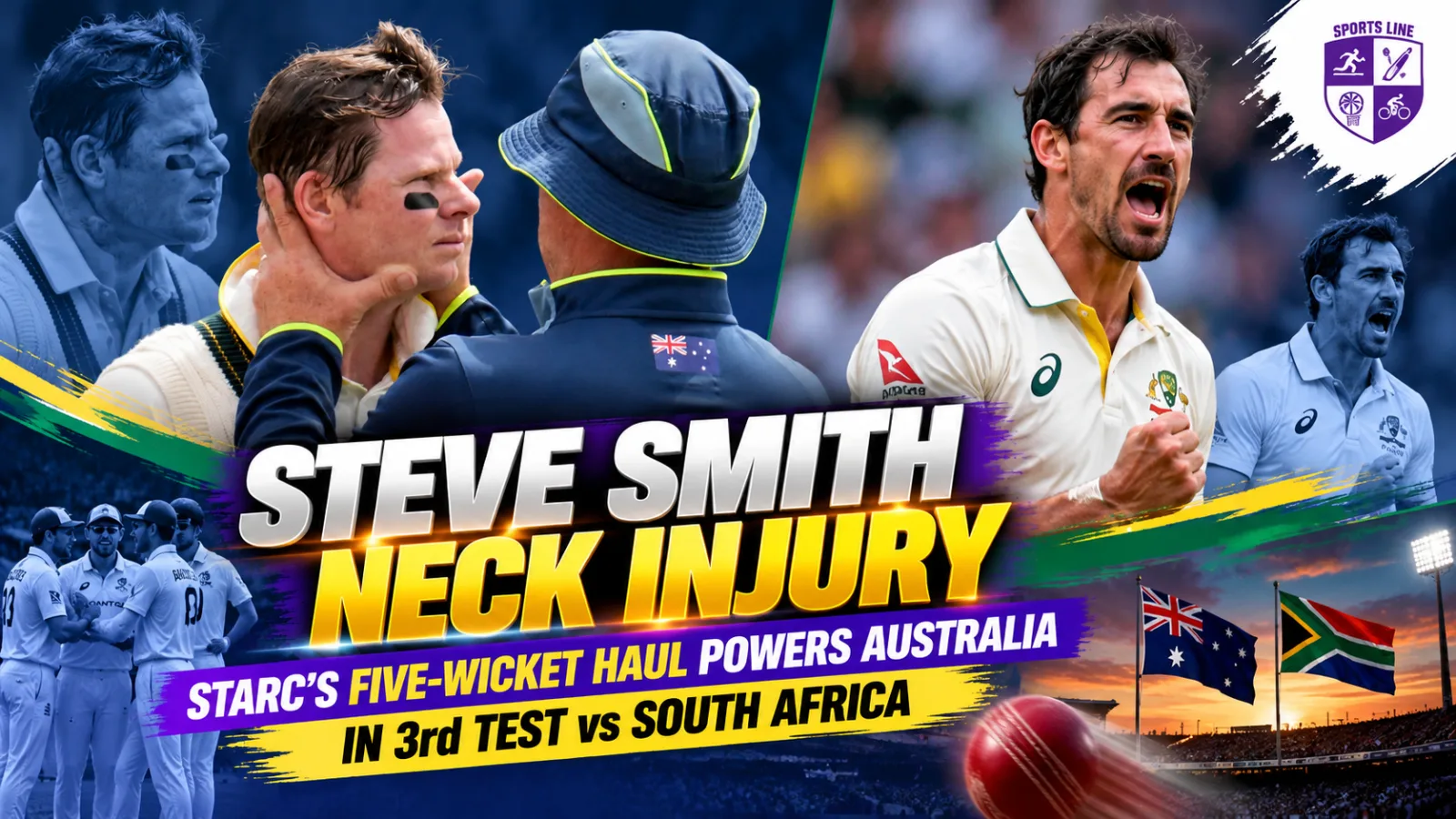
Steve Smith’s neck injury became a concern for Australia during the third Test against South Africa, while Mitchell Starc produced a five-wicket haul in the same match, according to Sportstar. The report puts two developments at the centre of the contest: a potential availability issue involving one of Australia’s senior batters and a major bowling contribution from Starc.
Smith’s neck problem was reported during the third Test, creating uncertainty around his immediate involvement and what it could mean for Australia as the match progressed. For a senior batter, an injury can affect not only the current innings but also fielding duties and the team’s options for the remainder of a Test or the next fixture.
The available headline and source context identify the injury as a neck issue, but do not establish a confirmed recovery timeline or a definitive diagnosis. Those details should be taken from an official Cricket Australia medical update or a subsequent team statement rather than inferred from the initial report. Until that information is available, the accurate description is that Smith suffered a reported neck injury during the match.
Smith’s status is significant because Australia rely on experienced batters to anchor innings and manage difficult phases against quality bowling. Any missed time could force the team to reconsider its batting order or replacement options, depending on the seriousness of the injury and the rules applicable to the match.
While Smith’s injury drew attention, Starc’s five-wicket haul gave Australia a substantial contribution with the ball. A five-for is one of the most recognisable milestones for a bowler in a Test innings and usually reflects the ability to take wickets repeatedly rather than merely restrict scoring.
Starc’s performance formed an important part of the contest against South Africa. Left-arm pace can create different angles for batters, particularly when the bowler combines movement with speed and changes in length. The exact figures, including runs conceded and the wickets taken, should be checked against the official scorecard before adding further statistical detail.
The two storylines also show how quickly a Test match can shift between performance and personnel concerns. A leading bowler can put pressure on the opposition, while an injury to a key batter creates questions about how a team will manage the rest of the game and the workload ahead.
In Test cricket, player availability has consequences beyond a single session. Teams must balance the need to compete in the current match with the risk of aggravating injuries, particularly during a series in which recovery time between Tests may be limited. Medical assessments and the player’s response to treatment usually determine the next step.
For Australia, the immediate priorities are to establish the extent of Smith’s neck issue and assess whether he can continue without risk. For Starc, the five-wicket return reinforces his value as a strike bowler capable of changing the course of an innings. The match situation and official scorecard will show how much the haul shifted the balance between the sides.
The next update to watch is an official statement on Smith’s fitness and any impact on his availability. A clear medical assessment would help distinguish a temporary in-match issue from an injury that could affect selection for subsequent fixtures. The final scorecard will also provide the complete record of Starc’s figures and South Africa’s response.
For now, the source-supported picture is straightforward: Sportstar reported a neck injury for Smith and a five-wicket haul for Starc in the third Test against South Africa. More detailed claims about the injury, the match score or the series implications should wait for verified team and scorecard information.
