Published:
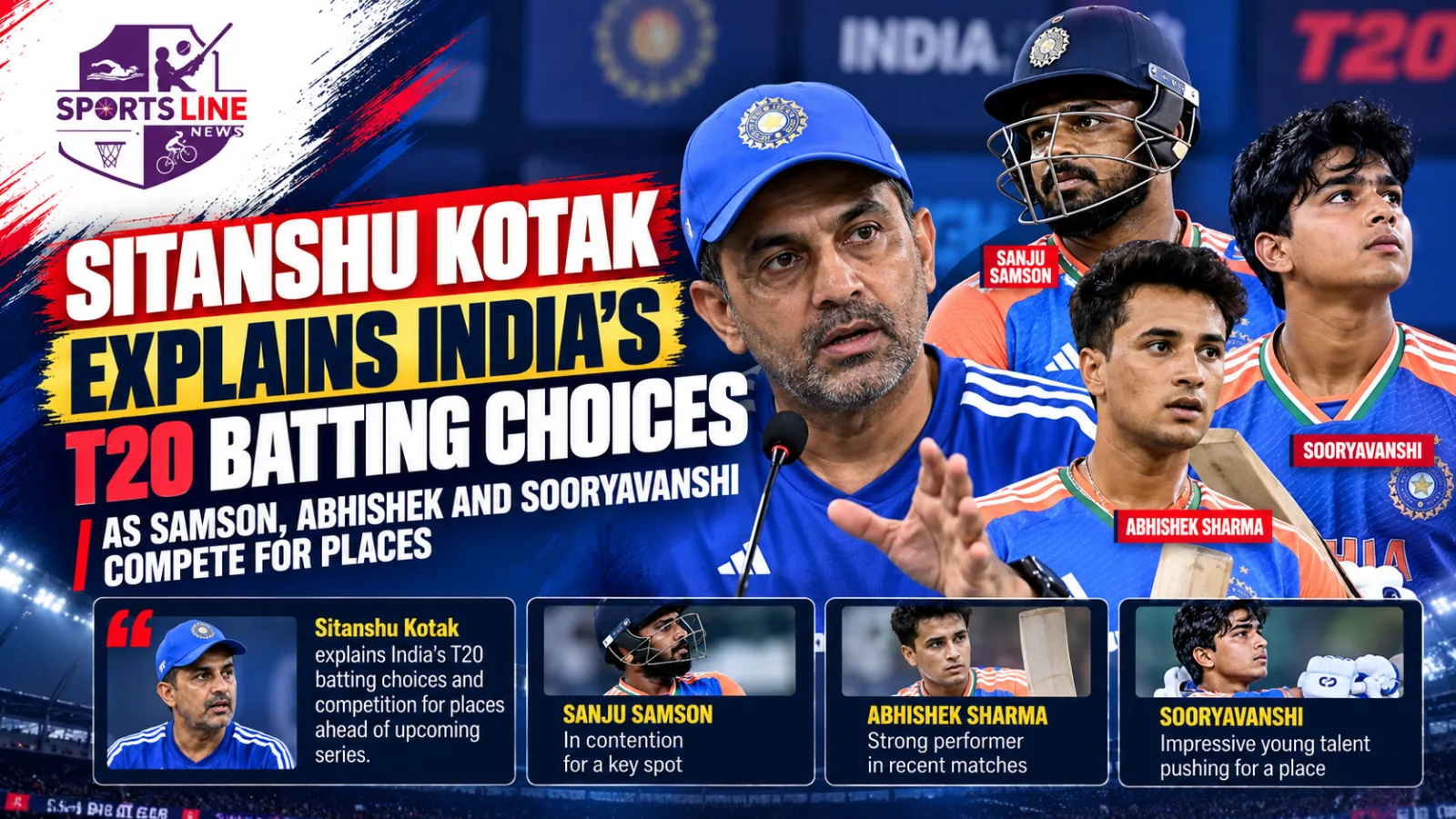
India’s T20 batting combination is under focus as the team weighs its options around Sanju Samson, Abhishek Sharma, Vaibhav Sooryavanshi and Naman Dhir, with batting coach Sitanshu Kotak discussing the choices in a Sportstar report published on October 23, 2026. The selection conversation comes ahead of India’s second T20I against New Zealand in Christchurch on October 24.
The four names have drawn attention for different reasons: Samson and Abhishek are top-order batting options, Sooryavanshi is a young batter in the squad, and Dhir made an impact with a rapid unbeaten innings in the series opener. The final combination, however, will be determined by the team management and confirmed only when the playing XI is announced.
The Sportstar report centres on Kotak’s comments about the batting options available to India. In a short-format side, the challenge is not simply to select the most talked-about names, but to build an order that has clear roles at the start, through the middle overs and at the finish.
Samson and Abhishek provide options near the top of the order, where powerplay scoring and early momentum are important. Sooryavanshi’s possible role has attracted attention because of his youth and inclusion in the squad, while Dhir’s recent performance gives the management a further middle-order option to consider. A place for one player can affect the roles and opportunities available to others.
Comments attributed to a coach should be read in their stated context rather than treated as confirmation of a selection decision. Unless the team announces its XI, speculation about which batter will play remains provisional.
Dhir made a strong contribution in India’s opening T20I against New Zealand, scoring 42 not out from 15 balls as India chased a target of 226. His late acceleration helped the side reach 230/6 in 19.4 overs and win by four wickets. That innings has strengthened the case for considering his role in the middle and lower order.
Samson also contributed heavily in the chase, making 67 from 33 deliveries. The two innings showed how India’s batting options can contribute at different stages of a demanding run chase: a top-order batter can establish the platform, while a finisher can convert the position into a win in the closing overs.
One match does not by itself settle long-term selection questions, but performances do influence the debate around roles. The team must weigh current form alongside conditions, opposition match-ups and the need for a balanced combination across the series.
Sooryavanshi’s inclusion in the squad has prompted interest in whether he will receive an opportunity in the playing XI. His availability should not be confused with a confirmed selection. The management may consider the balance of the top order, the positions already occupied and how the side wants to structure its innings.
If Sooryavanshi is selected, India would need to determine how the other batters fit around him. If he does not play, that would not necessarily indicate a long-term judgement; squad selection often involves match-specific decisions and competition for limited places.
India’s second T20I against New Zealand is scheduled for October 24 in Christchurch. The toss and official team announcement will clarify whether the management retains the winning combination from the opener or makes changes. Until then, the discussion around Samson, Abhishek, Sooryavanshi and Dhir remains a question of options rather than a confirmed team list.
India enter the match with a 1-0 series lead after the opening win. New Zealand will look to respond, while India’s immediate task is to maintain the balance that helped them complete the chase. Kotak’s comments provide context to the selection debate, but the final decision belongs to the team management.
SportsLine.news will update its coverage once the playing XI is confirmed and any further comments are available. This report separates the coach’s reported discussion and the players’ recent performances from speculation about who will take the field.
