
Key points
- Gurnoor Brar took 3/44 in 9.2 overs as India bowled New Zealand out for 185 in the first ODI at Eden Park, Auckland.
- Brar said he changed his length after conceding a six from a slightly fuller delivery in his opening over.
- The straight boundary at Eden Park is relatively short, so Brar decided to pull his length back and make it harder for batters to hit over square leg and fine leg.
- Arshdeep Singh and Anshul Kamboj advised Brar that a hard length could generate more bounce because of his height.
- Brar dismissed Tim Seifert, Tom Latham and Blair Tickner during New Zealand's innings.
- India chased a revised DLS target of 143 in 32 overs and won by five wickets, taking a 1-0 lead in the series.
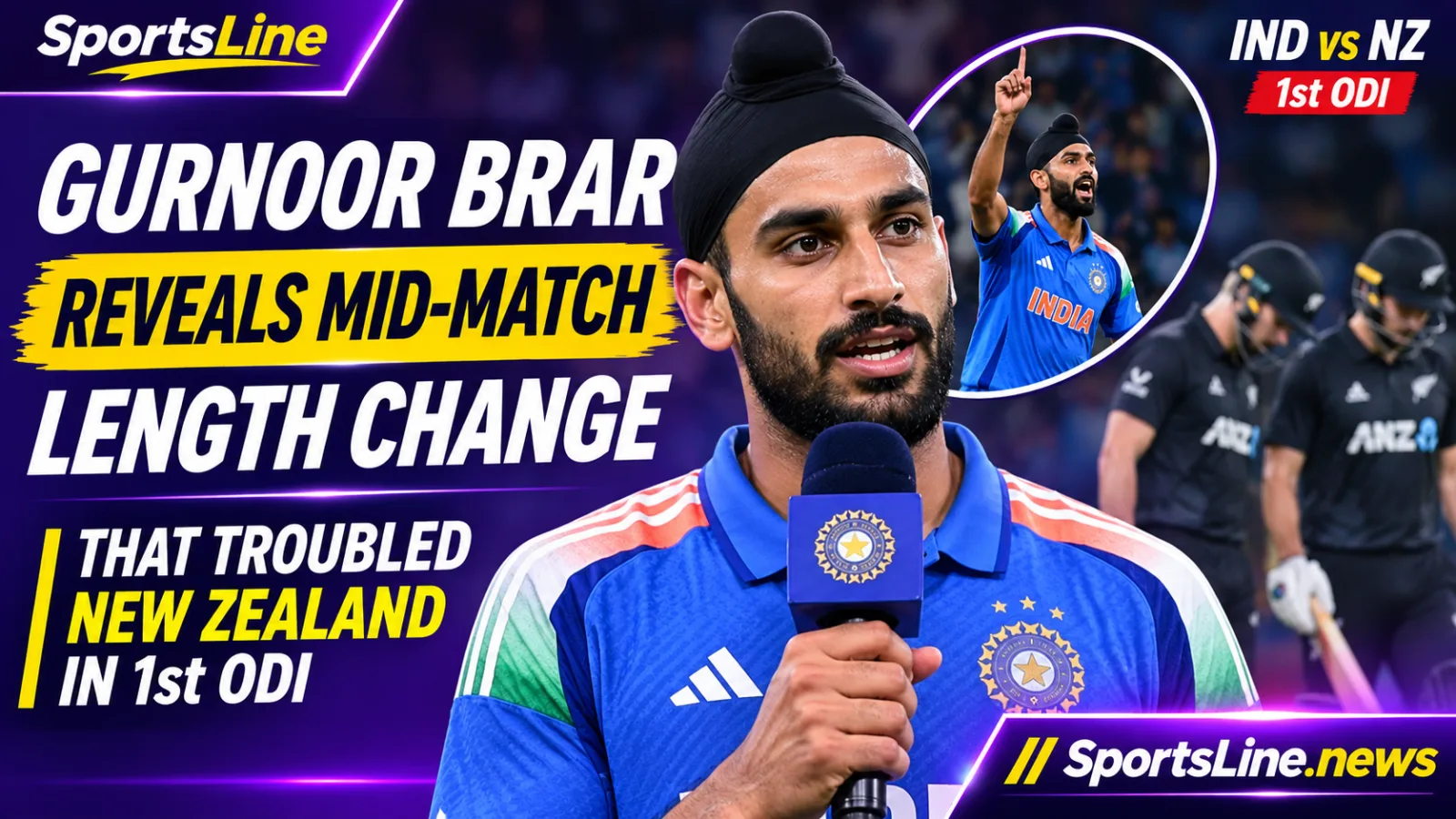
India fast bowler Gurnoor Brar has explained the mid-match adjustment that helped him trouble New Zealand in the first ODI at Eden Park, Auckland. After conceding a six from a slightly fuller delivery, the right-arm pacer pulled his length back and concentrated on hitting the hard length, using his height to generate extra bounce.
Brar finished with 3/44 in 9.2 overs as New Zealand were bowled out for 185 in 40.2 overs on November 4. India later chased a rain-revised target of 143 in 32 overs, winning by five wickets and taking a 1-0 lead in the series.
The adjustment after an expensive delivery
Brar said the straight boundary at Eden Park was relatively short, making it important to avoid offering batters a comfortable length to hit down the ground. After a six came from a slightly fuller ball in his first over, he reconsidered the length he wanted to bowl.
His response was to pull the length back. Rather than give the batters room to get underneath a fuller delivery and target the shorter straight boundary, he wanted to make scoring over square leg and fine leg more difficult. The plan was to use pace and bounce to hurry the batters and restrict their options.
Brar discussed the surface with Arshdeep Singh and Anshul Kamboj, who had already bowled on the Auckland pitch. He said they advised him that hitting a hard length would help him extract better bounce because of his height. Brar backed that plan and said the conditions suited his style of bowling.
Three wickets in a useful spell
The adjustment brought results as Brar removed Tim Seifert, New Zealand captain Tom Latham and Blair Tickner. Seifert was dismissed for 38 from 43 balls when he top-edged a short delivery to substitute fielder Ruturaj Gaikwad. Latham fell for three, chipping a fuller ball back towards the bowler, who completed an impressive caught-and-bowled with his left hand.
Brar returned at the end of the innings to remove Tickner for 34 from 23 balls. The New Zealand No. 11 had struck four sixes and a boundary during a late counterattack, including a sequence of big hits against Arshdeep Singh. Brar persisted with the short-ball approach and found the edge, with wicketkeeper KL Rahul completing the catch.
The three wickets came in a spell of 9.2 overs, with Brar conceding 44 runs. His performance complemented Arshdeep's 4/70 and Kamboj's controlled 2/22, as India's pace attack dismissed the hosts before they could use all 50 overs.
India's pace group makes an impact
India entered the match without first-choice fast bowlers Jasprit Bumrah, Mohammed Siraj and Prasidh Krishna. The opportunity went to a less experienced pace group, with Brar and Kamboj joining Arshdeep in the attack. The trio responded by sharing nine wickets and keeping New Zealand to 185.
Kamboj's contribution was particularly economical. He bowled his full quota of 10 overs for 22 runs and took two wickets, while also sending down 46 dot balls. Arshdeep struck early and finished with four wickets, providing the main breakthrough threat at both ends of the innings.
Brar's height was a key part of the plan. At around 6 feet 5 inches, he can release the ball from a higher point than many batters are accustomed to facing. When he lands the ball on a hard length, that release point can create awkward bounce and reduce the time available for a batter to play a controlled shot.
India take a 1-0 lead in Auckland
New Zealand's total of 185 gave India a manageable target, although rain interruptions changed the chase. The target was revised to 143 from 32 overs under the Duckworth-Lewis-Stern method. Virat Kohli led the response with 74 from 51 balls, while captain Shubman Gill made 37.
India reached 143/5 in 22.4 overs to secure a five-wicket win. The result gave the visitors a 1-0 advantage in the five-match ODI series. Anshul Kamboj was named Player of the Match for his economical spell, while Brar's three wickets were an important part of the bowling effort.
For Brar, the first ODI offered a practical demonstration of how a bowler can adjust to a ground's dimensions and use advice from teammates during a match. The change was not simply about bowling shorter: it was about choosing a length that suited his height, the bounce available and the scoring areas the New Zealand batters were looking to target.
A lesson in adapting to conditions
The episode underlined the value of reading conditions rather than following a fixed plan. Brar recognised the risk of bowling too full on a ground with a short straight boundary, consulted teammates who had already tested the pitch and shifted towards a hard length. The wickets that followed made the adjustment one of the defining details of India's bowling performance in Auckland.
As the ODI series continues, Brar's ability to repeat that discipline against different batters and conditions will be closely watched. His first outing showed how pace, height and a small tactical change can combine to make a young fast bowler a difficult proposition for an international batting line-up.
Frequently asked questions
What mid-match change did Gurnoor Brar make against New Zealand?
Brar pulled his length back after conceding a six from a slightly fuller delivery. He focused on hitting a hard length, aiming to make it difficult for New Zealand's batters to clear the square-leg and fine-leg boundaries at Eden Park.
Who advised Gurnoor Brar to bowl a hard length in the first ODI?
Brar said he discussed the surface and bowling plan with fellow India pacers Arshdeep Singh and Anshul Kamboj. Both had bowled on the wicket and suggested that a hard length would help him extract more bounce because of his height.
How many wickets did Gurnoor Brar take against New Zealand?
Brar finished with figures of 3/44 from 9.2 overs in the first ODI at Auckland. His wickets were Tim Seifert, Tom Latham and Blair Tickner as New Zealand were dismissed for 185 in 40.2 overs.
Why did Gurnoor Brar avoid bowling fuller at Eden Park?
The straight boundary at Eden Park is relatively short, and Brar had conceded a six from a slightly fuller delivery. He decided to pull his length back so batters would find it harder to hit over the square-leg and fine-leg regions.
Did India win the first ODI against New Zealand?
Yes. India won by five wickets under the DLS method after rain reduced the chase to 32 overs and revised the target to 143. India reached 143/5 in 22.4 overs, taking a 1-0 lead in the five-match series.