Published:
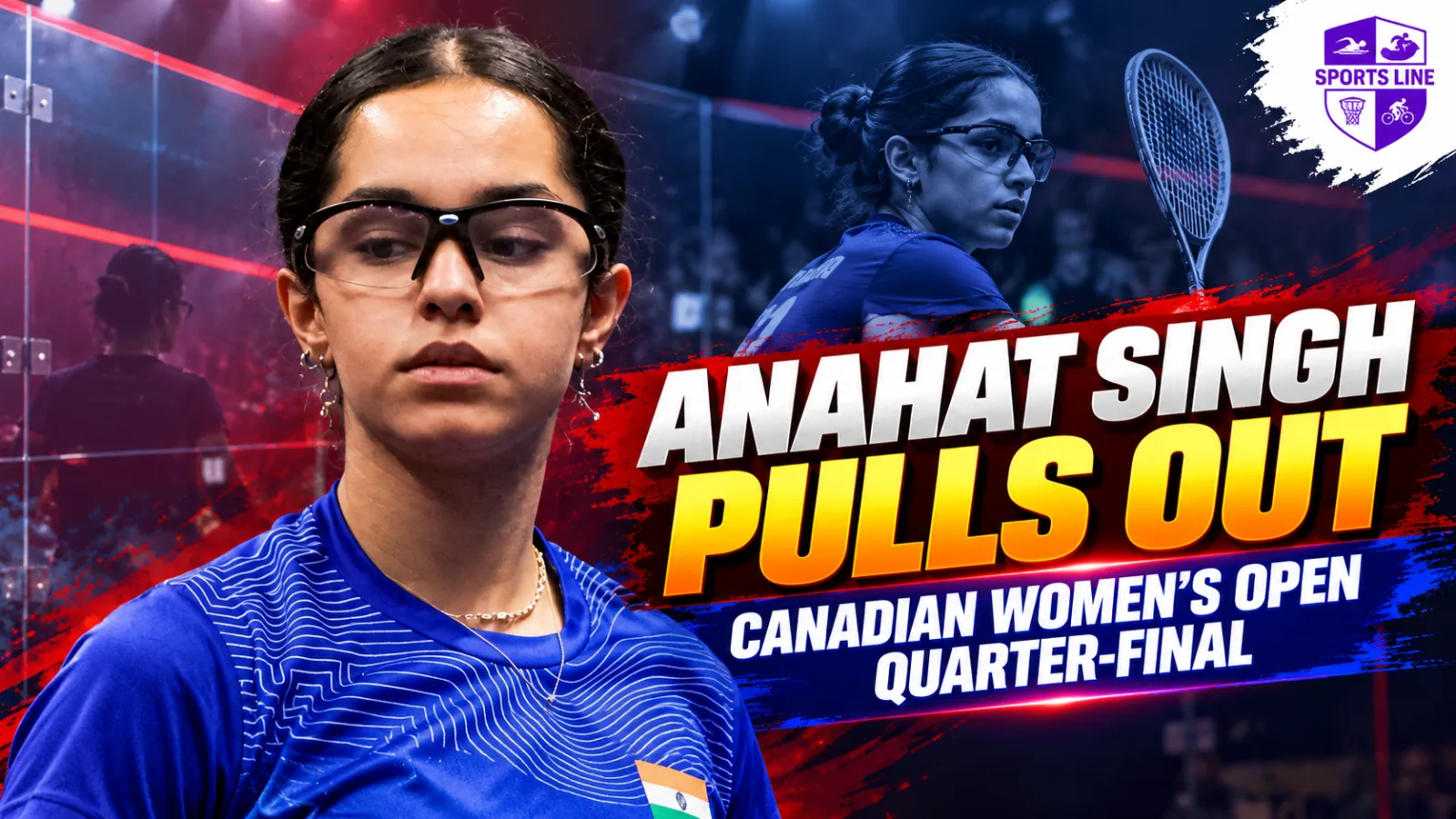
India’s Anahat Singh withdrew from her Canadian Women’s Open quarterfinal because of an injury, ending her campaign at the PSA squash event in Toronto before she could face Egypt’s top seed Fayrouz Aboelkheir. The Professional Squash Association’s tour announcement, cited by Hindustan Times on October 28, said Aboelkheir received a walkover into the semifinals as a result.
Anahat, the sixth seed, had been due to play the quarterfinal on Wednesday night at Brookfield Place. The withdrawal came one round after the 18-year-old secured a four-game win over England’s Saran Nghiem. The report did not specify the nature of Anahat’s injury or provide a timetable for her return, so neither should be assumed.
Anahat opened her Canadian Women’s Open campaign in the second round after receiving a bye in the first round. She beat world No. 52 Nghiem 11-6, 4-11, 11-5, 11-7, recovering after losing the second game to win the next two and close out the match.
The victory had set up a difficult last-eight assignment against Aboelkheir, the tournament’s top seed. Instead, the Egyptian advanced without playing the quarterfinal, according to the PSA statement quoted by Hindustan Times. The available report does not give further details about when Anahat sustained the injury or whether it occurred during practice or competition.
The withdrawal follows a strong run of results for Anahat in recent weeks. At the Silicon Valley Open in Redwood City, California, she reached the semifinals of a PSA Gold-level tournament for the first time. Hindustan Times reported that she beat world No. 1 Nour El Sherbini and sixth seed Salma Hany in consecutive matches before her run ended against Malaysia’s Sivasangari Subramaniam.
Subramaniam defeated Anahat 5-11, 11-6, 11-4, 11-7 in that semifinal. The Malaysian had also beaten the Indian in the women’s singles final at the Aichi-Nagoya Asian Games in September, where Anahat earned a silver medal. Those performances had placed the teenager among the notable emerging players on the women’s tour, making the injury-related withdrawal a frustrating interruption to her schedule.
For Aboelkheir, the walkover means a place in the Canadian Women’s Open semifinals without the physical demands of a quarterfinal match. For Anahat, the immediate priority is her injury and recovery; no return date was given in the report. It would be premature to draw conclusions about the seriousness of the problem without further information from the player, her team or the PSA.
Withdrawals are an unavoidable part of professional sport, but they can be especially disruptive during a busy run of tournaments. Anahat had travelled from the United States event to Canada after reaching a Gold-level semifinal, and her second-round win showed she had started the Canadian event competitively. Her quarterfinal exit therefore came not through a match defeat but through the decision to withdraw because of injury.
For Indian squash, Anahat’s recent results remain significant context: she is the reigning world junior champion and won a historic women’s singles silver at the 2026 Asian Games. Those achievements do not lessen the importance of managing an injury carefully. Until an official update is available, the next step in her schedule remains uncertain.
