Published:
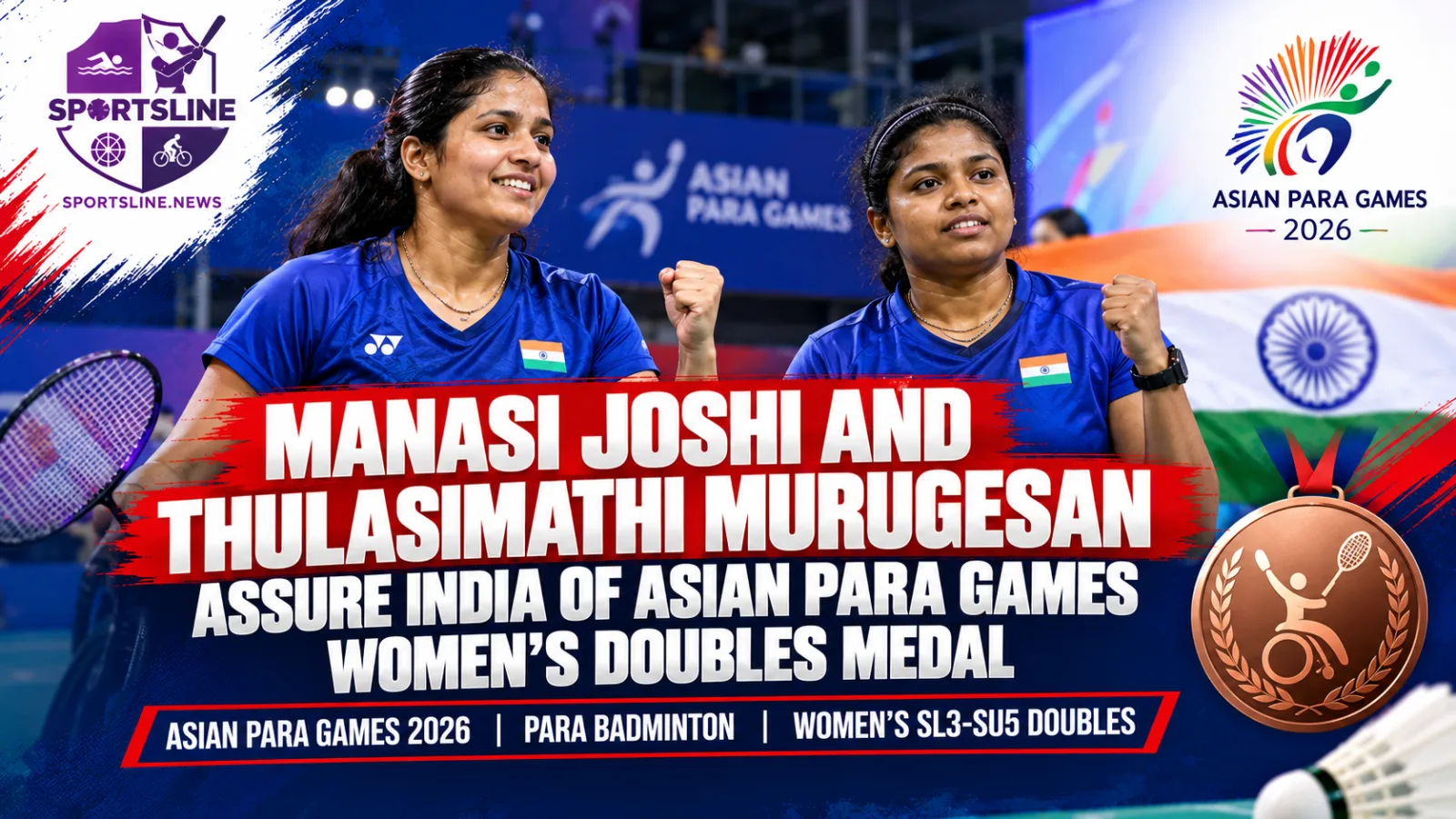
India have secured an assured medal in women’s SL3-SU5 doubles badminton at the 2026 Asian Para Games after Manasi Joshi and Thulasimathi Murugesan advanced to the semifinals. The result guarantees the Indian pair a place on the podium, with the final colour of the medal still to be decided by their remaining matches. The achievement adds another important moment to India’s para-badminton campaign at the continental multi-sport event.
The women’s SL3-SU5 doubles draw is played in a knockout format in which reaching the semifinals assures a medal. Joshi and Murugesan’s progress therefore means India are guaranteed at least a bronze medal in the event. A victory in the semifinal would give them a chance to contest the gold medal, while a defeat would leave them with bronze under the tournament format.
The pairing brings together two established names in Indian para-badminton. Joshi has been a prominent figure in the sport, including winning a world championship title, while Murugesan has earned major international honours and become one of India’s leading women’s para-badminton players. Their combination in the doubles event gives India experience and quality as the competition reaches its decisive stage.
The result is a team achievement as well as an individual milestone. Doubles badminton requires partners to coordinate court coverage, communicate quickly and adapt to opponents’ patterns, with every rally shaped by the pair’s movement and shot selection. In para-badminton, those tactical decisions must also account for the specific sport classes represented in the event.
Para-badminton competitions are organised by sport class to support fair competition among athletes with comparable activity limitations. SL classes are used for athletes with lower-limb impairments, while SU classes are for standing athletes with upper-limb impairments. The combined SL3-SU5 doubles category brings athletes from those classifications together under the event’s rules.
These classifications shape how players move, defend and attack. Athletes in lower-limb classes may face different movement constraints from standing players in upper-limb classes, so doubles partnerships must make the most of each player’s strengths. The sport remains technically demanding, with placement, anticipation and teamwork often deciding close exchanges.
India’s assured medal also highlights the depth that has developed in the country’s para-badminton programme. Indian players have earned recognition at world and continental level, and major events such as the Asian Para Games offer an opportunity to test combinations against the strongest opponents in the region. The semifinal will now provide a further measure of the pair’s form under pressure.
Joshi and Murugesan’s next target is a place in the final. Their semifinal performance will determine whether they advance to compete for gold or finish with the bronze medal already assured. The exact opponent, match time and score should be checked against the official competition draw and results service before publication or any live update.
For Indian supporters, the medal assurance provides a clear positive from the badminton competition, while the remaining rounds will decide the final ranking. It is important to distinguish an assured medal from a confirmed gold or silver: the pair have secured a podium finish, but the colour is not settled until their remaining matches are completed.
Medals at a continental event can build visibility for para-sport and encourage investment in coaching, accessible facilities and competition pathways. Results from established athletes also create examples for younger players who are considering para-badminton as a competitive sport. India’s assured medal in this doubles event adds to that broader story, regardless of the final colour.
Joshi and Murugesan will now look to convert their semifinal place into the strongest possible finish. Their progress has already secured India a podium result in women’s SL3-SU5 doubles at the 2026 Asian Para Games. The final standings will follow the remaining matches, and official results should be used to confirm the opponent, score and medal colour as soon as they are available.
