

Key points
- India lead the five-match ODI series 2-0 after both opening matches were decided using the DLS method.
- The third ODI is scheduled for November 10, 2026, at Seddon Park in Hamilton, starting at 3:00 PM local time (7:30 AM IST).
- One published forecast indicates rain chances of 79-86 per cent around the afternoon start and showers through much of the scheduled match period.
- A separate weather update gives a much lower 3 per cent rain probability for match day, illustrating the uncertainty in the available forecasts.
- Rain disrupted India’s outdoor training in Hamilton on November 9, forcing several batters to continue their preparations indoors.
- A win for India would give them an unassailable 3-0 lead, while a washout would leave India 2-0 ahead with two matches remaining.
Rain could once again become a major talking point when India meet New Zealand in the third ODI at Seddon Park in Hamilton on Tuesday, November 10. The match is scheduled to begin at 3:00 PM local time, or 7:30 AM IST, with India leading the five-match series 2-0 after two rain-affected contests. However, the weather outlook remains uncertain, with published forecasts offering sharply different assessments of the likelihood of rain during the match.
One forecast points to persistent showers through much of the afternoon and evening, including a high probability of precipitation around the scheduled start. Another update published on Monday suggests only a 3 per cent chance of rain on match day, despite heavy showers disrupting India’s practice session. The difference underlines why conditions at the venue and updated forecasts closer to the toss will be important.
Hamilton weather outlook: forecasts do not agree
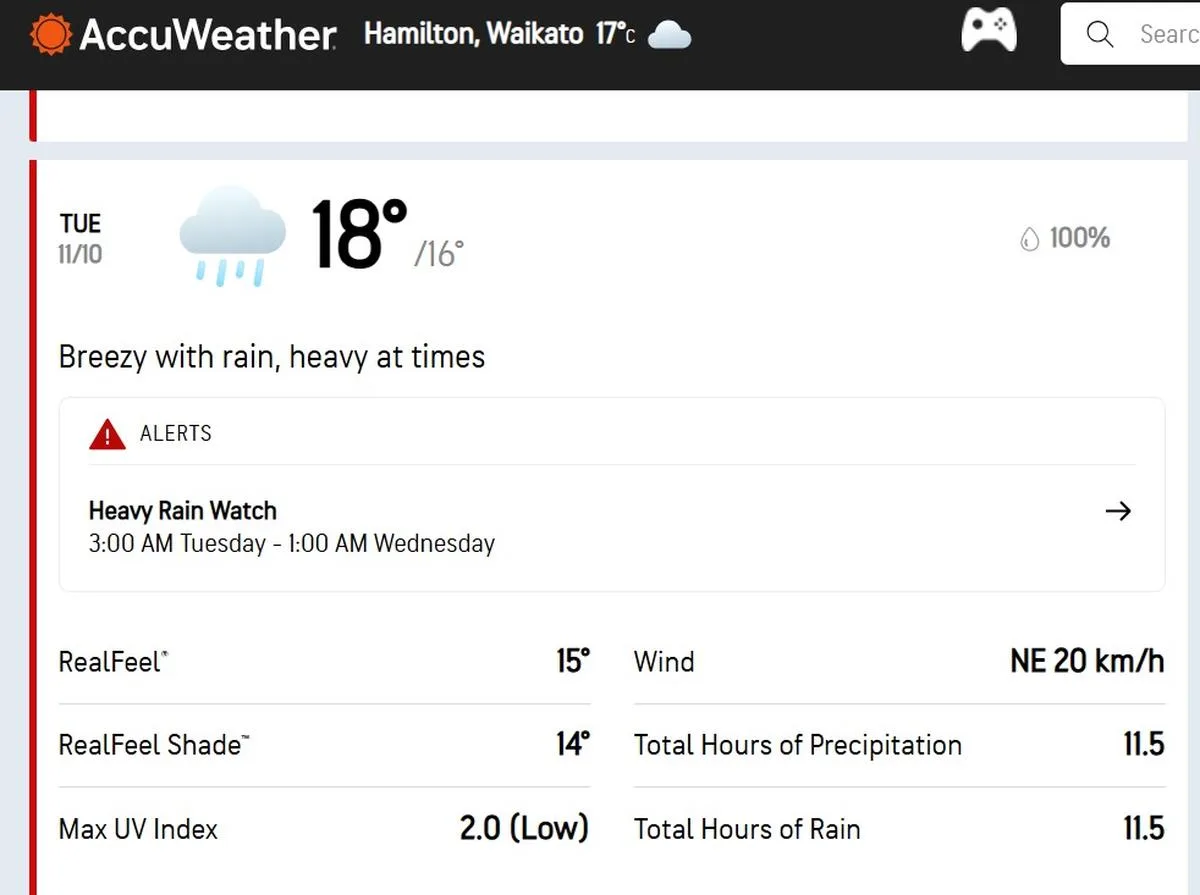
A forecast cited in a Monday weather report predicts rain chances of 79 per cent at 1:00 PM local time, 86 per cent at 2:00 PM and 3:00 PM, and more than 80 per cent through the early evening. It also indicates temperatures around 16 to 18 degrees Celsius, with a north-easterly wind and stronger gusts during the afternoon.
That outlook raises the possibility of a delayed start or interruptions during either innings. A separate report, however, describes a sunnier and partly cloudy match day with a rain probability of only 3 per cent and temperatures ranging from 6 to 15 degrees Celsius. These forecasts are materially different and should not be treated as a settled prediction. The actual conditions over Seddon Park may change, and the latest local update will be more useful as the match approaches.
The immediate concern is that rain has already affected preparations. India’s outdoor training on Monday was interrupted by heavy showers, and several batters had to move indoors to continue their session. The disruption came a day before a match that could decide the direction of the ODI series.
India one win away from taking an unassailable lead
India arrive in Hamilton with a 2-0 advantage in the five-match series. Both opening matches were affected by weather and completed using the Duckworth-Lewis-Stern method. The visitors won the first ODI in Auckland and followed it with a four-run DLS victory in Wellington.
In the second match, India were 113 for seven after 26 overs while chasing a revised target of 135 when rain interrupted play. The result went India’s way by four runs under DLS. The close finish gave the visitors a valuable lead, but the weather has meant that neither side has yet had the uninterrupted conditions normally expected in a full 50-over contest.
A victory in Hamilton would put India 3-0 ahead and secure the series with two matches still to play. For New Zealand, the third ODI is an important opportunity to get back into the contest. Another defeat would leave the hosts needing to win the final two games merely to draw the series.
What happens if rain interrupts or washes out the match?

If showers delay the start, the match officials can use the available time to try to complete a shortened contest. Overs may be reduced if the interruption makes a full 50-over match impossible, and the DLS method can be used to adjust the target in a rain-affected chase.
For a result in a standard ODI, both teams generally need the opportunity to bat for at least 20 overs, unless the chasing side reaches its target earlier. If rain prevents the minimum requirement from being met, the match can be declared a no result. There is no reserve day for this bilateral ODI fixture.
A washout would leave India with their 2-0 series lead intact and two matches remaining. It would not hand India the series at that point, but it would mean New Zealand must win both remaining games to level the contest. If a shortened match is possible, both teams will need to be prepared to adapt their batting plans quickly to the revised number of overs.
Seddon Park adds another challenge for the visitors
Hamilton is a significant venue for New Zealand, and the hosts will be keen to use familiar conditions to keep the series alive. Seddon Park has historically been a difficult ground for India in ODIs, and the home side will look to turn that familiarity into an advantage if the weather allows a meaningful contest.
Conditions after rain can also influence how the match is played. A damp outfield may slow the ball, while moisture and cloud cover can make seam bowling a factor in the early stages. The teams will have to assess the surface and overhead conditions before deciding how aggressively to approach the powerplay and how to balance their bowling options.
Match details and what to watch
The third ODI will be played at Seddon Park in Hamilton on November 10. The scheduled start is 3:00 PM local time in New Zealand and 7:30 AM IST in India. With the series at 2-0, India have the opportunity to secure the contest, while New Zealand need a result to prevent the visitors from moving beyond reach.
The biggest question before the toss is whether the weather will allow a full match, a shortened game or no play at all. The forecasts available on Monday differ sharply, and rain has already disrupted India’s preparations. Fans will therefore be watching the latest venue conditions as closely as the team news. After two matches decided by DLS, both teams will hope Hamilton finally provides a clear window for uninterrupted cricket.
Frequently asked questions
When is the India vs New Zealand third ODI in Hamilton?
The third ODI is scheduled for Tuesday, November 10, 2026, at Seddon Park in Hamilton. The scheduled start is 3:00 PM local time in New Zealand, which is 7:30 AM IST for viewers in India.
Will rain affect the India vs New Zealand third ODI?
The available forecasts differ significantly. One published outlook predicts a high chance of showers around the scheduled start and through the afternoon, while another gives a 3 per cent rain probability for match day. India’s practice was disrupted by rain on November 9.
What is the current series score between India and New Zealand?
India lead the five-match ODI series 2-0 after winning the first two matches. Both games were affected by rain and decided using the Duckworth-Lewis-Stern method, including India’s four-run victory in Wellington.
What happens if the third ODI in Hamilton is washed out?
If rain prevents the minimum overs needed for a result, the match can be declared a no result. There is no reserve day for this bilateral ODI. India would retain their 2-0 lead, with two matches remaining in the series.
Can the India vs New Zealand third ODI be shortened because of rain?
Yes. If conditions allow some play but not a full 50-over match, officials can reduce the number of overs. The Duckworth-Lewis-Stern method can then be used to revise the target in a rain-affected chase.
What time does the third ODI start in India?
The match is scheduled to begin at 7:30 AM Indian Standard Time on November 10. In Hamilton, the local start time is 3:00 PM. The venue is Seddon Park, where the teams are hoping conditions allow a full or shortened contest.