Published:
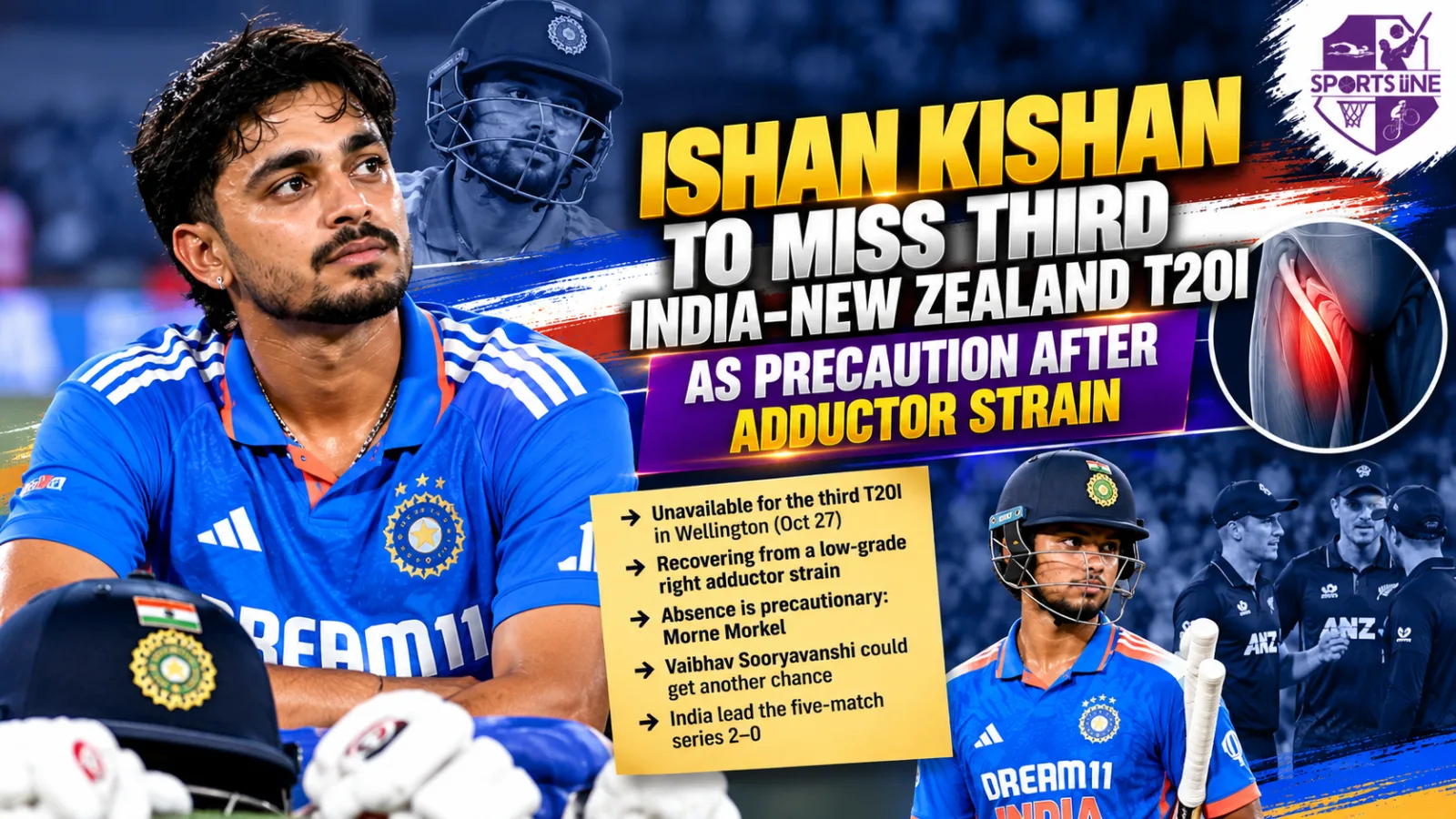
Ishan Kishan will miss India’s third T20 International against New Zealand in Wellington on October 27 as a precaution while recovering from a low-grade right adductor strain. India bowling coach Morne Morkel confirmed the wicketkeeper-batter’s unavailability at the pre-match press conference, adding that Kishan had been training and was doing well, but was not yet being risked for the match.
“Ishan Kishan is unavailable for the 3rd T20I. He's here to train and is doing well. But his unavailability is mostly precautionary,” Morkel said, as reported by Hindustan Times. Kishan sustained the injury during the series opener on October 22 and also missed the second T20I in Christchurch. India have won both matches and lead the five-match series 2-0.
The injury is a low-grade strain in Kishan’s right adductor, a group of muscles along the inner thigh. The Board of Control for Cricket in India confirmed after the first match that he had sustained the strain and that the medical team was monitoring his progress. The board did not initially provide a return date, and Morkel’s latest comments indicate that India are continuing to manage the recovery cautiously.
Kishan featured in the opening game, when India chased down 226 to beat New Zealand by four wickets at Hagley Oval in Christchurch. He picked up the injury during that match and subsequently missed the second fixture on October 24. Kumar Kushagra was added as cover for the second T20I, while the team adjusted its batting combination.
The decision to keep Kishan out of the Wellington match is precautionary rather than a public indication of a more serious injury. Morkel said the player was training and doing well, but did not offer a firm timeline for his return to competitive action. With two matches still to come after Wellington, India will be keen to have him available without aggravating the strain.
Kishan’s absence creates another selection question for India, particularly around the No. 3 position. Fifteen-year-old Vaibhav Sooryavanshi played in the second T20I after Kishan was ruled out, but made four runs from eight balls while batting at No. 3. The Wellington match gives the teenager a possible second opportunity, although India’s final playing XI and batting order will be confirmed closer to the toss.
Sooryavanshi has generally played as an opener, including during India’s gold-medal-winning campaign at the Asian Games. Former India spinner Ravichandran Ashwin questioned the decision to use him at No. 3 in Christchurch, saying the role appeared unfamiliar for the young batter. Ashwin suggested India could consider a combination that allows Sooryavanshi to open alongside Abhishek Sharma, with Sanju Samson moving to No. 3, though that remains analysis rather than a confirmed team plan.
India also have options elsewhere in the batting order, but any change has to balance a young player’s preferred role with the form and established positions of the current top order. The absence of Kishan matters because he provides a left-handed batting option and flexibility through the top and middle order. India’s management will have to decide whether continuity or a reshuffle best suits the Wellington conditions.
India arrive in Wellington with a 2-0 lead after winning the first two matches. The opening victory was notable because the visitors chased 226, their highest successful run chase in men’s T20I cricket at the time, according to the ICC. India then won the second game in Christchurch, with Tilak Varma and Nitish Kumar Reddy producing a decisive late partnership.
The third T20I is scheduled for October 27 in Wellington, followed by the fourth match in Auckland on October 30 and the fifth in Hamilton on November 1. India can strengthen their position in the series with another win, while New Zealand need a response to stay in contention. Kishan’s recovery will remain a key consideration for India as the series moves into its second half.
For now, the message from the Indian camp is that Kishan is progressing but will not be rushed back. His absence gives the team a chance to assess its alternatives, particularly at No. 3, while the medical staff continue to monitor the adductor strain. Any update on a return beyond the third T20I will depend on his recovery and the team’s assessment.
