Published:
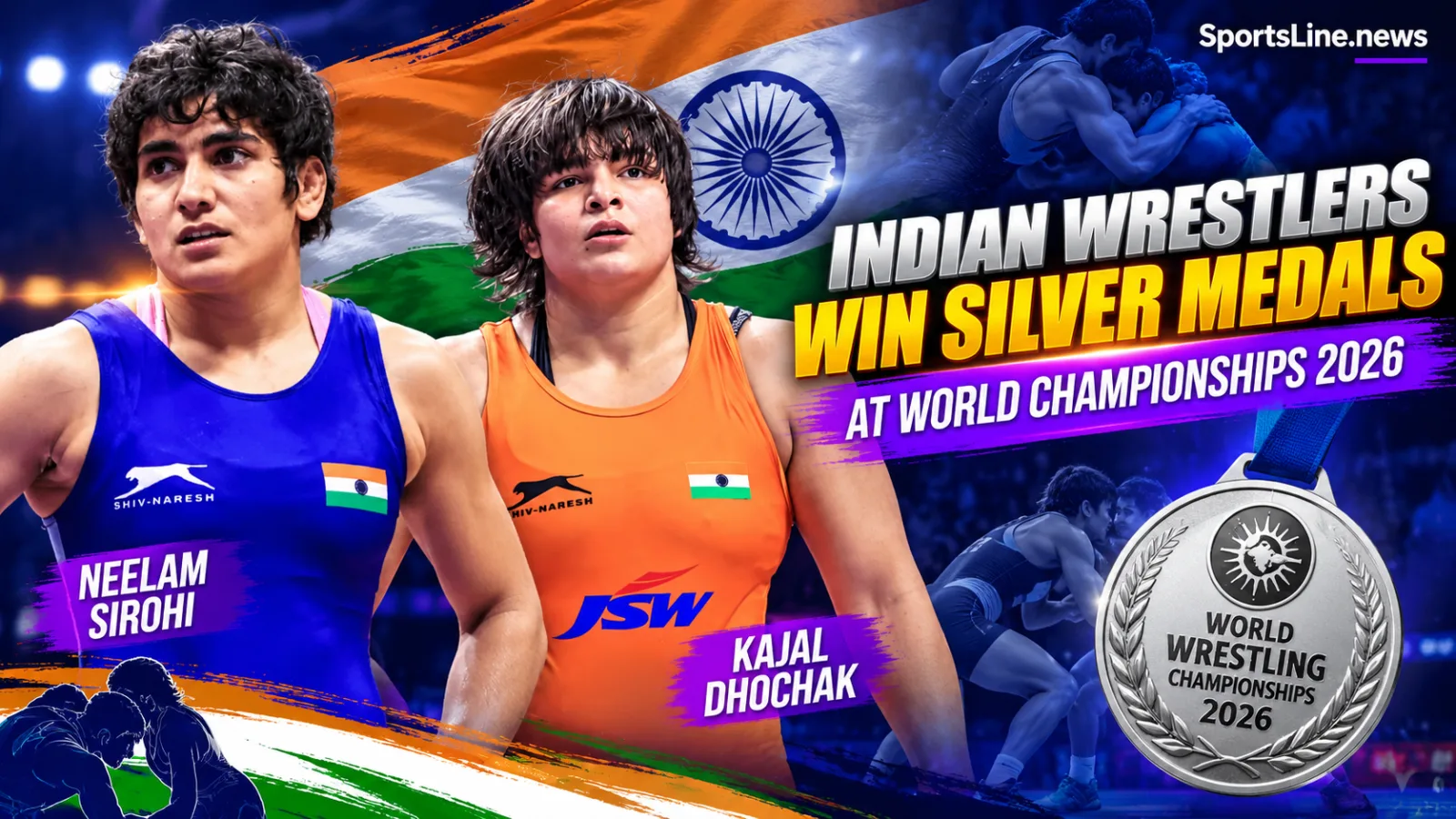
Indian wrestlers Neelam Sirohi and Kajal Dhochak won silver medals at the 2026 World Wrestling Championships in Astana, Kazakhstan, on October 28, delivering a landmark result for the country’s women’s programme. Neelam finished second in the 50kg category after losing to Japan’s Yui Susaki, while 18-year-old Kajal took silver at 76kg after an 6-8 final defeat to Ukraine’s Anastasiya Alpyeyeva.
The two podium finishes marked the first time two Indian women reached the finals at the same edition of the senior World Championships. Their runs also gave India a pair of medal-winning performances across very different stages of experience: Neelam, 26, earned her first senior world medal, while Kajal made an immediate impact in her senior debut after winning two under-20 world titles.
Neelam faced one of the toughest possible opponents in the final: Susaki, a Japanese wrestler and four-time world champion who also won Olympic gold in Tokyo. Neelam was defeated by fall after trailing 0-5, but reaching the title bout secured a significant milestone in her career.
Her path to the final had included a 6-0 opening-round win over Belarus’ Natallia Varakina. She then advanced after Russia’s Elizaveta Smirnova withdrew from their quarterfinal with an injury, before beating Kazakhstan’s Zeinep Bayanova 7-3 in the semifinal. Against Bayanova, Neelam used a four-point throw to take control and move within one win of the world title.
Neelam’s silver made her only the second Indian woman to finish runner-up at the senior World Championships, following Anshu Malik, who won silver in the 57kg category in Oslo in 2021. The result represents a breakthrough after earlier senior World Championships appearances had ended without a medal.
Kajal’s 76kg final against Alpyeyeva was close, ending 8-6 in favour of the Ukrainian. The result left Kajal with silver on her senior World Championships debut, but her performance across the tournament had already established her as one of India’s most promising wrestlers in the heavier women’s categories.
The 18-year-old entered the senior event after securing two U20 world titles. Her semifinal against Kyrgyzstan’s Aiperi Medet Kyzy was a defining moment: Kajal fell behind 1-7, then fought back to win 10-7. The comeback showed her ability to remain composed and keep attacking even when the match situation appeared unfavourable.
Alpyeyeva, a European champion, denied Kajal the chance to become India’s first woman senior world champion. Reports on the final noted that Kajal had been ahead on criteria when the score was tied 4-4, but Alpyeyeva produced a late takedown to take the decisive lead. Kajal nevertheless left Astana with a silver medal and a major step forward from age-group competition to the senior international stage.
The double-silver result is notable not simply because India had two finalists, but because the two wrestlers reached that stage through different routes. Neelam combined a shutout win and a controlled semifinal performance to reach the 50kg final. Kajal’s campaign was built around a high-pressure comeback in the semifinal and a close contest in the title bout.
Before this championship, Anshu Malik’s 2021 silver had been the landmark reference point for Indian women at the senior Worlds. The 2026 edition extended that history by producing two finalists in one tournament for the first time. It also gave Indian wrestling a pair of medal-winning performances to build on as the sport continues to develop athletes across weight categories.
The result should not obscure the challenge still ahead. Neither wrestler won gold, and the finals showed the narrow margins separating silver from a world title. But for Neelam, the medal marks a first senior world podium; for Kajal, it confirms that her junior success can translate to the senior stage. Their performances provide a strong foundation for the next phase of international competition.
For both wrestlers, the next task is to use the experience of a world final as a guide for future preparation. Neelam has now tested herself against one of the most decorated wrestlers in her division, while Kajal has gained experience of a senior championship final at just 18. The difference between silver and gold was clear in Astana, but both athletes have taken a major step in their international careers.
For young wrestlers in India, their campaigns also underline two lessons: a route to the final can involve composure and consistency, as Neelam showed, or persistence through a deficit, as Kajal demonstrated. The medals are a historic result for the women’s team and a reminder that senior-level progress can come from both long experience and rapid transition from junior success.
