Published:
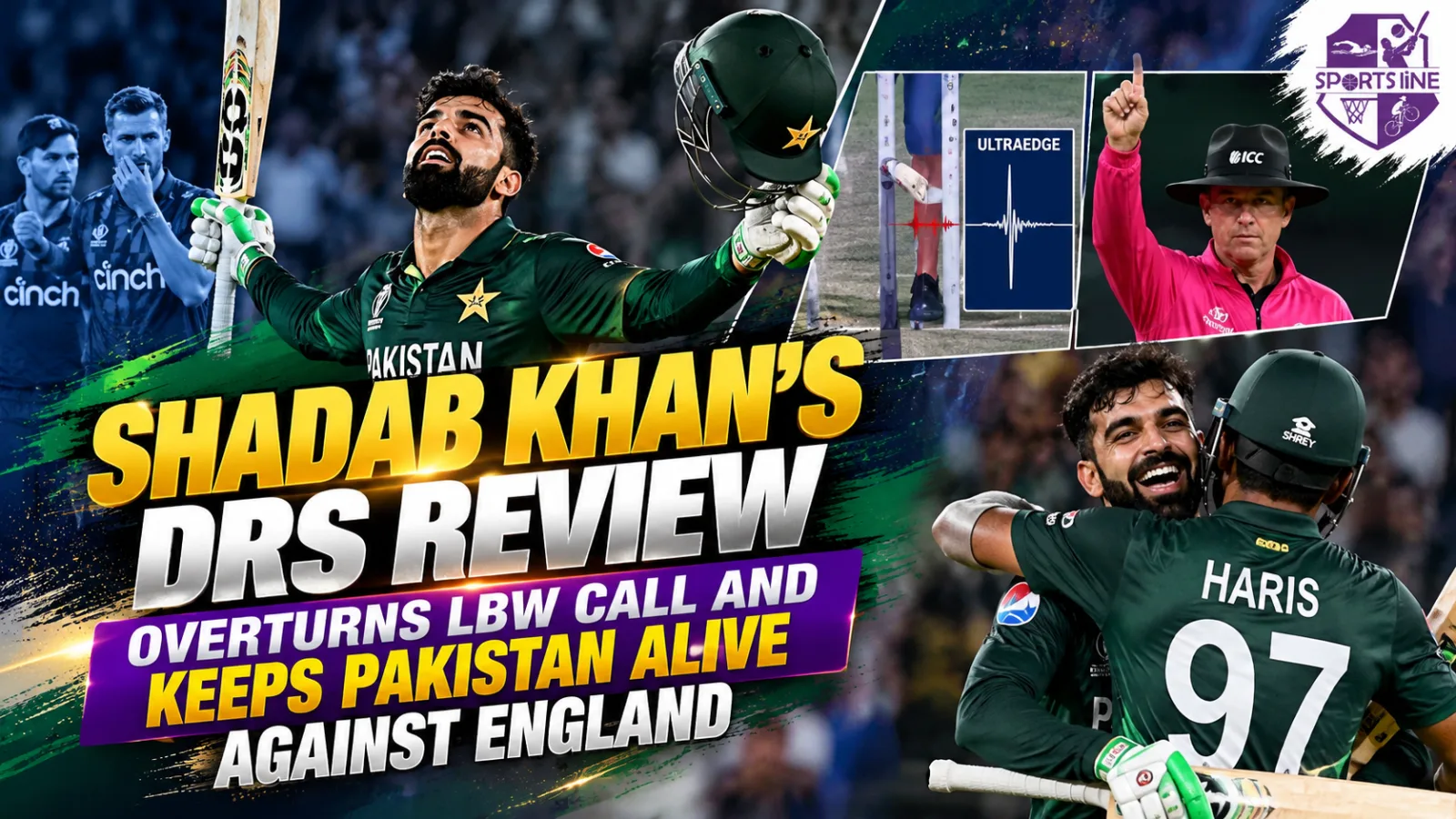
Shadab Khan’s decision to review an lbw verdict became the pivotal moment in Pakistan’s one-wicket victory over England at Lahore’s Gaddafi Stadium on October 25, 2026. Given out on 97 with Pakistan still needing 21 runs, Shadab initially appeared to accept the decision, but the DRS review showed an inside edge and overturned the call. He went on to finish unbeaten on 113 from 96 balls as Pakistan chased 242 with one wicket to spare.
England fast bowler Gus Atkinson trapped Shadab in front during the 45th over, with Pakistan’s chase hanging by a thread. The on-field umpire raised the finger, and the situation looked decisive because Pakistan had already lost nine wickets and still needed 21 runs. Accounts of the incident reported that Shadab began walking away and even exchanged gestures with England’s players before opting to review.
The replay review revealed contact between bat and ball: a faint inside edge meant the ball had not struck Shadab’s pad first in the way required for the lbw decision to stand. The decision was overturned, keeping Pakistan’s last recognised hope at the crease. It was a high-pressure use of DRS, but the decisive evidence was the edge detected on review, not a subjective judgement about where the ball was going.
Pakistan were 154-9 while chasing England’s 241, and the last-wicket pair had an enormous task ahead. Shadab’s survival changed the match’s immediate equation: rather than ending his innings at 97, it gave him the chance to continue attacking while number 11 Haris Rauf focused on supporting him and staying available at the other end.
Shadab finished with 113 not out, striking 13 fours and five sixes, while Rauf contributed seven not out from 19 balls. The pair added an unbeaten 89 runs for the tenth wicket, and Rauf hit the boundary that sealed the victory. The partnership is the highest 10th-wicket stand in a successful men’s ODI run chase, according to the ICC.
- England: 241 all out in 46.4 overs.
- Pakistan: 243-9 in 47.1 overs.
- Shadab Khan: 113 not out from 96 balls.
- Haris Rauf: seven not out from 19 balls.
- Last-wicket partnership: 89 runs.
- Ben Duckett: 105 from 111 balls; Shaheen Shah Afridi: 4-46.
The Pakistan Cricket Board confirmed that Shadab’s score was the highest ever in men’s ODIs by a batter at number eight or lower. The ICC also noted that the stand broke a 51-year-old benchmark for the biggest last-wicket partnership in a successful ODI chase: West Indies’ Deryck Murray and Andy Roberts had put on 64 against Pakistan at the inaugural men’s World Cup in 1975.
England’s total had been built around Duckett’s century after an early wobble. They were bowled out for 241, with Shaheen leading Pakistan’s attack, but England’s bowlers then reduced the hosts to 154-9. Jamie Overton took three wickets and Liam Dawson two, leaving England close to a win before Shadab and Rauf turned the contest around.
The DRS episode therefore stands out not because reviews are unusual, but because of the match situation and what followed. Shadab was close to a maiden international century, Pakistan were one wicket from defeat, and the successful review gave the last-wicket partnership a chance to complete a result that had looked improbable.
The win secured Pakistan’s place in the tri-series final with a match still to play, while England’s third consecutive defeat left their route to the final in serious doubt. The immediate lesson from the incident is straightforward: a batter’s first reaction does not replace the review process, and a small piece of evidence such as an inside edge can determine the outcome of a match. In Lahore, that evidence gave Shadab another opportunity—and he made it count.
For players and coaches following the game, the sequence also illustrates the value of understanding review options under pressure. The technology did not guarantee Pakistan a win; it corrected one decision, after which Shadab and Rauf still had to score the remaining runs against England’s attack.
