Published:
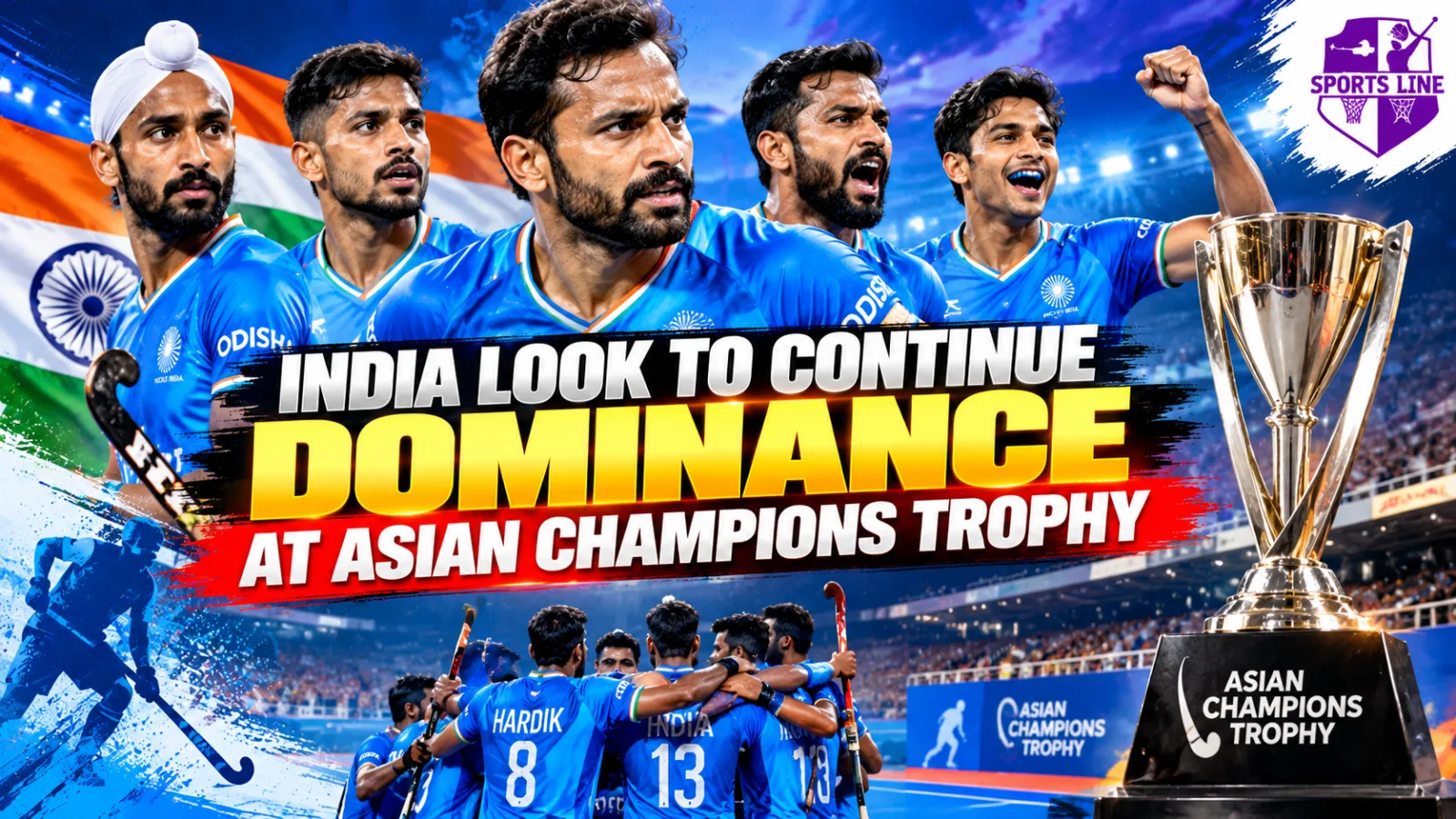
India begin their bid for a third consecutive Asian Champions Trophy title against Bangladesh in Jalandhar on October 27, as international hockey returns to Punjab after a 17-year gap. The five-time champions arrive after defending their men’s Asian Games gold in Japan, but face a late personnel setback with midfielder Manpreet Singh ruled out by a calf injury, according to Hindustan Times.
The 2026 tournament runs until November 5 and features six teams: India, Japan, China, Malaysia, South Korea and Bangladesh. Pakistan withdrew and Bangladesh took its place. India captain Harmanpreet Singh and head coach Craig Fulton will look to maintain the team’s recent momentum while managing a demanding round-robin schedule before the semi-finals.
India are the most successful side in Asian Champions Trophy history, with titles in 2011, 2016, 2018, 2023 and 2024. The 2018 trophy was shared with Pakistan after the final was washed out. Having won the last two editions, India enter this campaign seeking to extend their run and add another title in front of home supporters.
The team’s confidence has been strengthened by its Asian Games campaign, where India won all seven matches and successfully defended the gold medal. The recent result gives Fulton’s side a strong foundation, although the coach and captain have stressed that each opponent must be treated seriously. Harmanpreet said before the opener that every team had come to compete and India would not take any side lightly.
India’s squad retains much of the core that won the Asian Games, with goalkeeper Krishan Bahadur Pathak returning in place of Mohith HS. Young defender Amandeep Lakra and midfielder Aditya Arjun Lalage have also been given opportunities in the senior set-up. Vishnu Kant Singh and forward Angad Bir Singh are listed as reserves.
The injury to Manpreet Singh is a notable setback because of his experience and playmaking role. Hindustan Times reported that the former India captain suffered a calf injury during training and was ruled out of the tournament, with fellow midfielder Vivek Sagar Prasad called up in his place. The change places added responsibility on India’s midfield group as the team begins its title defence.
The tournament also carries personal meaning for several players who developed in Punjab’s hockey system. Harmanpreet, Mandeep Singh, Jarmanpreet Singh, Dilpreet Singh and Pathak have links to Jalandhar’s Surjit Hockey Academy, according to the Hindustan Times report. Playing in front of local supporters gives the team a homecoming element, but also brings the expectation of a strong performance.
All league-stage matches will be played at the Olympian Surjit Singh Hockey Stadium in Jalandhar from October 27 to November 2. India’s fixtures are Bangladesh on October 27, China on October 29, Japan on October 30, Malaysia on November 1 and South Korea on November 2. Each team plays the other five sides once, and the top four advance to the semi-finals.
Malaysia are among the potential challengers after finishing runners-up in 2023, while South Korea won the 2021 edition. Japan have twice finished runners-up, and China reached the final in the previous tournament. Bangladesh, replacing Pakistan, will seek to make the most of its opportunity in a field that offers little room for an easy match.
The competition moves to Mohali for the knockout stage. The semi-finals are scheduled for November 4, with the medal matches on November 5 at the Olympian Balbir Singh Senior International Hockey Stadium.
For Punjab, hosting the competition is a return to the international hockey calendar after 17 years. The state has a deep connection to the sport and has produced generations of Indian players. Jalandhar will stage the opening and all league fixtures, before Mohali hosts the decisive matches.
The SportsLine angle: India’s title defence combines a chance to build on Asian Games success with a test of squad depth following Manpreet’s injury. For young players such as Amandeep Lakra and Aditya Arjun Lalage, the home tournament is an opportunity to establish themselves. For Punjab’s hockey community, the event brings elite international competition back to a region central to the sport’s Indian history.
