Published:
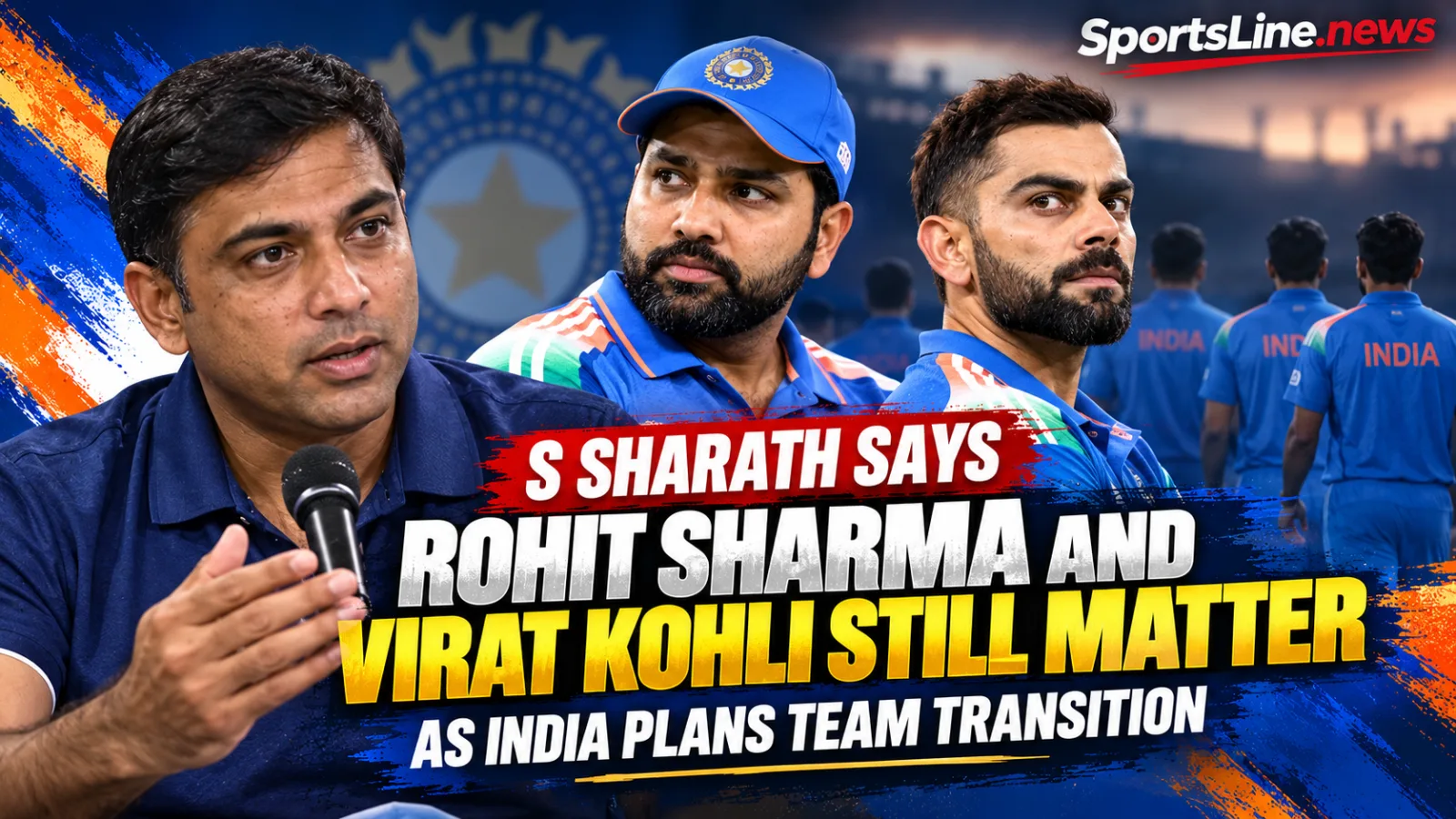
Former India selector S Sharath has said Rohit Sharma and Virat Kohli continue to have an important place in the national team’s environment, even as India prepares younger players for future leadership roles. In an interview published by The Indian Express on October 24, Sharath said the senior batters’ presence can help the next generation learn, adding that the team cannot simply remove them entirely.
Sharath’s comments came as his five-year term as chairman of the junior selection committee ended on October 23, following three years as a member of the senior selection panel. Reflecting on his time in both roles, he discussed leadership, selection debates, the development of red-ball players and the decisions that shaped India’s teams across formats.
Sharath said Rohit remains a leader in the squad even after the captaincy transition, and described the same principle as applying to Kohli. His view was that experienced players can contribute beyond their individual performances by helping younger teammates understand the demands of international cricket.
He also praised Rohit’s approach to team management, saying the former captain took care of players individually and gave attention to those who were not in the playing XI. Sharath said that sort of environment matters when building a winning side because a player outside the team may still be needed later in a series or tournament.
The comments come with India looking toward the 2027 ODI World Cup and a new leadership phase under Shubman Gill. Sharath’s interview did not announce any selection decision for that tournament; instead, it offered his perspective on why senior players can remain valuable while younger leaders are being developed.
Sharath rejected the perception that IPL performances alone determine selection. He said selectors look at a player’s overall cricket, including contributions to state teams and domestic competitions, while also considering performances in the IPL against high-quality opposition and under pressure.
He explained that selection involves weighing the role a player can perform in particular conditions and in the country where India is playing. In his account, discussions and disagreements among selectors are part of the process: the composition of the team, rather than the reputation of an individual, has to guide the final decision.
Sharath also reflected on the choice of Suryakumar Yadav as T20I captain ahead of Hardik Pandya after Rohit’s tenure. He said the team had several leaders available and credited the selection panel with making a decision that allowed Suryakumar to take over, while noting that Hardik’s contributions at the T20 World Cups were also important.
Sharath was part of the senior selection panel during a period in which India won the T20 World Cup, the Champions Trophy, two Asia Cups and Asian Games gold, according to his interview. During his time leading the junior committee, India won two Under-19 World Cups.
He recalled that the 2022 Under-19 campaign began in difficult circumstances during the COVID period, when there were fewer matches available to assess players. Camps and monitoring sessions helped the selectors assemble a squad, and the team recovered from a tri-series loss in Bangladesh to win the Under-19 Asia Cup and the World Cup in the Caribbean.
Sharath also spoke about the decision to select Vaibhav Sooryavanshi for the Under-19 World Cup at 14. He said the youngster’s uncomplicated approach at the crease stood out, while stressing that patience and sustained cricket would be necessary to see how fully his talent developed.
Looking ahead, Sharath said India has a promising pool of fast bowlers emerging through junior cricket and the BCCI Centre of Excellence. He said young players need to go through two to three years of development, and pointed to age-group exposure tours to Australia and Sri Lanka as opportunities to build experience in longer formats.
His comments underline a long-term view of selection: emerging players need time and appropriate competition, while experienced internationals can help establish standards within the dressing room. For India, maintaining that balance will be an ongoing task as it plans for future tournaments without losing sight of immediate results.
Sharath’s term has concluded, and India’s selection structure is moving into a new phase as the team prepares for the next cycle of international cricket. Questions about the precise composition of future squads, including the 2027 ODI World Cup group, remain for the current selectors to decide based on performance, fitness, roles and team requirements.
Sharath’s interview offers a retrospective account of how the panels he served approached those choices. His central message was that leadership and experience still have value, but selection must remain a broader assessment of the team’s needs, the conditions ahead and a player’s contribution across formats and competitions.
