Published:
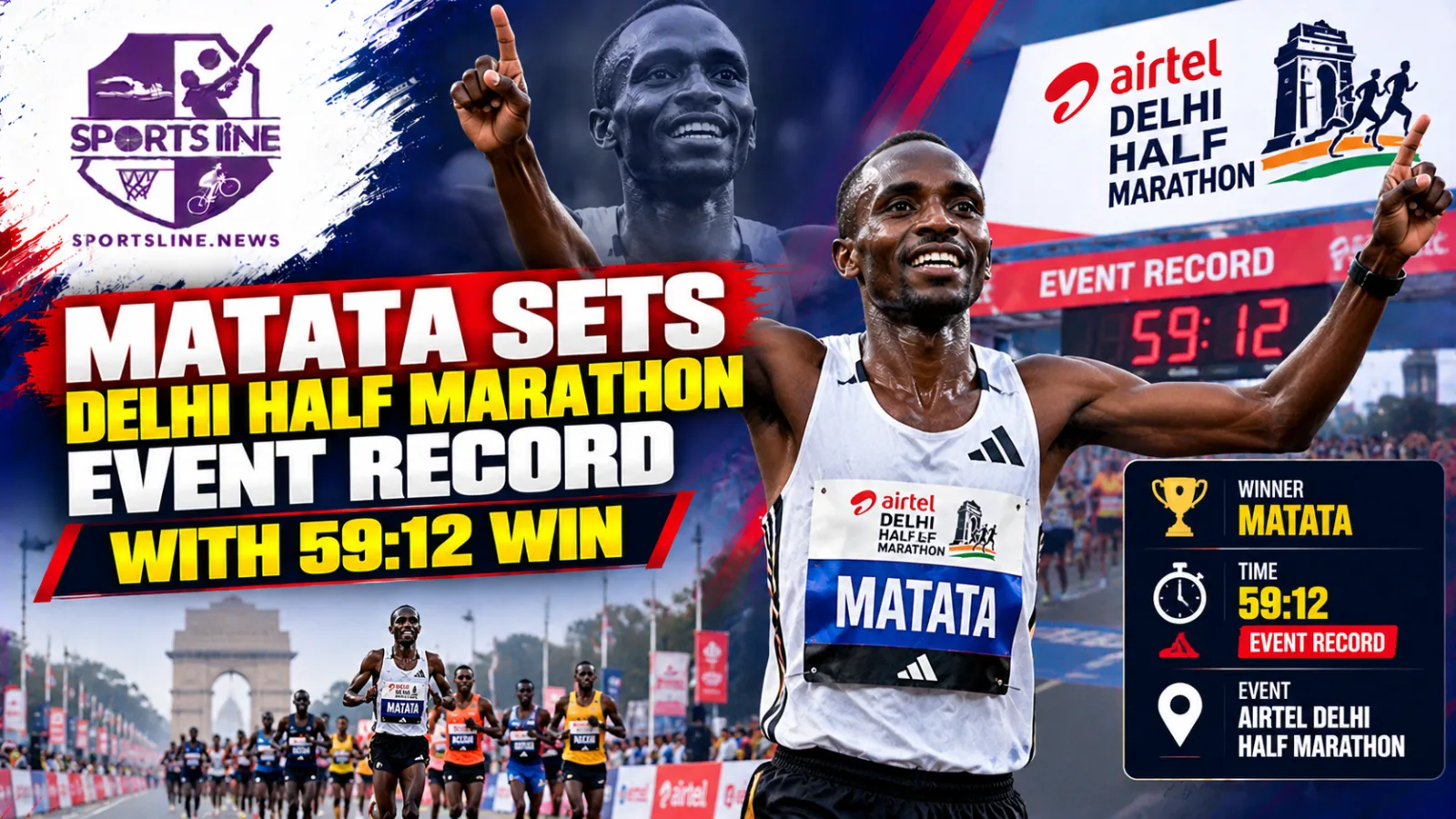
Matata edges the event record lower
Matata’s 59:12 brought the men’s race to a close with a new event benchmark. In a competitive elite field, the Kenyan runner’s winning time improved the previous record by the narrowest of margins: one second. Such a small change can still matter at a major road race, where the record reflects both the pace of the leading athletes and the conditions on the day.
The result continued the strong presence of East African distance runners at the front of international road racing. Ethiopia’s Gemechu Dida finished behind Matata, while India’s Gulveer Singh secured third place. The podium represented three countries and gave the home crowd an Indian athlete among the leading finishers.
The event record is specific to the Delhi Half Marathon and should not be confused with the world record for the half-marathon distance. The 21.0975-kilometre race is a major fixture on India’s road-running calendar and brings elite international athletes together with mass-participation runners.
Gulveer Singh’s third-place finish made him the leading Indian athlete in the elite men’s race. Sharing the podium with Matata and Dida gave the Indian runner a significant result in a field that included established international competitors. His finish also gave domestic distance-running followers a clear performance to track as Indian athletes continue to target faster times on the road.
For Indian runners, elite races such as the Delhi Half Marathon offer an opportunity to measure performances against international competition. A podium finish does not, by itself, establish a long-term ranking or guarantee future results, but it provides a useful benchmark for training and competition planning.
The women’s elite race and the broader event also form part of the half marathon’s wider sporting programme, which brings professional athletes and recreational participants to the same city course. The headline men’s result, however, was Matata’s record-setting run and the close margin by which the previous event mark was beaten.
- 59:12: Alex Matata’s winning time.
- One second: The amount by which Matata improved the previous event record.
- 21.0975 km: The official half-marathon distance.
- Second: Gemechu Dida’s position in the elite men’s race.
- Third: Gulveer Singh’s finish and the leading Indian result in the men’s elite field.
- October 18, 2026: Date of the Delhi Half Marathon.
Matata’s performance gives the Delhi Half Marathon a new event benchmark and shows how tightly contested elite road racing can be. A one-second improvement may look modest, but at the front of a half marathon it represents a meaningful gain over more than 21 kilometres. The result also adds another record performance to the event’s history.
Gulveer Singh’s podium finish provides a positive marker for Indian distance running. Continued progress will depend on repeat performances, training and opportunities to race against international fields, but placing among the top three in a race won in under an hour is a notable outcome for the home contingent.
The Delhi Half Marathon result will now serve as a reference point for future editions, with Matata’s 59:12 becoming the time competitors will aim to beat. For India, attention will turn to how Gulveer Singh and other leading distance runners build on their performances through the season and at upcoming road and track events.
The 2026 race delivered a new event record, a multinational men’s podium and a leading Indian finish. Matata’s time was the defining result of the day, while the one-second record margin illustrated the precision required to make history in elite road running.
