Published:
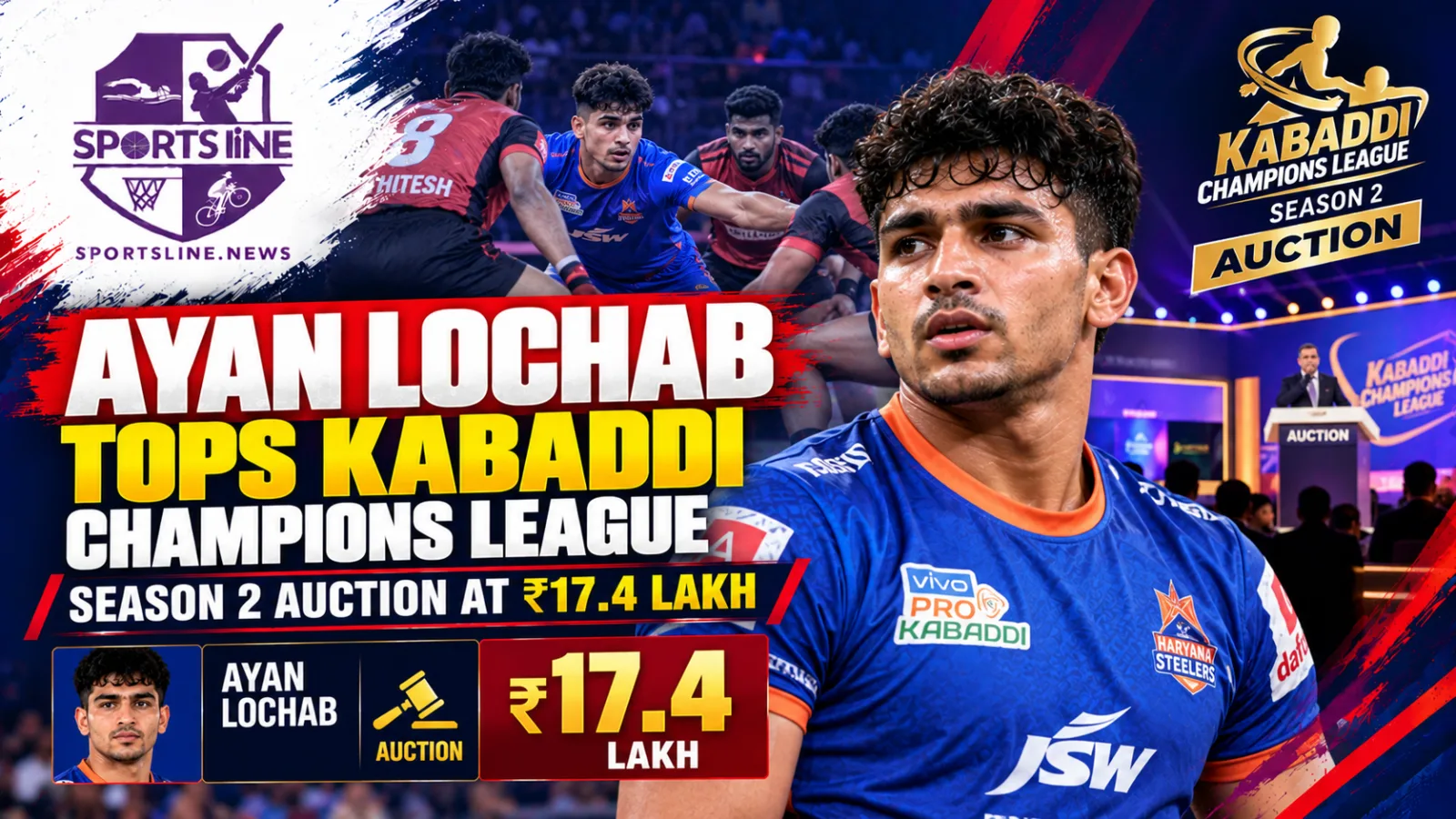
Ayan Lochab emerged as the most expensive player at the Kabaddi Champions League (KCL) Season 2 auction, with Jhajjar Jaguars securing the raider for ₹17.4 lakh on October 17, 2026. The auction saw 10 franchises assemble their squads for the upcoming season, with Bharat Hooda and Naveen Goyat also attracting bids above ₹15 lakh, according to ANI’s report carried by The Economic Times.
The auction highlighted the league’s attempt to combine established names with opportunities for emerging players. A total purse of ₹5 crore was available across the 10 franchises, while more than 300 players were expected to be in the pool. Season 2 also includes two new teams, Jhajjar Jaguars and Kurukshetra Knights, broadening the competition’s franchise base.
Lochab’s ₹17.4 lakh deal for Jhajjar Jaguars placed him at the top of the auction list. Bharat Hooda was the second-highest buy, joining Karnal Kings for ₹16.6 lakh, while Naveen Goyat was acquired by Kurukshetra Knights for ₹15.2 lakh. The three leading deals showed franchises were prepared to allocate a substantial share of their budgets to players they believed could shape their campaigns.
Several other players also secured notable contracts. Rakesh Singroha joined Faridabad Fighters for ₹11 lakh, Sumit Sangwan went to Sonipat Stars for ₹10.2 lakh, and Sunil Malik was acquired by Faridabad Fighters for ₹10 lakh. Malik’s profile includes captaining India at the Asian Games, bringing international experience into the franchise competition.
The top 10 list also included Yogesh Dahiya, bought by Faridabad Fighters for ₹9.2 lakh; Neeraj Narwal, who joined Rohtak Royals for ₹8.6 lakh; Mohit Goyat, acquired by Sonipat Stars for ₹8.4 lakh; and Jaideep Dahiya, who also went to Sonipat Stars for ₹8.2 lakh. These signings distributed experienced and high-profile talent across several teams rather than concentrating the biggest names in one squad.
The ₹5 crore purse across 10 franchises works out to ₹50 lakh per team. That budget places a premium on how teams balance their marquee purchases against the need to fill the rest of their squads. Lochab’s ₹17.4 lakh price tag alone represented more than a third of a single franchise’s ₹50 lakh allocation, illustrating the trade-off involved in bidding aggressively for a leading player.
Team-building decisions were not limited to the highest bids. Each franchise had to consider the balance of raiders and defenders, the experience available in the pool and how much money to reserve for the remaining squad. The final auction prices provide a snapshot of how teams valued players at this stage, but they do not by themselves determine which side will perform best once the season begins.
The second season’s expansion adds Jhajjar Jaguars and Kurukshetra Knights to the league, increasing the number of franchises and the number of roster places available. Both new teams made headline signings: Jhajjar secured the auction’s top buy in Lochab, while Kurukshetra brought in Goyat for ₹15.2 lakh. Their early recruitment choices give fans an initial indication of the players around whom they may build their teams.
The player pool was preceded by central trials in Sonipat and Rohtak. ANI reported 6,400 registrations in Sonipat and 650 participants in Rohtak, a response that points to substantial interest in the opportunity to enter the competition. More than 300 players were expected to go under the hammer, creating a large pool from which franchises could choose.
The auction now gives the franchises a roster foundation for KCL Season 2. Attention will turn to how the newly assembled squads develop combinations, particularly how the leading purchases fit alongside retained players and lower-priced additions. The auction amounts establish the market’s immediate hierarchy, but performance on the mat will determine whether the investments translate into results.
For kabaddi followers, Lochab’s position as the highest-paid player is the headline from the bidding, with Hooda and Goyat close behind. Malik’s move also adds a prominent international name to Faridabad Fighters. As the league prepares for its next season, the expanded 10-team format and the volume of registrations for the trials underline the competition’s role as a franchise platform for both established players and those seeking a larger stage.
