Published:
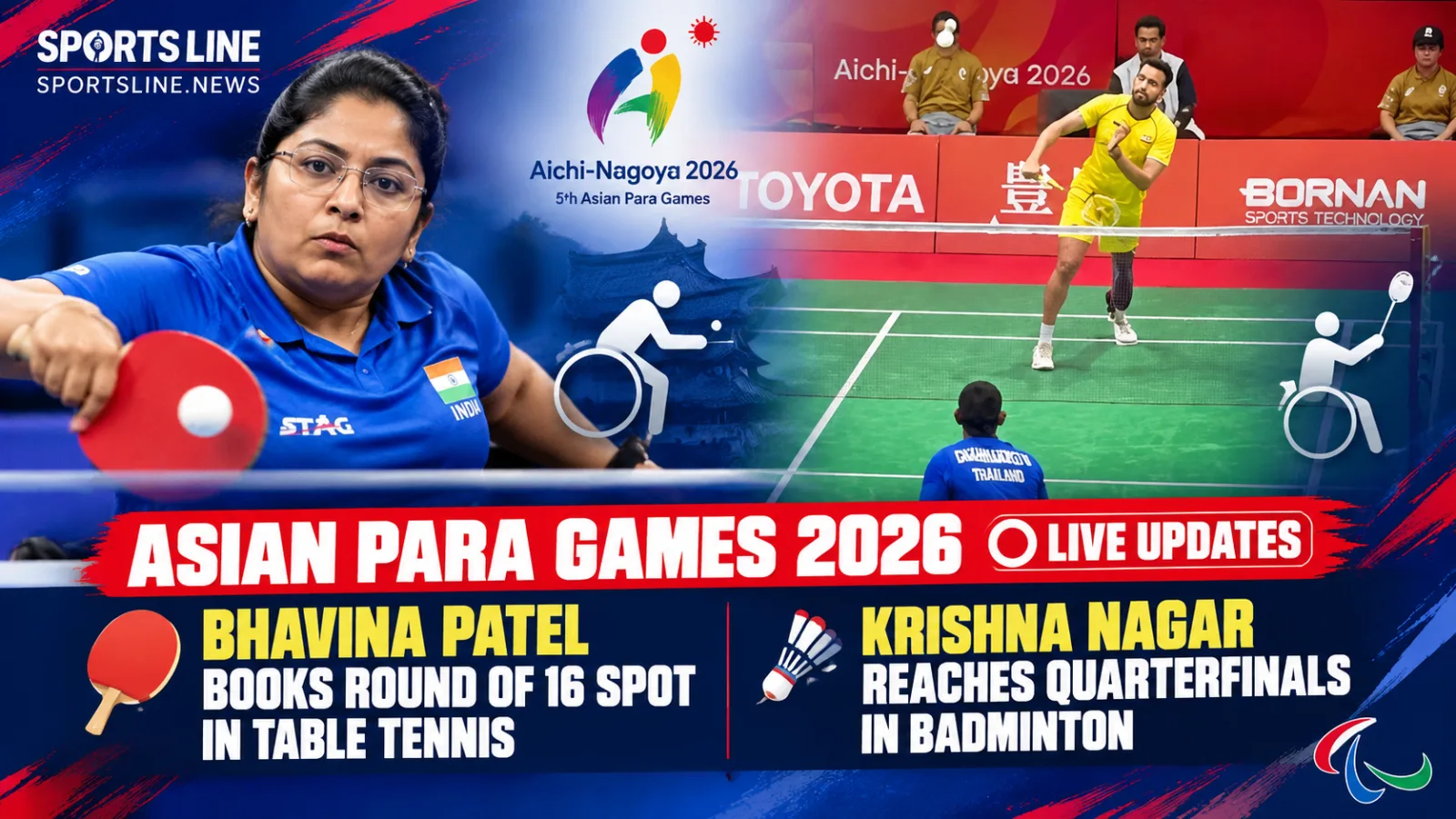
Indian para-athletes made a mixed start to their Aichi-Nagoya 2026 campaign, with early victories in para table tennis and para badminton offset by a defeat for the men’s blind football team. Bhavina Patel opened her women’s singles table tennis campaign with a 3-0 win over Kuwait’s Ahad Alrasheedi on October 16, while badminton stars including Suhas Yathiraj also began with victories, according to tournament coverage published by Outlook India and The Times of India.
Patel, a Tokyo Paralympics silver medallist, won her women’s singles Class 4-5 match 3-0 against Alrasheedi. Baby Sahana Ravi also began well in women’s singles Class 9, defeating Vietnam’s Thi Hoa Phuong Nguyen 3-0, according to The Times of India’s October 16 report.
In para badminton, Suhas Yathiraj beat Bangladesh’s Joytu Dhar 21-8, 21-11 in the men’s singles SL4 event. Abhijeet Sakhuja also recorded a straight-games win, defeating Chinese Taipei’s En-chuan Yeh 21-17, 21-12. These early results gave India positive momentum in two sports as the wider programme gathered pace.
Outlook’s live coverage also listed prominent Indian shuttlers including Pramod Bhagat, Manisha Ramdass and Krishna Nagar among those scheduled for action on October 17. The day’s programme included singles and doubles matches, giving several members of the contingent opportunities to progress through their respective groups.
India’s men’s blind football team lost 0-2 to South Korea on October 16. Jang Yeongjun scored both goals for South Korea, according to Outlook India’s match coverage. The result meant India entered its next group match needing a response against hosts Japan, which was listed on the October 17 schedule.
The contrasting outcomes illustrate the early challenge for a multi-sport contingent: success in one event does not guarantee an easy path across the programme. Group-stage matches in football and other sports can quickly shape qualification prospects, while badminton and table tennis players must continue to navigate their individual draws.
- 3-0: Bhavina Patel’s winning score against Ahad Alrasheedi.
- 21-8, 21-11: Suhas Yathiraj’s scoreline against Joytu Dhar.
- 21-17, 21-12: Abhijeet Sakhuja’s win over En-chuan Yeh.
- 0-2: India’s men’s blind football result against South Korea.
- October 18–24, 2026: the scheduled dates for the Aichi-Nagoya Asian Para Games.
These figures show the range of results across the Indian campaign, from straight-game victories in racket sports to a two-goal defeat in blind football. They are match results rather than a medal tally, and they should not be read as a measure of India’s overall standing at this early stage.
The Asian Para Games are scheduled to run in Aichi-Nagoya, Japan, from October 18 to 24. Coverage of Indian matches on October 16 and 17 reported competition activity before the official opening ceremony, so the early results and schedules need to be understood in that context. The event is the fifth edition of the continental multi-sport competition.
India’s schedule for October 17 included para badminton fixtures involving established names such as Pramod Bhagat, Manisha Ramdass and Krishna Nagar, along with a men’s blind football group match against Japan. The schedule is subject to the official competition programme, and results should be checked against event updates as matches conclude.
India’s immediate focus is on converting early wins into progress through the group stages and responding in events where the opening result went against the team. The badminton and table tennis competitions will continue with further singles and doubles matches, while the men’s blind football team faces Japan. Medal expectations should remain separate from these early match outcomes until event brackets and results clarify who advances.
The opening results underline the depth and variety of India’s para-sport contingent. Familiar names such as Bhavina Patel and Suhas Yathiraj have started with wins, while the blind football defeat shows the competitive margins involved in team events. For followers of Indian para-sport, the most useful next step is to track individual results and qualification progress sport by sport rather than relying on a single overall narrative.
