Published:
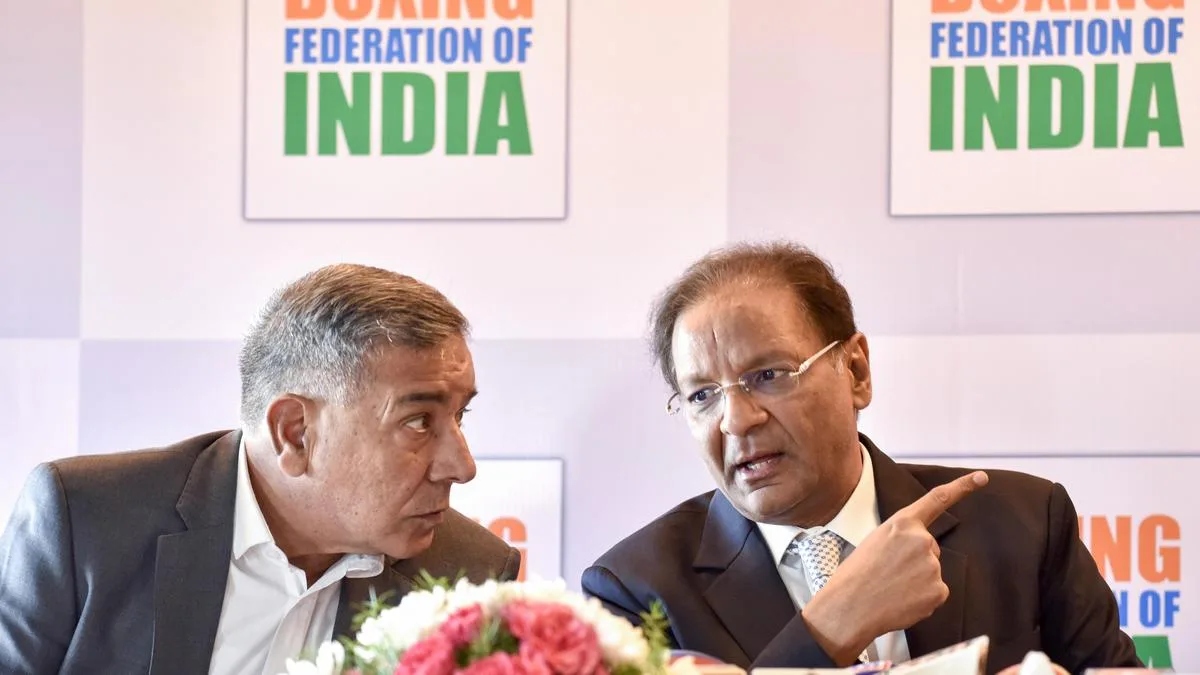
The leadership dispute within the Boxing Federation of India intensified in mid-October 2026 after president Ajay Singh suspended secretary general Pramod Kumar, who had initiated a no-confidence motion against Singh. The dispute brought competing claims over authority, internal inquiries and the federation’s governance into public view, with a proposed Special General Meeting expected to become a key test of support among affiliated units.
According to The Hindu’s October 14 report, Singh suspended Kumar after the secretary general moved to convene a meeting to consider a no-confidence motion against the president. Singh’s letter cited pending inquiries and alleged concerns over financial decisions, lack of cooperation and communications said to have been issued without proper authority. These were allegations cited in the suspension order, not findings of a completed adjudication.
Kumar disputed Singh’s authority to suspend him while a no-confidence motion was pending. He argued that the general house should decide the president’s position and said he had support from affiliated state associations. Contemporary reporting gave differing descriptions of the level of support, so the exact number of units backing each side should be treated as a claim rather than an independently settled count.
The situation then escalated further when reports said Kumar issued a counter-order suspending Singh, leaving both senior officials asserting authority over the federation. The competing orders created uncertainty over who could direct day-to-day administration and oversee upcoming decisions.
Singh’s suspension order referred to alleged financial irregularities, misuse of authority and non-cooperation with inquiries. Reporting also connected the dispute to a broadcasting arrangement and a disagreement over the handling of a national championship. The allegations remained contested in the reports available at the time and should not be treated as proven wrongdoing.
Kumar, meanwhile, accused Singh and other senior officials of trying to obstruct the proposed no-confidence process and alleged intimidation of state associations. The allegations were denied by BFI executive director Col. Arun Malik, who told PTI that the accusations were baseless. Neither side’s allegations should be presented as established fact without the outcome of an independent inquiry or an authoritative ruling.
The conflict therefore extended beyond a personal disagreement. At issue were the interpretation of the BFI constitution, the authority to suspend elected office-holders, the process for calling a Special General Meeting and the federation’s internal checks and balances.
The no-confidence motion was intended to give affiliated members an opportunity to consider Singh’s continuation as president. Contemporary reports said a Special General Meeting was proposed for October 28, 2026. As that date approaches or passes, the meeting’s actual status and any decision should be verified through a current official statement before publication of an update.
The number of associations supporting a motion matters because removal from elected office depends on the federation’s constitution and the applicable voting threshold. News reports referred to competing claims about support, but the final result would depend on the recognised membership, the meeting’s validity and the rules applied to any vote.
The existence of a proposed meeting does not itself mean that a no-confidence motion has succeeded. The process, attendance, voting and any subsequent recognition by the relevant sporting authorities are separate questions that require documented confirmation.
The timing of the leadership crisis drew attention because Indian boxers were coming off strong performances at major competitions and had further international events to prepare for. Administrative uncertainty can affect coordination, selection processes, funding decisions and communication between the national federation and state associations. Those are risks arising from a prolonged governance dispute, rather than proof that any particular athlete’s preparation has already been disrupted.
The conflict also places attention on transparency and due process in national sports bodies. Clear communication about inquiries, suspension powers and the legitimacy of meetings would help athletes, coaches and affiliated associations understand who is authorised to make decisions while the dispute is unresolved.
For Indian boxers and grassroots programmes, the priority is continuity: athletes need reliable competition calendars, selection processes and preparation arrangements regardless of disputes among administrators. The BFI’s leadership must clarify the status of the competing orders and ensure that governance proceedings follow the federation’s constitution.
The key point is that the crisis involved disputed suspensions and allegations from both sides, not a final ruling on the merits of those claims. The next authoritative development is the verified outcome of the proposed general meeting or any decision by the relevant sports authorities. Until then, claims about support, misconduct and control of the federation should remain clearly attributed.
