
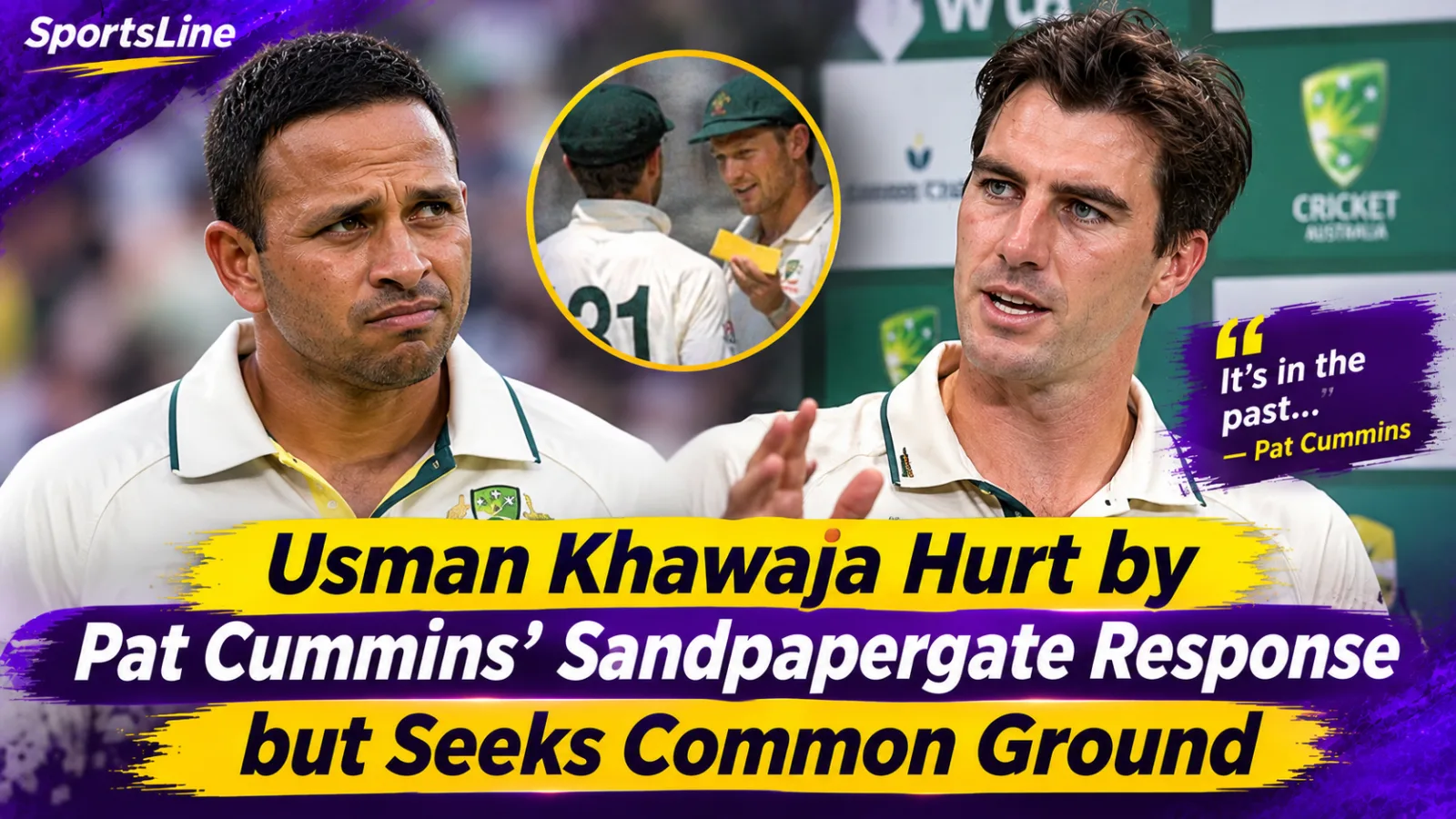
Key points
- Usman Khawaja said Pat Cummins’ public response to his Sandpapergate comments left him disappointed.
- Khawaja said he texted Cummins before the captain’s November 2026 press conference seeking common ground.
- Cummins rejected the claim that the entire Australian XI knew sandpaper was being used during the 2018 Cape Town Test.
- Steve Smith and David Warner received 12-month suspensions after the 2018 incident; Cameron Bancroft was suspended for nine months.
- Khawaja said his concern was the wider culture within Australian cricket, not removing Cummins as captain.
- Cricket Australia has ruled out reopening the original investigation for further sanctions and is moving towards a forum for accounts from those involved.
- Usman Khawaja has said he was hurt and disappointed by Pat Cummins’ public response to his comments about Australia’s 2018 ball-tampering scandal, but insists the disagreement should not be mistaken for a personal campaign against the current Test captain. Speaking on The Grade Cricketer podcast, the former Australia opener said he had expected Cummins to seek common ground rather than challenge him so forcefully in public.
The latest comments add another chapter to the renewed debate over Sandpapergate, which resurfaced after details from Khawaja’s forthcoming autobiography, Sabr, questioned how widely knowledge of the ball-tampering plan extended within the Australian team during the Cape Town Test against South Africa in March 2018. Cummins has strongly rejected the suggestion that the wider team knew sandpaper was being used.
Khawaja surprised by Cummins’ public response
Khawaja said he had praised Cummins in his book as a person and a leader, and therefore did not expect the Australia captain to respond in such personal terms. He described the comments as surprising and said he had not previously seen that side of Cummins. The former opener also explained that he had contacted Cummins by text a few days before the captain’s lengthy press conference, hoping the two sides could find a middle ground.
According to Khawaja, his intention was to bring people together and avoid widening divisions within Australian cricket. He said he still had affection for Cummins despite being upset by the response. His remarks make clear that he views the disagreement as a dispute over how the 2018 episode should be acknowledged, rather than a demand for the captain to lose his position.
Cummins addressed Khawaja’s claims at a press conference in Sydney earlier in November. He rejected the allegation that the entire Australian XI knew about the use of sandpaper, calling it completely wrong and describing the suggestion that he and others had helped organise the scheme as “complete and utter nonsense”. Cummins has maintained that he did not know sandpaper was being used on the field.
What reignited the Sandpapergate debate?
The controversy dates to the third Test between Australia and South Africa at Newlands, Cape Town, in March 2018. Television cameras captured Cameron Bancroft using a piece of sandpaper on the ball. The incident triggered a major investigation and became one of the most damaging episodes in modern Australian cricket.
Cricket Australia suspended then-captain Steve Smith and vice-captain David Warner for 12 months, while Bancroft received a nine-month suspension. The penalties had lasting consequences for the players and the national team. The episode also prompted a wider examination of the aggressive culture and win-at-all-costs environment within Australian cricket.
Khawaja’s autobiography has brought the question of collective knowledge back into focus. His account challenges the narrow version of responsibility accepted at the time, while Cummins and other figures have disputed claims that the wider playing group knew about the use of sandpaper. These remain contested accounts, and the distinction between awareness of a broader culture and knowledge of the specific method is central to the disagreement.
Cricket Australia faces pressure to address the past
The discussion has expanded beyond the exchange between two former teammates. Khawaja has argued that Cricket Australia and the broader team environment should take responsibility for the culture that allowed the scandal to happen. He has said the issue should not be framed as a personal matter involving Cummins, who was a young player at the time of the Cape Town Test.
Cricket Australia has publicly backed Cummins as Test captain and has ruled out reopening the original investigation to impose fresh sanctions. The governing body has instead moved towards a forum through which players and staff connected to the 2018 tour can share their experiences. The process is intended to provide space for accounts to be heard, rather than function as a new disciplinary inquiry.
The renewed debate has also featured comments from other members of the 2018 squad, with some supporting Khawaja’s account and others rejecting it. That range of views illustrates why the scandal remains sensitive years after the original suspensions. A fuller public understanding may depend on whether former players and officials are willing to describe what they knew, when they knew it and how decisions were made.
A disagreement Khawaja says need not define the relationship
Despite his disappointment, Khawaja has stressed that he does not want the dispute to become a lasting personal feud. He has said he continues to respect Cummins and does not want the captaincy to be affected. His central argument is that Australian cricket should confront the wider culture and acknowledge the consequences borne by the players who were punished.
Cummins, for his part, has defended his reputation and rejected the suggestion that he was involved in planning or knowingly participating in the use of sandpaper. The two positions remain far apart on the key question of what the wider team knew. For now, the debate is being played out through interviews, memoir accounts and Cricket Australia’s proposed forum, rather than a reopened formal investigation.
The latest exchange shows that Sandpapergate is not simply a closed disciplinary episode. It remains an unresolved question of memory, accountability and trust in Australian cricket. Khawaja’s appeal for common ground suggests he wants the sport to move forward, but the competing accounts mean that reconciliation will require more than a public statement.
Frequently asked questions
Why is Usman Khawaja disappointed with Pat Cummins?
Khawaja said he was surprised by the force and personal nature of Cummins’ public response to his comments about Sandpapergate. He had expected the Australia captain to look for common ground, particularly after Khawaja had contacted him before the press conference.
What did Khawaja claim about the 2018 ball-tampering scandal?
In his forthcoming autobiography Sabr, Khawaja questioned the accepted account of how much of the Australian team knew about the ball-tampering plan during the 2018 Cape Town Test. He suggested knowledge extended beyond the three players who were sanctioned, a claim disputed by Cummins.
How did Pat Cummins respond to Khawaja’s allegations?
Cummins rejected the suggestion that the entire Australian team knew sandpaper was being used. At a press conference in November 2026, he called the claim completely wrong and denied being an architect of any ball-tampering scheme.
What punishments followed the 2018 Sandpapergate incident?
Cricket Australia imposed a 12-month suspension on then-captain Steve Smith and vice-captain David Warner. Cameron Bancroft, who was caught on camera using sandpaper on the ball during the Cape Town Test, received a nine-month suspension.
Will Cricket Australia reopen the Sandpapergate investigation?
Cricket Australia has ruled out reopening the original investigation to impose further sanctions. It has instead moved towards an independent forum where players and staff connected to the 2018 tour can share their experiences of the episode.