
Key points
- Karnataka beat Rajasthan by four wickets, reaching 114/6 in 16 overs after bowling them out for 113 in 15.3 overs.
- The result did not change Karnataka’s fate after Baroda secured qualification from Elite Group A.
- Karnataka used 16 players in six matches; only R Smaran, Manvanth Kumar and Pravin Dubey featured in all six.
- The team recorded only three half-centuries, with Karun Nair scoring two and Smaran one.
- Karnataka’s highest first-innings total was 184 against Bengal and their lowest was 95 against Chandigarh.
- Manvanth Kumar was the leading all-round contributor with 91 runs and 10 wickets.
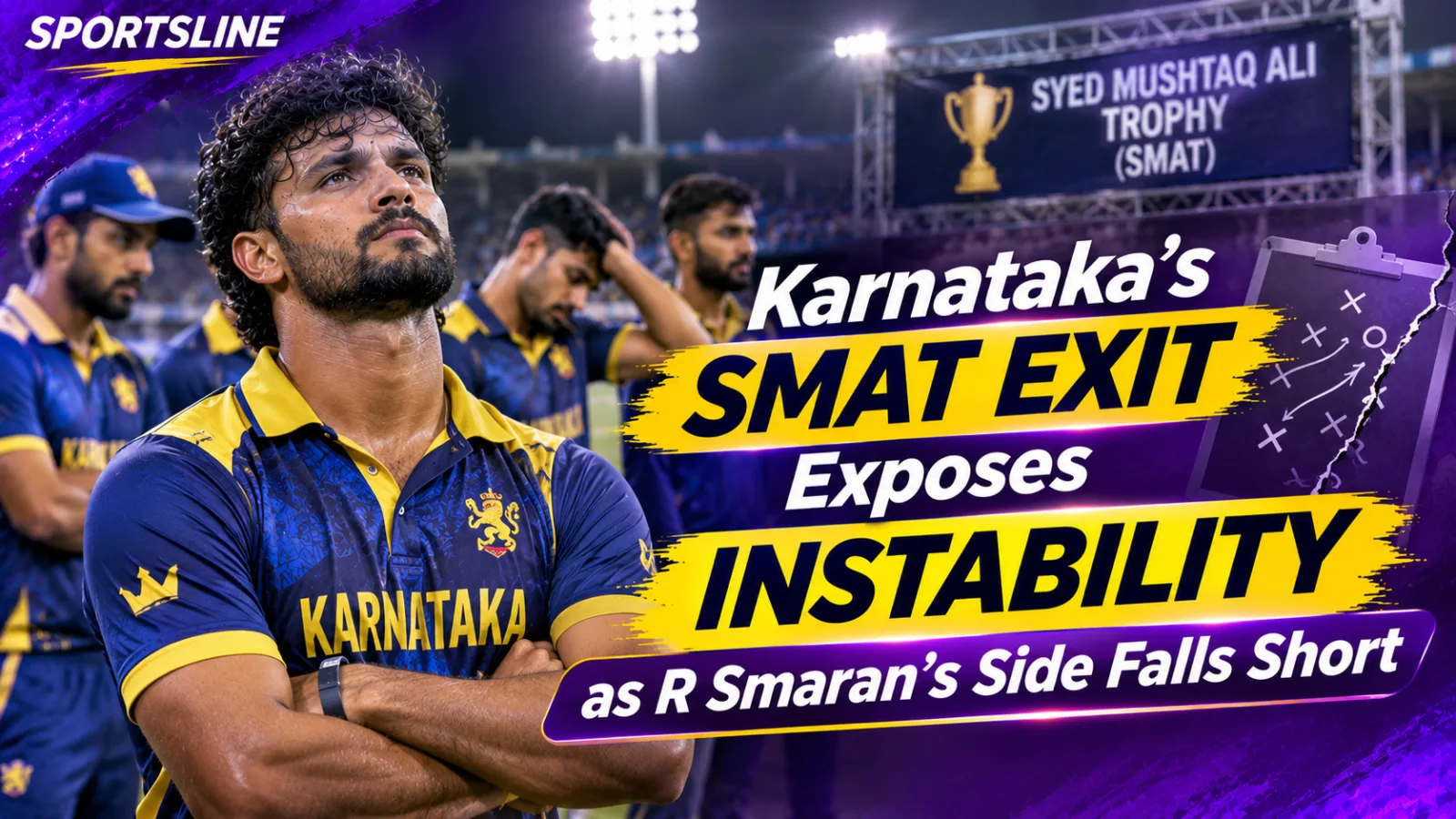
- Karnataka’s Syed Mushtaq Ali Trophy campaign has ended before the knockout stage, and a late victory over Rajasthan could not disguise a season marked by instability. R Smaran’s side beat Rajasthan by four wickets in Mumbai on Tuesday, November 24, but the result was not enough to keep their qualification hopes alive. Baroda had already secured the available qualification place from Elite Group A, leaving Karnataka’s final league result without a route into the next stage.
The early exit is particularly disappointing for a team with a strong domestic T20 pedigree. Karnataka have now failed to progress beyond the league phase for the fourth consecutive season in the competition. The campaign raises questions not only about results, but also about team selection, batting roles, bowling support and the balance between rebuilding and chasing immediate success.
A final win that came too late
Karnataka’s final match offered a brief positive note. Rajasthan were dismissed for 113 in 15.3 overs, and Karnataka reached 114/6 in 16 overs to complete a four-wicket win. It was a useful response after a difficult run, but the points could not change the larger Group A picture. Baroda had confirmed qualification, while the remaining qualification position was to be determined by the final league encounter involving Rajasthan and Bengal.
The win also highlighted the frustrating contrast within Karnataka’s campaign: the side could produce a result when required, yet had already lost control of its qualification prospects through earlier defeats. Their six-match league phase included three wins and three losses. They opened with a 19-run victory over Bengal, lost to Uttar Pradesh, beat Mizoram, then suffered defeats against Jharkhand and Chandigarh before closing against Rajasthan.
That sequence left little room for error. The defeat to Chandigarh was especially damaging, with Karnataka bowled out for 95 in 17.5 overs while chasing 96. A team that had begun the tournament with 184 against Bengal was unable to maintain a reliable scoring level across the group stage.
Frequent changes prevented a settled batting unit
One of the clearest features of Karnataka’s season was the scale of experimentation. The team used 16 players across six matches, while only Smaran, Manvanth Kumar and Pravin Dubey appeared in every fixture. Such turnover can be necessary when injuries, form or availability demand changes, but the repeated adjustments also made it difficult for the side to establish continuity and clear roles.
The batting order was a particular concern. Karnataka’s top-order combinations changed during the tournament, and the returns were modest. The side recorded only three half-centuries: Karun Nair scored two, while Smaran made the other. The recall of experienced batter Manish Pandey did not provide the expected lift, and the continued backing of Abhinav Manohar did not translate into the consistency Karnataka needed.
The comparison with the wider tournament was uncomfortable. Several batters across the competition scored at strike rates above 200, but among Karnataka’s top- and middle-order options, Luvnith Sisodia had the best strike rate at 154. Karnataka’s highest first-innings total was 184 against Bengal, while the collapse to 95 against Chandigarh exposed how quickly the batting could lose momentum.
Manvanth Kumar stood out in an underperforming attack
The bowling department also struggled to deliver sustained control. Karnataka tried 12 players with the ball during the campaign, but Manvanth Kumar was the standout performer. He contributed 91 runs and claimed 10 wickets, giving the team impact in both departments. Abhilash Shetty and Ritesh Bhatkal had encouraging moments, but the wider group did not provide consistent support.
The numbers point to a team that lacked a dependable core. Frequent changes may have been intended to identify the best combination, but the results suggest that Karnataka did not settle on a bowling unit capable of defending totals or applying pressure throughout an innings. In a short T20 league phase, that lack of rhythm can quickly become costly.
Vijay Hazare Trophy offers the next reset
Head coach R Vinay Kumar and the selectors now have a window to assess the decisions that shaped the campaign. The key task will be to distinguish between necessary experimentation and changes that disrupted the team’s balance. Karnataka need clarity around the top order, a more reliable middle-order contribution and a bowling group with defined roles.
The focus will now move to the Vijay Hazare Trophy, where the team can attempt a fresh start in the 50-over format. Smaran’s leadership and Manvanth Kumar’s all-round contribution provide positives to build on, while the experience of players such as Karun Nair and Manish Pandey remains valuable. But Karnataka will need more than individual performances: they need a settled combination and a clearer plan.
For a former champion, another league-stage exit is a warning that reputation cannot substitute for consistency. The victory over Rajasthan ended the T20 campaign on a winning note, but the larger verdict is clear: Karnataka have work to do before they can return to the business end of the Syed Mushtaq Ali Trophy.
Frequently asked questions
Did Karnataka qualify for the Syed Mushtaq Ali Trophy knockouts?
No. Karnataka’s campaign ended in the league phase despite a four-wicket win over Rajasthan on November 24. Baroda had already secured qualification from Elite Group A, so Karnataka’s final result could not revive their chances of progressing.
How did Karnataka finish their final match against Rajasthan?
Rajasthan were bowled out for 113 in 15.3 overs. Karnataka chased the target successfully, reaching 114/6 in 16 overs to win by four wickets. The victory provided a positive finish to the match but did not alter Karnataka’s elimination from the tournament.
Why was Karnataka’s SMAT campaign considered inconsistent?
Karnataka used 16 players across six matches, with only R Smaran, Manvanth Kumar and Pravin Dubey appearing in every game. The batting order changed repeatedly, the side managed only three half-centuries, and its totals ranged from 184 against Bengal to 95 against Chandigarh.
Who was Karnataka’s standout performer in the tournament?
Manvanth Kumar was Karnataka’s leading all-round contributor. He scored 91 runs and took 10 wickets during the campaign, making him the clearest positive in a season when the batting unit and the wider bowling group struggled to deliver consistently.
What is next for Karnataka after the SMAT exit?
Karnataka will turn their attention to the Vijay Hazare Trophy. Head coach R Vinay Kumar and the selectors have an opportunity to review team balance, settle batting roles and identify a more dependable bowling combination before the next domestic assignment.