
Key points
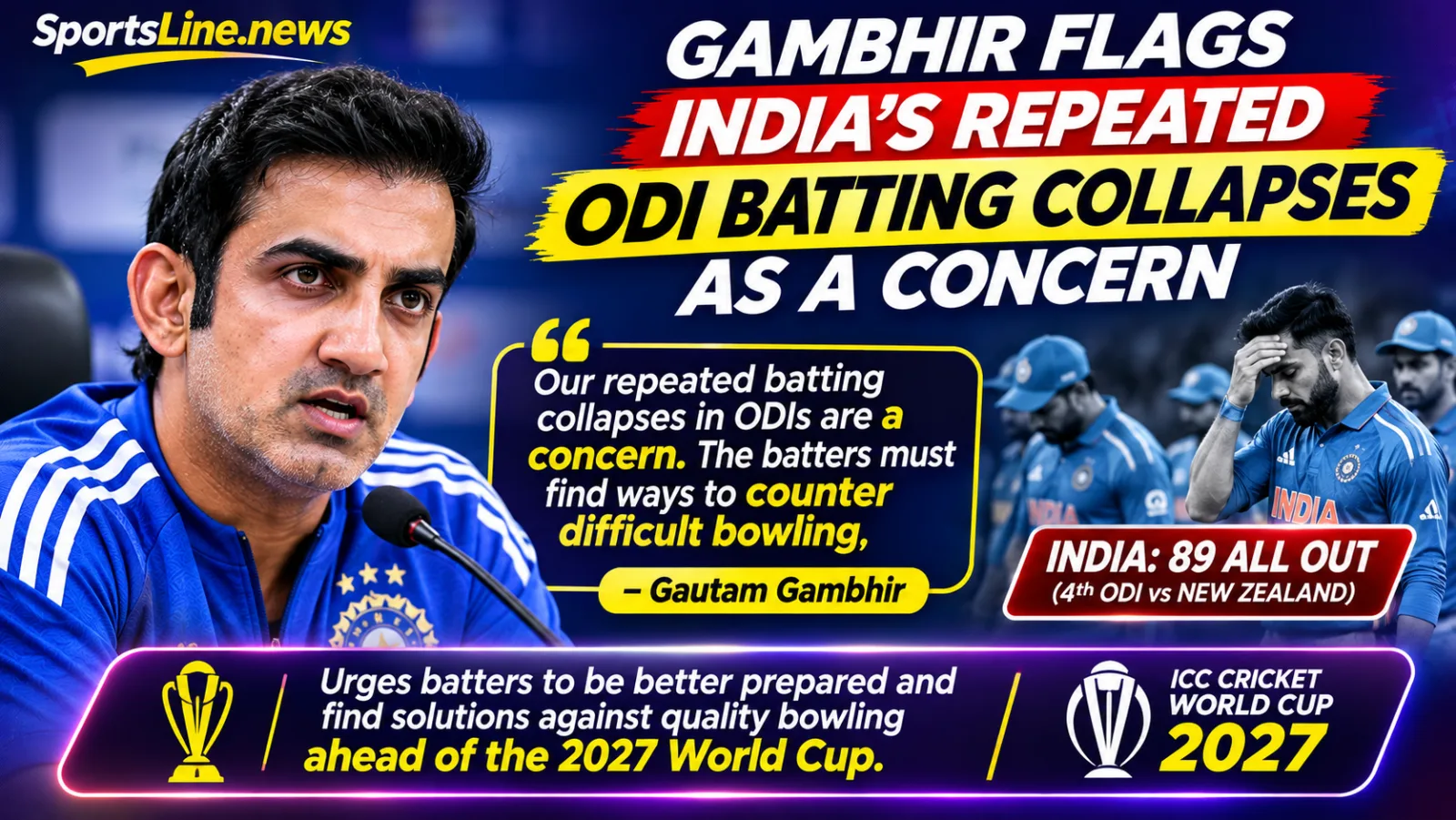
- India were bowled out for 89 in 26.4 overs while chasing New Zealand’s 334 in the fourth ODI at Mount Maunganui on November 13, 2026.
- New Zealand won the match by 244 runs, reducing India’s lead in the five-match series to 2-1.
- Matt Henry took 6 for 27 and dismissed Rohit Sharma, Virat Kohli and Shreyas Iyer for ducks in the opening over.
- Gautam Gambhir said there are no unplayable deliveries in international cricket and that India’s batters should find ways to negate good bowling.
- Gambhir described being dismissed for around 90 as a concern and pointed to the previous match, in which India had lost seven wickets.
- Gambhir said the conditions were similar to those India could encounter at the 2027 ODI World Cup in South Africa.
India head coach Gautam Gambhir has admitted that the team’s repeated batting collapses are becoming a concern after the visitors were bowled out for 89 in the fourth ODI against New Zealand at Mount Maunganui on November 13, 2026. India lost the match by 244 runs after failing to chase a target of 334, with the top order collapsing in the opening over.
Speaking after the defeat, Gambhir said international batters should not label deliveries unplayable. He acknowledged that New Zealand pacer Matt Henry had bowled in good areas, but insisted India needed to find a way to counter such spells. The coach also pointed to the previous match, when India had lost seven wickets, as evidence that the issue required attention.
Gambhir identifies a worrying pattern
India’s innings lasted just 26.4 overs. The collapse began immediately, with Henry removing Rohit Sharma, Virat Kohli and captain Shreyas Iyer for ducks in the first over. Kyle Jamieson then dismissed Ruturaj Gaikwad, leaving India at 9 for 4 and facing an enormous recovery task.
Gambhir’s concern was not limited to one difficult afternoon. He said that being bowled out for around 90 was always worrying and referred to India’s loss of seven wickets in the previous game. His comments underline the importance of turning starts into substantial contributions and avoiding clusters of dismissals that make a chase almost impossible.
The coach’s message was direct: even when the opposition bowls well, India’s batters must find methods to survive, rotate the strike and put pressure back on the bowling side. The challenge is to adapt rather than assume that a good delivery cannot be played.
Matt Henry’s opening burst leaves India reeling
Henry produced the decisive spell of the match. Rohit was caught at slip, Kohli was bowled and Iyer was trapped leg before wicket, all in the opening over. Henry finished with 6 for 27, while Matthew Fisher took three wickets as New Zealand completed the rout.
India’s innings briefly showed some resistance through Ishan Kishan and Axar Patel, who put together a 44-run fifth-wicket partnership. Axar made 21 and Kishan top-scored with 27, but Henry returned to dismiss Kishan and the lower order could not extend the recovery. India were dismissed for 89, narrowly avoiding their lowest ODI total against New Zealand of 88.
The result was India’s second-biggest defeat by runs in men’s ODI cricket, according to match reports. It also gave New Zealand a chance to keep the five-match series alive, cutting India’s lead to 2-1.
World Cup conditions add to the concern
Gambhir’s reference to the 2027 ODI World Cup gives the defeat a longer-term context. He said the conditions were close to what India could expect in South Africa, where the next men’s ODI World Cup is scheduled to be played. The team therefore has a reason to treat the problems exposed in New Zealand as preparation issues, not merely a one-match setback.
South African conditions can offer pace and bounce, and Gambhir’s comments focused on the need for batters to handle challenging lengths and movement. India’s response will involve more than technical adjustments: decision-making, partnerships and composure after early wickets will all matter.
The fourth ODI also followed a match in which India had lost seven wickets, according to Gambhir. That repeated pattern makes the next opportunity to bat an important test of how quickly the team can respond. The coach’s public assessment signals that the issue is being taken seriously within the camp.
New Zealand make India pay
Earlier, New Zealand had posted 333, built around Will Young’s 125 from 108 balls and Tim Seifert’s 58. The hosts were well placed to push beyond that total, but India’s bowlers pulled things back in the final 10 overs. The target nevertheless proved far beyond reach once Henry struck three times at the start of the chase.
For New Zealand, the victory was a major response after India had won the first two completed matches of the series. The third ODI had been washed out, leaving the fourth match as an opportunity for the home side to reduce the deficit.
India now have to address the batting issues Gambhir highlighted. The immediate lesson from Mount Maunganui is the need to withstand the new-ball challenge and build partnerships before the innings gets away from them. With the 2027 World Cup in view, the coach has made clear that repeated collapses cannot be treated as isolated failures.
Frequently asked questions
Why was Gautam Gambhir concerned after the fourth ODI against New Zealand?
Gambhir was concerned by India being bowled out for 89 while chasing 334, and by the repeated loss of wickets in recent matches. He said being dismissed for around 90 was worrying and noted that India had also lost seven wickets in the previous game.
What did Gautam Gambhir say about unplayable deliveries?
Gambhir said there are no unplayable deliveries in international cricket. While acknowledging that Matt Henry bowled in good areas, he said India’s batters needed to find a way to negate that challenge rather than treat difficult conditions as an excuse.
How many runs did India score in the fourth ODI against New Zealand?
India were bowled out for 89 in 26.4 overs while chasing New Zealand’s target of 334 at Bay Oval in Mount Maunganui on November 13, 2026. The defeat by 244 runs was one of the heaviest in India’s ODI history.
How did Matt Henry dismantle India’s top order?
Matt Henry took 6 for 27 and struck three times in the opening over of India’s chase. He dismissed Rohit Sharma, Virat Kohli and captain Shreyas Iyer, all for ducks, leaving India at 0 for 3 immediately.
Why did Gambhir compare the conditions to the 2027 ODI World Cup?
Gambhir said the conditions in New Zealand were close to what India could face at the 2027 ODI World Cup in South Africa. His concern was that the team needed to develop better responses to challenging bowling and conditions before that tournament.
What is the score in the India-New Zealand ODI series after the fourth match?
New Zealand’s 244-run victory in the fourth ODI reduced India’s lead in the five-match series to 2-1. The third match had been abandoned because of rain, and one match remained after the fourth game.