
How Young Athletes Can Build a Strong Sports Portfolio
By SportsLine Desk Published:
A practical guide for young athletes in India to document results, organise certificates, track progress, create a SportsLine Athlete Profile and present their sporting journey accurately to coaches, academies and opportunity providers.
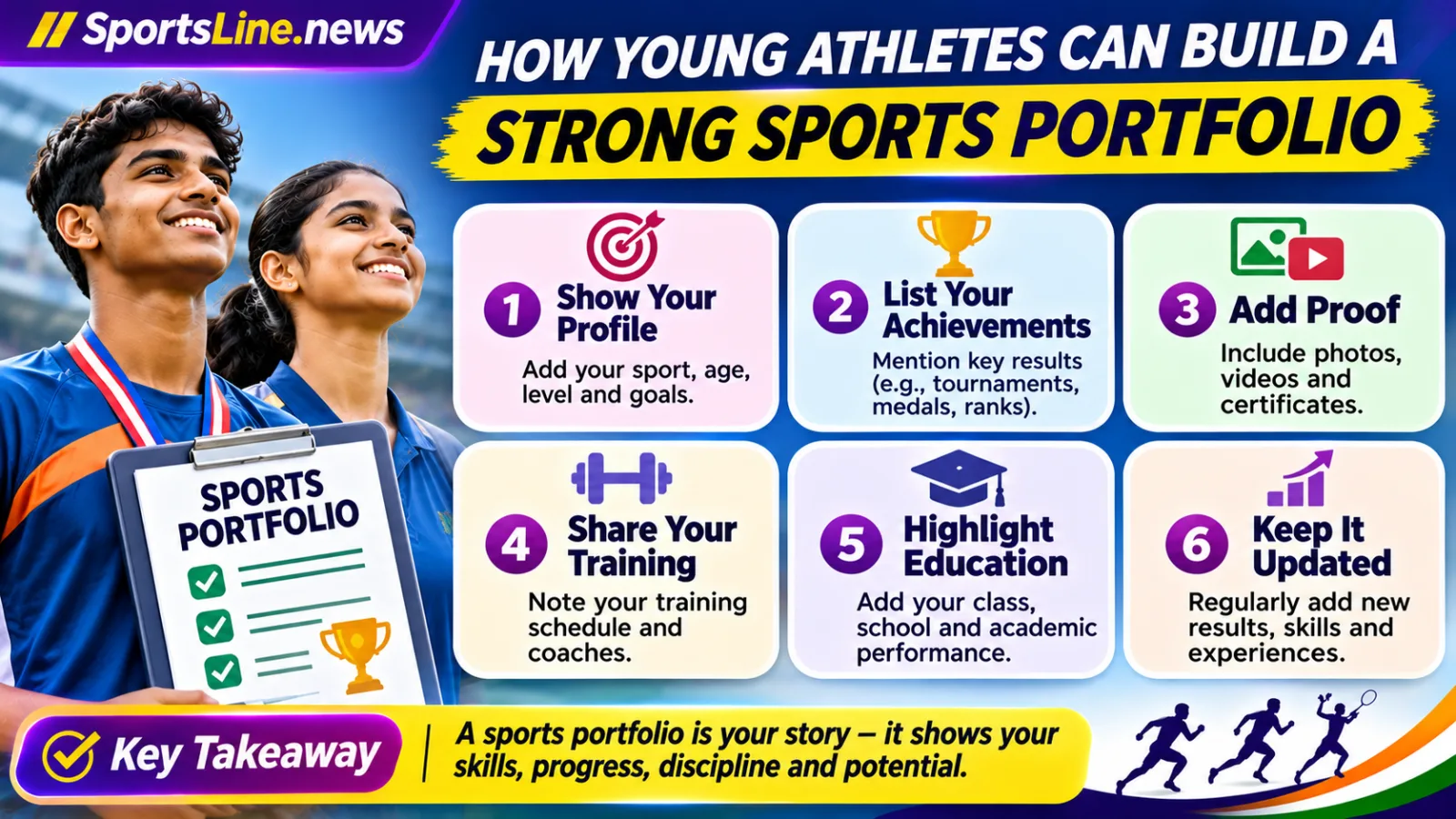
A strong sports portfolio helps young athletes show more than enthusiasm: it brings together their sporting background, competition results, development goals and evidence of achievement. It can help a coach, academy or opportunity organiser understand where an athlete is now and how they are progressing. A portfolio does not guarantee selection, a scholarship or sponsorship, but an accurate and well-organised record makes the athlete’s experience easier to assess.
1. Start with a clear athlete summary
Begin with the basics: full name as used in sporting records, main sport, event or playing position, age category where appropriate, city and state, current school or club if relevant, and coaching background. Add a short bio of three to five sentences describing how long you have trained, what you specialise in, what you are working towards and which competitions you have entered.
Keep the summary specific and truthful. Instead of saying “I am the best player,” describe a verifiable strength or goal, such as working to improve a personal best, competing in a district championship, or developing a particular position or technique. Avoid sharing private details that are not needed for a sporting profile, especially on a public page. Young athletes should involve a parent or guardian when deciding what personal information to publish.
2. Record results and progress consistently
Build a results log after every meaningful competition. Include the event name, organiser, date, age group or category, venue, result, and a link or document that supports the result when available. Individual athletes can record times, distances, scores, rankings or personal bests. Team-sport athletes can record the team and competition, their position, relevant statistics and the final result, while avoiding claims that cannot be verified.
Do not list only medals. Participation in recognised competitions, improvement over time, team responsibilities and milestones can also help explain an athlete’s development. Keep a simple progress tracker with a few goals for the next training block and review it with a qualified coach. For example, track a measurable performance target, a technical skill and a consistency goal. Compare results under similar conditions where possible, and do not treat every training measurement as an official competition result.
3. Organise certificates and supporting evidence
Save genuine certificates, selection letters, competition results and relevant recommendations in clearly labelled folders. Use filenames that make the contents easy to identify, such as the year, competition and document type. Keep an offline backup and a secure digital copy. If an organiser publishes official results online, preserve the link or a copy of the relevant record in line with its rules.
SportsLine’s Help Centre says athletes can add certificates and letters through the dashboard’s Certificates and Letters section. It describes uploading a photo or PDF, adding the title, issuer and year, and choosing whether the item should be displayed publicly. The Help Centre lists a 4 MB upload limit for these items. Check the current platform instructions before uploading, and never alter a certificate or submit a document belonging to someone else.
Not every document needs to be public. Review what information a certificate contains and use the available visibility settings. Do not publicly share sensitive identity, school, medical or contact details just to make a portfolio look complete.
4. Create and maintain a SportsLine Athlete Profile
An online athlete profile can make a portfolio easier to share than a collection of separate files. SportsLine’s athlete registration page is available at SportsLine Athlete Profile creation. Follow the current registration instructions and enter accurate details about your sport, experience, specialisations, bio, photograph and location. Review every field before submitting and follow any additional instructions shown by the platform.
SportsLine’s published guidance explains that athletes can request profile verification after completing their profile and providing the requested proof. Verification is subject to review and is not automatic. It should not be presented as a guarantee of sporting ability, selection, sponsorship or employment. Keep your profile current by adding new verified results and removing or correcting outdated information.
SportsLine also lists an opportunities page for trials, scholarships, sponsorships, jobs and competitions. Treat each listing as a lead to investigate: check the organiser, age and sport eligibility, location, deadline, costs and application process. A profile does not automatically enter an athlete into a trial or competition, so follow the official organiser’s instructions separately.
5. Make the portfolio useful for a specific goal
Tailor the order of information to the opportunity. For a selection trial, place relevant competition results, personal bests and eligibility details near the beginning. For an academy application, include training history, the coach’s contact details only with permission, and the skills relevant to the programme. For a scholarship or sponsor enquiry, explain the goal and the support needed clearly, and provide evidence for the results you mention.
Keep a short shareable version and a fuller evidence folder. A one-page summary may be enough for an initial introduction, while the longer folder can hold certificates, official result links and detailed statistics. Ask a coach or guardian to review the portfolio for clarity, accuracy and privacy before sending it to anyone.
6. Use a simple monthly portfolio routine
- Update the competition log after each event.
- Add new certificates and official result links.
- Review goals with a coach and note progress.
- Check that profile details, contact preferences and achievements are current.
- Remove duplicate, outdated or unverified claims.
- Confirm the legitimacy and deadline of any opportunity before applying or paying a fee.
A strong sports portfolio is built gradually. It should tell a clear story: what the athlete practises, what they have achieved, what evidence supports those achievements and what they hope to do next. Consistent updates and honest documentation are more valuable than inflated claims or a polished profile with little substance.
Sources
Frequently asked questions
What should a young athlete include in a sports portfolio?
Include a short athlete bio, main sport and event or position, training background, recognised competition results, personal bests or relevant statistics, genuine certificates, and clear development goals. Add dates and supporting links or documents where available. Keep private information out of public pages unless it is necessary and safe to share.
How can young athletes use SportsLine to build a portfolio?
Athletes can visit SportsLine’s athlete registration page, follow the current instructions, and provide accurate details about their sport, experience, specialisations, bio, photograph and location. SportsLine also describes certificate management and profile verification through its dashboard. Submission and verification do not guarantee selection or sponsorship.
Should a sports portfolio include certificates and medals?
Yes, where they are genuine and relevant. Record the competition name, year, result and issuing organisation, and keep the original certificate or an official result link. SportsLine’s Help Centre says athletes can add certificates and letters through the dashboard, with a title, issuer, year and a choice about public visibility.
Does a strong sports portfolio guarantee selection or sponsorship?
No. A portfolio helps present an athlete’s experience and supporting evidence, but selectors, academies, scholarship providers and sponsors apply their own criteria. Athletes still need to meet eligibility requirements, follow application instructions and demonstrate the performance or qualities required for each specific opportunity.
How often should young athletes update their sports portfolio?
Update the competition log after each event and add new certificates or official results when they become available. Review goals with a coach regularly and check the online profile monthly for outdated details. Before applying for an opportunity, confirm that the results, eligibility information and contact preferences are accurate.
Where can athletes find sports trials and other opportunities on SportsLine?
SportsLine has an opportunities page listing categories such as trials, scholarships, sponsorships, jobs and competitions. Athletes should check each listing’s organiser, eligibility, deadline, location, costs and application steps. Finding a listing does not automatically register an athlete, so complete any separate application required by the organiser.
Events in this post
Summer Youth Olympic Games
Event · Other · Dakar · 31 Oct 2026
The Youth Olympic Games (YOG) are an elite, international multi-sport event organized by the International Olympic Committee (IOC) for young athletes aged 15 to 18. Staged every four years in stagg...
View event →