
How to Find Sports Trials and Selection Opportunities in India
By SportsLine Desk Published:
A practical guide for athletes and parents in India to find genuine sports trials, verify selection notices, prepare documents and results, and follow official pathways through federations, schools, academies and SportsLine.
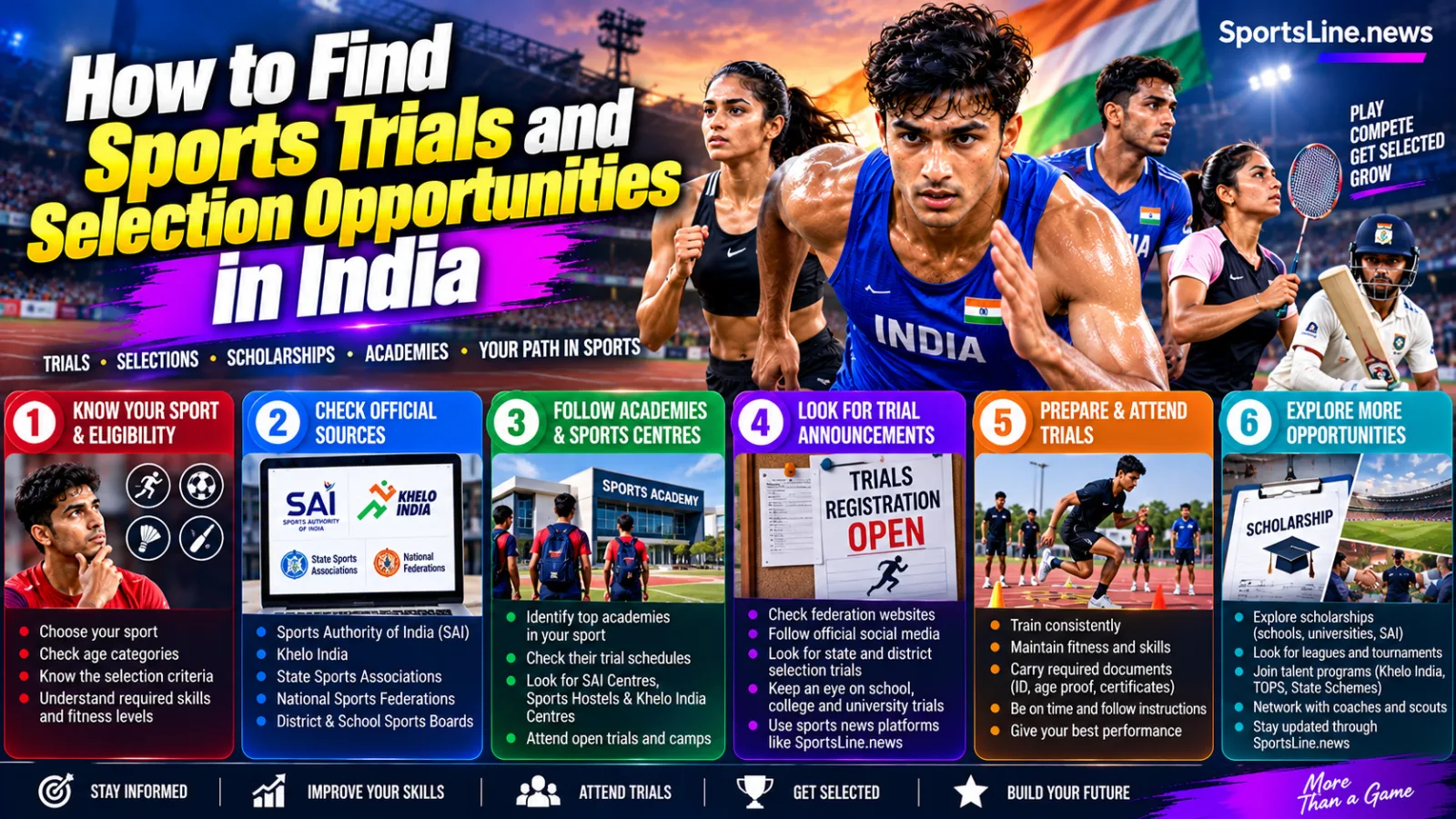
Finding a genuine sports trial in India starts with knowing which organisation runs the sport and what level of competition you are targeting. Trials may be announced by recognised sports federations, state associations, schools, universities, government programmes, clubs and academies. Each opportunity can have different age limits, qualifying standards, selection methods and deadlines, so athletes should verify the details before travelling, paying fees or sharing documents.
1. Start with the official organisation for your sport
Identify the national federation for your sport and the relevant state association. Check their official websites and verified social channels for trial notices, selection camps, ranking events and competition calendars. For school-level competitions, ask your school and the relevant School Games Federation of India (SGFI) unit about the current season’s process. College athletes can contact their university sports department for inter-university pathways.
The Sports Authority of India and Khelo India publish information about national sports programmes and athlete-development initiatives. These are useful places to learn about official pathways, but not every programme holds open trials, and registering on a website does not guarantee selection. Read the current notice for the specific sport, age group and event, and follow the instructions from the organisation responsible for selection.
Also ask a qualified coach, school sports teacher or recognised local association which events count toward the next level. A coach can help interpret eligibility and performance requirements, but confirm dates and application details directly with the organiser rather than relying only on forwarded messages.
2. Use SportsLine to discover opportunities
SportsLine provides an Opportunities page where athletes can look for trials, competitions, scholarships, sponsorships and other listings. Review the listing carefully, then verify it with the organiser’s official website or independently confirmed contact details. Listings can change, close or be updated, so do not assume an opportunity is still open merely because a page or social post remains online.
A SportsLine Athlete Profile can help you organise your sporting background, event or playing position, competition results and achievements. It may make your information easier to share, but it is not an official trial registration and does not guarantee that a selector will view the profile. If a trial is open, submit the required application through the organiser’s stated process as well.
3. Check the notice before applying
Before registering, look for the organiser’s full name, sport and event, eligible age category, gender or other eligibility criteria where applicable, location, trial date and reporting time, registration deadline, selection method, fees if any, equipment requirements and documents needed. Check whether the trial is open to individual applicants or whether nominations must come from a school, club, district association, state association or another authorised body.
Confirm what happens after the trial. Some selection processes may include multiple rounds, assessment camps, rankings, fitness tests or a later official announcement. Ask how results will be published and how applicants can contact the organiser with questions. Save the official notice and registration confirmation so you can refer back to the exact conditions.
4. Prepare a simple athlete application pack
Keep an updated athlete summary with your name as shown on official records, sport, event or position, age category, school or club, coaching background, competition history and verified results. Add official certificates, rankings, personal bests or match statistics where relevant. Do not exaggerate achievements, edit certificates or list unofficial results as recognised qualifications.
The organiser may request proof of age or identity, school or college details, photographs, medical forms, registration receipts, certificates or a recommendation. Requirements vary, so use the current notice as the final checklist. Keep digital copies in a secure folder, carry originals only when requested, and involve a parent or guardian if you are under 18. Avoid sending sensitive identity or financial information to an unverified contact.
Prepare for the actual demands of the sport. Ask your coach to review the relevant skills, fitness, tactics and competition rules. Plan travel early, arrive at the stated time, bring required equipment and follow officials’ instructions. Do not attempt sudden extreme training immediately before a trial; preparation should fit your existing training plan and allow for recovery.
5. Recognise warning signs and avoid scams
Be cautious of messages promising guaranteed selection, national-team entry or scholarships in return for an unexplained upfront payment. Verify the trial through the official federation, state association, institution or academy using contact details found independently. Check whether any fee is clearly stated in the official notice, who receives it and what it covers. Do not rely solely on screenshots, personal messaging accounts or logos that can be copied.
Ask for written terms and keep receipts if an official fee applies. If a notice uses vague details, a suspicious payment method or pressure to pay immediately, pause and verify before proceeding. Never hand over original certificates or identity documents to an unknown intermediary without a clear, legitimate requirement.
6. Keep a trial calendar and learn from each attempt
- Record the trial name, organiser, sport, eligibility rules, location, deadline and official link.
- Mark registration and travel dates in a calendar.
- Track which documents have been prepared and submitted.
- After the trial, record the outcome and any feedback offered.
- Ask your coach to identify skills or results to improve before the next opportunity.
- Not being selected at one trial does not mean you have run out of options. Review the criteria, seek constructive feedback where available, continue competing in recognised events and watch for the next official notice. The aim is to find opportunities that match your current age, level and sport, then apply through a verified process with accurate information.
Frequently asked questions
Where can I find sports trials in India?
Check the official website of your sport’s national federation and state association, along with your school or university sports department where relevant. The Sports Authority of India and Khelo India publish information about national sports programmes. SportsLine’s Opportunities page can also help you discover listings, but confirm each opportunity with its organiser.
Can I register for a trial through SportsLine?
SportsLine provides an Opportunities page and an Athlete Profile registration page that can help athletes discover listings and organise sporting information. These pages do not automatically register you for every trial. Read the opportunity details and complete the application through the official organiser’s stated process, meeting its eligibility requirements and deadline.
What should I check before applying for a sports trial?
Verify the organiser, sport, age category, eligibility criteria, venue, date, reporting time, deadline, selection method, fees and required documents. Confirm whether individual applications are accepted or nominations are needed from a school, club or association. Use the current official notice as the final source of requirements.
What documents are commonly needed for sports selection trials?
Depending on the organiser, applicants may need proof of age or identity, school or college details, photographs, medical forms, registration confirmation, competition certificates and verified results. Requirements differ by trial, so prepare documents according to the official notice and avoid sending sensitive information to unverified contacts.
Are sports trials that charge a fee genuine?
A fee alone does not establish whether a trial is genuine. Check whether the fee and its purpose are clearly stated in an official notice, verify the organiser independently and use only confirmed payment instructions. Be cautious of unexplained upfront payments or promises of guaranteed selection, and keep receipts for any legitimate fee.
What should I do if I am not selected at a trial?
Review the published selection criteria and ask for constructive feedback if the organiser offers it. Discuss your performance with your coach, identify skills or results to improve, continue competing in recognised events and track upcoming official notices. One unsuccessful trial does not prevent you from applying for other eligible opportunities.
Events in this post
20th National Inter District Junior Athletics Meet (NIDJAM) 2026
Event · Other · Hyderabad · 14 Nov 2026
The National Inter District Junior Athletics Meet (NIDJAM) is a premier grassroots talent identification program. Organised by the Athletics Federation of India (AFI) in collaboration with host sta...
View event →