
How to Build a Successful Career in Sports Beyond Playing
By SportsLine Desk Published:
Explore career paths beyond competing in India, from coaching and sports science to officiating, journalism, event management, analytics and administration, with practical steps to build skills and experience.
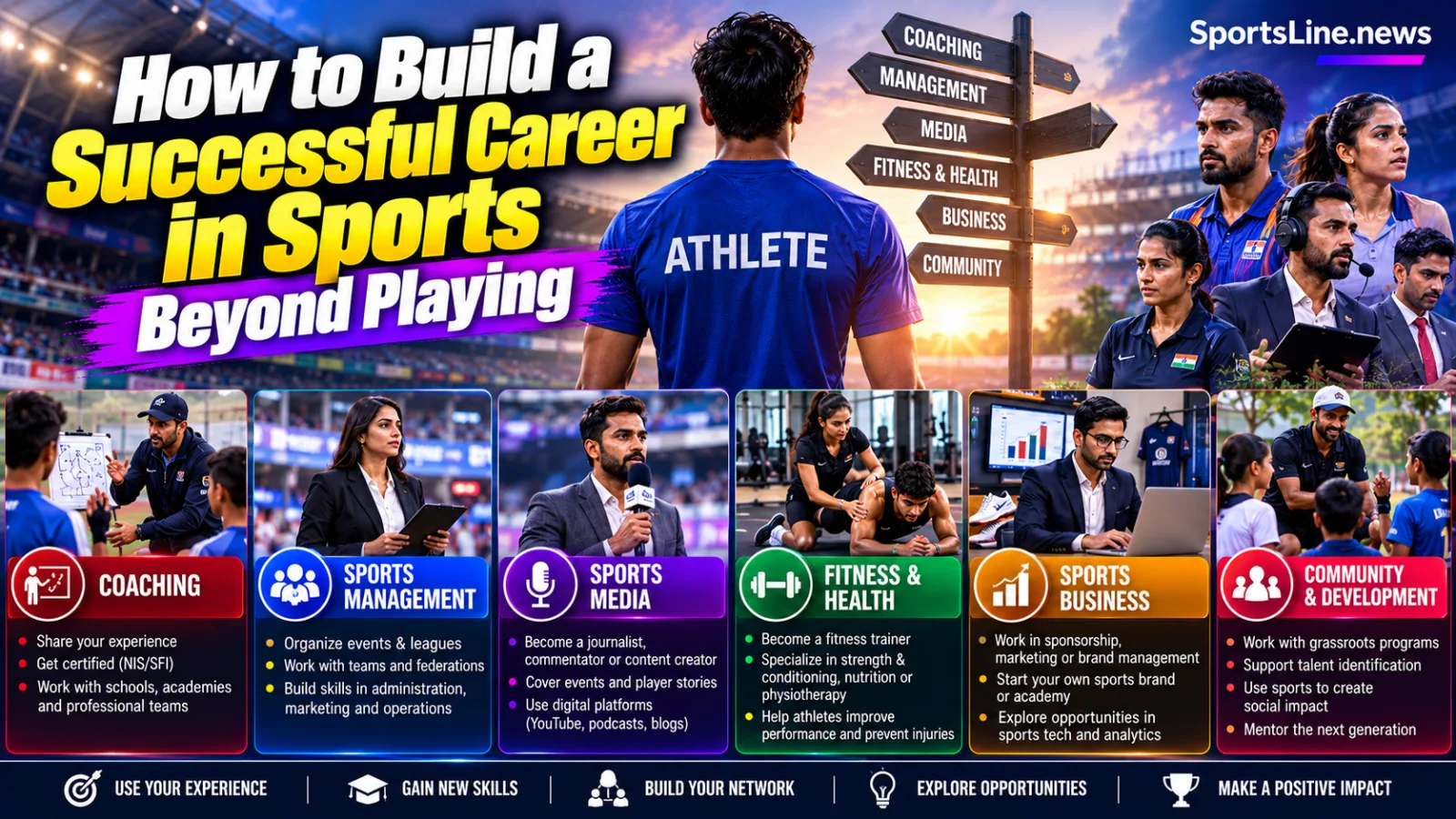
A career in sport does not have to end when an athlete stops competing—or require someone to become a professional player in the first place. Sport depends on coaches, officials, physiotherapists, strength and conditioning professionals, analysts, event organisers, journalists, administrators and many other specialists. The best route depends on your interests, education, practical experience and the requirements of the role you want to pursue.
1. Explore the many jobs behind sport
Coaching and athlete development: Coaches teach technique, plan practice and help athletes develop. Entry routes vary by sport and level; recognised coaching qualifications, practical experience and federation or employer requirements may apply. Assistant coaching, volunteering with a local club or helping at school competitions can help you learn what the work involves.
Sports science and athlete support: Roles can include physiotherapy, sports medicine, strength and conditioning, nutrition, psychology and performance support. These professions have different education, registration and scope-of-practice requirements. For example, clinical healthcare roles require the relevant professional qualifications and registration where applicable. Do not present yourself as a clinician or provide treatment beyond your training.
Officiating and technical roles: Referees, umpires, judges, technical officials and competition administrators help events run according to the rules. Start by checking the governing body for your sport for rules courses, official development programmes and assessment requirements. Accuracy, impartiality, communication and the ability to make decisions under pressure are important parts of this work.
Media, content and communications: Sports journalism, photography, video production, social media, commentary, public relations and team communications help audiences understand sport. Build a portfolio of original work, learn to verify results and quotes, and practise clear storytelling. Follow copyright, privacy and safeguarding rules when working with athletes, especially minors.
Business, events and administration: Clubs, leagues, academies, venues, federations and event companies need people for operations, sponsorship, marketing, ticketing, logistics, finance, partnerships and athlete services. Internships and volunteer roles at legitimate events can provide practical experience. Learn how budgets, schedules, contracts, safety plans and stakeholder communication work.
Performance analysis and technology: Analysts and data specialists help teams interpret statistics, video and performance trends. Useful foundations can include spreadsheets, statistics, video analysis, data visualisation and sport-specific knowledge. Create sample analyses using lawful data and explain what the numbers do—and do not—show.
2. Match a career to your strengths and interests
Think about the tasks you enjoy, not just the job title. If you like teaching and building relationships, investigate coaching. If you enjoy evidence, numbers and patterns, explore analysis. If you prefer organising people and solving logistical problems, consider event operations. If you enjoy explaining a story, media or communications may fit. These are starting points, not fixed rules: many roles combine several skill sets.
Read job descriptions from sports organisations and note recurring requirements. Compare those requirements with your current education, communication skills, technical knowledge and experience. Speak to people working in the field, ask what a normal working week looks like and learn which qualifications employers actually require. Be wary of courses that promise guaranteed jobs without clear accreditation, practical learning or transparent outcomes.
3. Choose the right education and qualifications
There is no single degree for every sports career. Coaching and officiating may have sport-specific certification pathways; physiotherapy and other regulated health professions require formal qualifications; journalism and communications roles may value writing and reporting samples; and analytics roles may require statistics, computing or data skills. Event and business roles can draw on sports management, business, operations or related experience. Check the current requirements of employers and relevant governing or professional bodies before enrolling in a course.
In India, the Sports Authority of India provides information about sports development and training institutions, while the Ministry of Youth Affairs and Sports publishes information about the sports sector and relevant organisations. Use official institution and professional-body pages to verify course recognition, eligibility, fees and application dates. A short course can be useful for a specific skill, but it does not replace a legally required qualification or licence.
4. Gain experience before you graduate
Practical experience helps you test whether a role suits you and gives employers evidence of your skills. Look for supervised volunteering, internships, club responsibilities, school or college tournaments, local leagues, community sports programmes or entry-level work with recognised organisations. Agree on your responsibilities, working hours, supervision and any expenses before starting. For roles involving children or sensitive information, follow safeguarding and background-check requirements.
Build a portfolio that matches the career. A future coach might document session plans and experience under supervision; a journalist can publish original match reports and interviews with permission; an analyst can show a short, carefully explained performance report; an event candidate can describe the logistics they helped coordinate. Protect confidential information and obtain permission before sharing photographs, athlete data or work created for an employer.
5. Develop transferable skills and professional connections
Clear communication, teamwork, reliability, problem-solving, ethical judgement and time management matter across many sports roles. Learn to write professional emails, prepare a concise CV and explain what you contributed to a project. Keep records of relevant courses, supervised experience, responsibilities and outcomes. Do not inflate job titles or claim results that you cannot substantiate.
Networking can begin locally. Attend legitimate competitions, workshops and career events, ask informed questions and follow up politely. Connect with coaches, officials, alumni and sports professionals through appropriate channels. A useful conversation is often about how the person entered the field, which skills they use every week and what a beginner should learn next—not simply asking them for a job.
6. Create a 90-day action plan
- Days 1–30: Choose two career paths to explore, review real job descriptions and speak with at least one person in each field if possible.
- Days 31–60: Identify required qualifications, start a relevant skill course if appropriate, and apply for supervised volunteering or internship opportunities.
- Days 61–90: Complete one small portfolio project, update your CV and request feedback from a teacher, mentor or professional.
A sustainable career in sport is built through informed choices, relevant qualifications, ethical practice and experience over time. You do not need to settle on a lifelong job immediately. Start with a role that matches your interests, verify the requirements and keep learning as the sports sector and your own goals evolve.
Frequently asked questions
What careers can I pursue in sports without becoming a player?
Sports offers roles in coaching, officiating, physiotherapy and other athlete-support professions, journalism, photography, communications, event management, administration, sponsorship, marketing and performance analysis. The best fit depends on your interests, skills and the requirements of the role. Some careers need formal professional qualifications, while others may value practical experience and a strong portfolio.
Which qualifications are needed for a career in sports in India?
Requirements depend on the job. Coaches and officials may need sport-specific certifications, clinical healthcare roles require the relevant professional qualifications and registration where applicable, and analytics or media roles may need technical skills or a work portfolio. Check current employer, federation and professional-body requirements before paying for a course.
How can students gain experience in the sports industry?
Students can look for supervised volunteering, internships, club responsibilities, college tournaments, community sports programmes and entry-level roles with legitimate organisations. Choose work that matches the career you want to explore, clarify responsibilities and supervision, and follow safeguarding rules. Keep a record of your contributions and ask for feedback.
Is a sports management degree necessary to work in sports?
Not every sports job requires a sports management degree. Some roles need specialist qualifications, while others value education in business, communications, data, operations or a related field combined with relevant experience. Read job descriptions and verify the requirements for your target role before deciding which course or qualification to pursue.
How can I build a portfolio for a sports career?
Build samples that demonstrate the skills needed for your chosen role. Examples include original match reports for journalism, supervised session plans for coaching, a clear data analysis for performance analysis, or an event report describing your responsibilities. Obtain permission before sharing confidential information, athlete data or photographs, and be accurate about your contribution.
Where can I find official information about sports careers and training in India?
Start with the Sports Authority of India, the Ministry of Youth Affairs and Sports, the relevant sports federation and recognised educational or professional institutions. Check official pages for current courses, eligibility, qualifications and deadlines. Requirements vary across professions, so confirm that a course or certificate is recognised for the work you intend to do.
Events in this post
20th National Inter District Junior Athletics Meet (NIDJAM) 2026
Event · Other · Hyderabad · 14 Nov 2026
The National Inter District Junior Athletics Meet (NIDJAM) is a premier grassroots talent identification program. Organised by the Athletics Federation of India (AFI) in collaboration with host sta...
View event →