
How to Start a Sports Career in India After School
By SportsLine Desk Published:
Finished school and want to work in sports? Explore athlete pathways, coaching and sports-science courses, officiating, sports management and practical steps to choose training, build experience and verify opportunities in India.
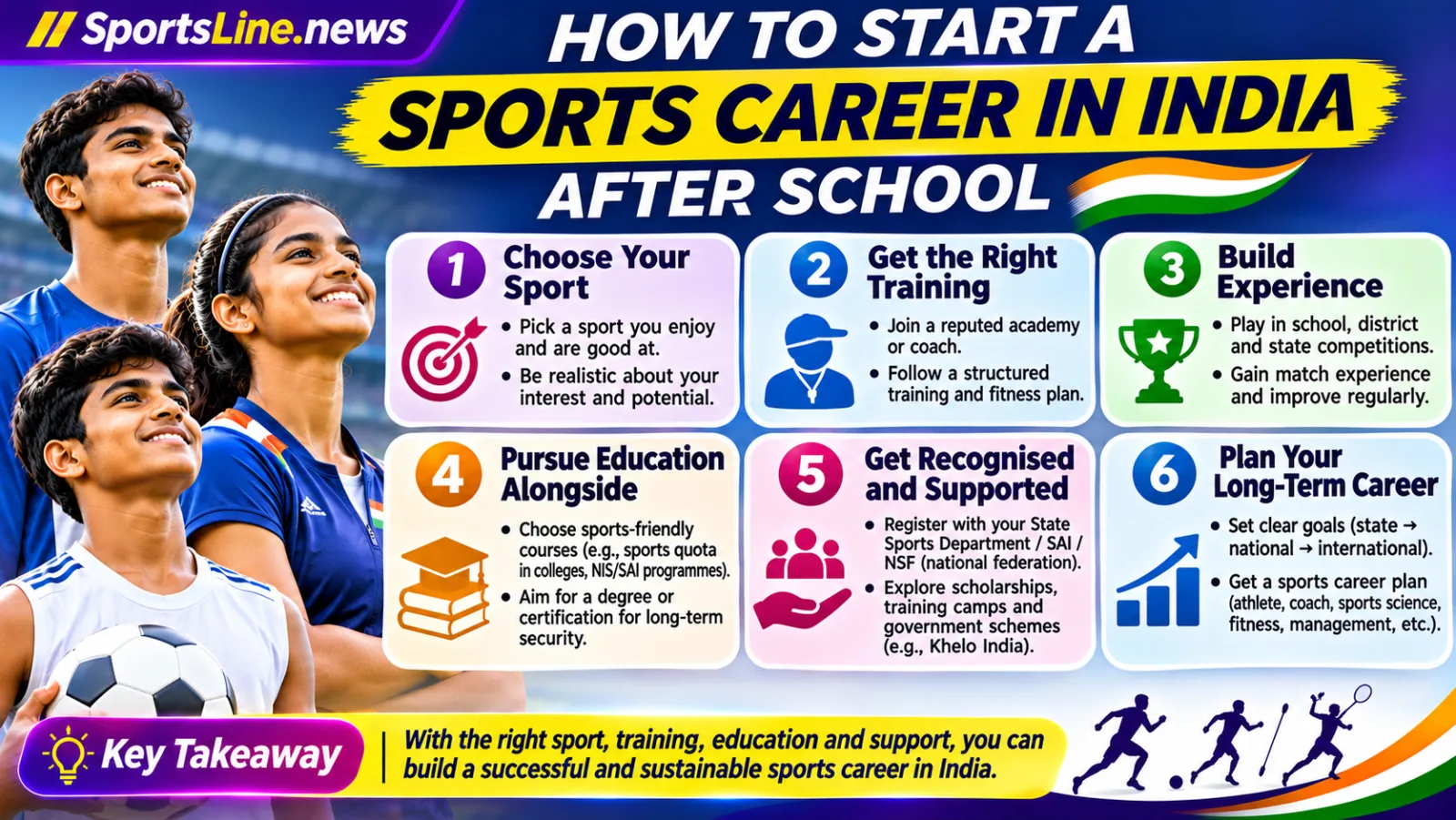
Finishing school can be the start of a sports career, whether your goal is to compete, coach, officiate, work in sports science or help organise sporting events. There is no single route into the industry: the right choice depends on your interests, current ability, education plans, budget and access to recognised training.
Start by separating two goals: becoming a competitive athlete and building a career in the wider sports sector. They can overlap, but they often require different qualifications, selection processes and timelines. You do not have to give up education to take sport seriously; a realistic plan can make room for training while keeping future options open.
Step 1: Decide which kind of sports career you want
If you want to compete, choose a sport and identify the level you are currently playing at. Ask a qualified coach to assess your technique, fitness and competition readiness. Then map the next steps: local events, district or state competitions, recognised trials and, where applicable, federation selection. Requirements differ by sport and age group, so check the current rules with the relevant state association or national federation.
If you enjoy sport but do not want to rely on competition results for your livelihood, consider other roles. These can include coaching, physical education, sports management, event operations, officiating, sports journalism, strength and conditioning, sports science, physiotherapy or sports data work. Each route has its own educational, practical and professional requirements.
Step 2: Build a training or education plan
For an athlete pathway, find a suitable coach and training venue, and set measurable goals. Keep a record of competition results, personal bests, training attendance and coach feedback. Make sure your programme includes recovery and injury prevention. Be wary of anyone promising guaranteed selection, government jobs, medals or professional contracts in return for large payments.
For an academic route, compare courses carefully. Physical education, sports management, sports science and allied health programmes can lead to different types of work. Check admission eligibility, recognised accreditation where applicable, practical placements, faculty experience, course costs and what graduates actually do. For physiotherapy or other regulated professions, verify the applicable professional registration and qualification requirements before enrolling.
Short courses can help you explore a field, but they do not automatically replace a required degree, recognised certification or supervised experience. Before paying for a coaching or fitness qualification, check whether employers, sports bodies or the relevant federation recognise it for the role you want.
Step 3: Explore official athlete-development opportunities
India’s Khelo India programme supports sports development and talent-identification pathways. Its official materials describe a progression from grassroots participation toward higher performance levels. Opportunities depend on the sport, current programme and selection criteria; participation alone does not guarantee athlete status, funding or admission to a training centre.
The Sports Authority of India operates Training Centres and National Centres of Excellence for selected athletes. SAI programme pages describe coaching and training support, and some schemes may provide facilities or other assistance to selected trainees. Check the current official notice for age limits, sports covered, trial dates, documents, selection procedures and the support actually offered.
Also check state sports departments, recognised academies, school and university teams, and the official calendar of the relevant state association or national federation. Apply through published channels and verify any trial notice directly with the organiser. Avoid relying solely on social media forwards or intermediaries who claim they can guarantee selection.
Step 4: Get practical experience early
Experience matters in many sports careers. If you want to coach, assist at a recognised club or academy under supervision and learn how sessions are planned, athletes are assessed and safety is managed. If you are interested in event operations, volunteer at school, college or community competitions and learn registration, scheduling, venue logistics and participant communication.
A future official can investigate the relevant sport’s referee or umpire pathway and complete the required training and assessments. Someone interested in journalism can practise match reports, interviews and score verification. For sports science or management, look for supervised projects, internships or placements that are appropriate to your qualifications and age.
Keep evidence of your work: certificates, verified results, sample writing, event responsibilities, references and project summaries. Do not publish private information about athletes or use photos and videos without permission. A concise portfolio makes your skills easier for a coach, employer or course provider to assess.
Step 5: Plan finances and protect your options
Make a budget for tuition or coaching fees, equipment, travel, accommodation, competition entry and medical care. Ask providers for written fee details and refund terms. Investigate legitimate scholarships, state support, university sports opportunities and athlete-development schemes, but treat funding as conditional until you have received official confirmation.
If you are pursuing high-performance sport, discuss a dual-career plan with your family, school or college and coach. A flexible study schedule can help you manage training camps and competitions. If your main goal is employment in sport, compare likely entry-level roles and the experience they require rather than choosing a course based only on its title or marketing.
Do not use unverified supplements or performance-enhancing substances to accelerate progress. Athletes should understand anti-doping rules relevant to their sport and seek qualified medical advice about medicines or supplements. For injuries or persistent pain, consult an appropriate healthcare professional rather than attempting to train through it.
Step 6: Turn your next 90 days into a plan
- Weeks 1–2: Decide whether your priority is competition, coaching, officiating, sports education or another role. Write down your current experience and constraints.
- Weeks 3–4: Speak with a qualified coach, course adviser or professional working in the field. Check official requirements and shortlist realistic options.
- Month 2: Attend a trial or introductory session, visit course providers, volunteer at an event or begin an appropriate recognised course.
- Month 3: Review costs, progress and feedback. Set the next milestone, such as entering a competition, completing an application or building a small portfolio.
This plan is a starting framework, not a guarantee of selection or employment. Keep checking official sources for changing application windows, course requirements and competition calendars. Useful starting points include Khelo India and the Sports Authority of India, alongside the official federation or state sports body for your chosen sport.
Choose progress over promises
A sports career after school is built through a series of practical decisions: choosing a direction, finding credible training, gaining experience, measuring progress and adjusting when circumstances change. Whether you aim to compete professionally or work behind the scenes, verify qualifications and opportunities before spending money, seek advice from people with relevant experience, and keep a plan that protects both your development and your future choices.
Sources
Frequently asked questions
Can I start a sports career in India immediately after Class 12?
Yes. After school, you can explore competitive sport, coaching pathways, officiating, physical education, sports management, sports science and event work. The route depends on your current experience and the qualifications required for the role. Check course eligibility and sport-specific selection rules with official providers before making a commitment.
How can I join Khelo India after school?
Khelo India supports sports development and talent-identification pathways, but entry depends on the programme, sport and current selection criteria. Check the official Khelo India website and relevant notices for eligible age groups, trial details, documents and dates. Participation does not automatically guarantee selection, funding or admission to a training centre.
What careers in sports are available besides becoming an athlete?
Sports-related career options can include coaching, officiating, physical education, sports management, event operations, sports journalism, strength and conditioning, sports science, physiotherapy and sports data work. These roles have different education, certification and experience requirements, so investigate the route for the specific job you want.
How do I choose a sports course or academy?
Compare admission requirements, total costs, qualifications, practical experience, coaching quality, facilities and recognition by relevant employers or sports bodies. Ask for written fee details and verify claims directly with the provider. Be cautious of any academy or agent promising guaranteed selection, medals, jobs or professional contracts in exchange for payment.
Can I study while training to become an athlete?
A dual-career plan can help you continue education while pursuing sport. Discuss training schedules, competition travel and study flexibility with your family, school or college and coach. Keep track of costs and recovery needs, and investigate scholarships or official athlete-support schemes without assuming that financial assistance is guaranteed.