
How to Balance Education and Sports Training
By SportsLine Desk Published:
A practical guide for student-athletes in India to plan study and training, communicate with teachers and coaches, protect sleep and recovery, and prepare for exams and competitions without sacrificing long-term development.
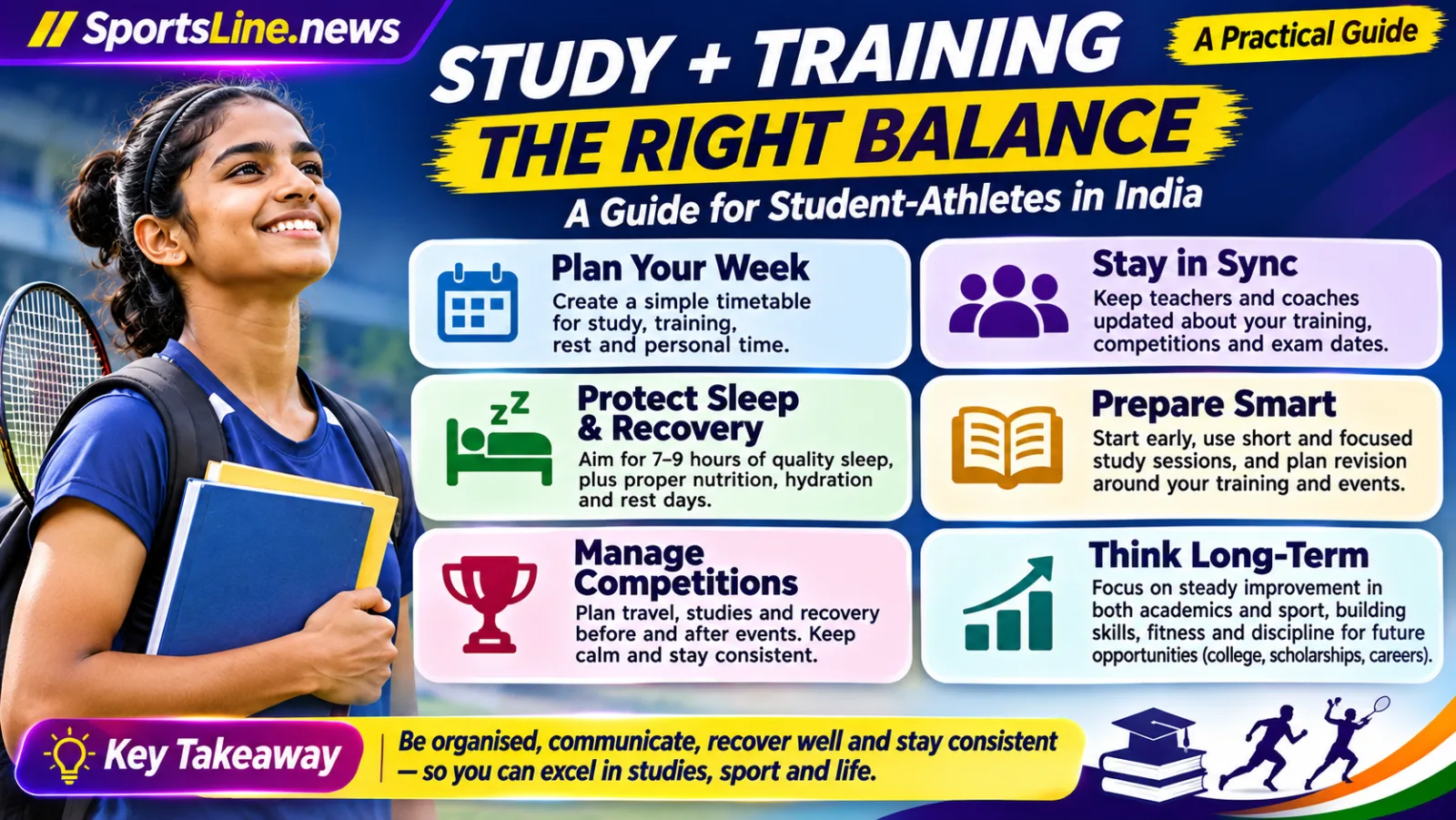
Student-athletes often have to manage classes, homework, travel, practice, competitions and family responsibilities in the same week. Balancing education and sports does not mean giving every activity equal time every day. It means planning around the most important commitments, communicating early when schedules clash, and protecting enough time for learning, training, sleep and recovery.
1. Build a realistic weekly schedule
Start by writing down fixed commitments: school or college hours, travel, coaching sessions, upcoming tests, assignment deadlines and competition dates. Add study blocks and training sessions around these commitments, then leave some buffer time for delays, extra homework or recovery. A schedule that assumes every day will go perfectly is likely to break down.
Use a calendar or notebook to mark the week’s top priorities. Break large assignments into smaller tasks, such as reviewing one chapter, completing a set of questions or drafting a project section. Short, focused study blocks can be easier to fit around practice than waiting for a single long period. Choose the length of each block based on the task and your concentration rather than forcing the same routine every day.
Coordinate with your coach about training times and competition travel, and ask teachers about major academic deadlines as early as possible. When a tournament overlaps with a test or practical, discuss options in advance rather than waiting until the last moment. Any changes to school requirements or competition arrangements should be confirmed with the responsible institution.
2. Study with a plan, not just longer hours
Identify the subjects and topics that need the most attention. After class, review key ideas while they are still familiar, and use practice questions, self-testing and spaced review to check what you remember. Keep your phone and other distractions away during a focused study session. At the end, note the next task so it is easier to restart later.
Use lighter training days or travel periods for manageable academic tasks such as reviewing flashcards or reading notes, if conditions allow. Do not rely on every journey or rest period for serious study: transport can be tiring, and athletes also need genuine downtime. Ask classmates for notes when you miss lessons for authorised competition travel, and arrange a clear plan to catch up on missed work.
Before examinations, look at the calendar with your coach and agree on a realistic training plan. You may need to adjust the volume or timing of sessions temporarily, but avoid making major changes without discussing them with the coach. After exams, return to the normal plan gradually as appropriate. The aim is to manage both commitments, not to treat one as an enemy of the other.
3. Protect sleep, food and recovery
A timetable is not sustainable if it removes sleep or leaves no time to recover. Keep a consistent sleep routine as far as school, travel and training allow, and speak with a healthcare professional if ongoing fatigue or sleep problems affect daily life. Young athletes should not use repeated late-night study sessions as their normal strategy for keeping up.
Plan regular meals and snacks around the day so that school and training do not leave you without time to eat. Carry water and any food you know suits you during long days or travel. Nutrition needs differ by age, sport, training load and health, so seek advice from a qualified professional for individual plans rather than following restrictive diets or unverified supplements.
Recovery is part of training, not a reward that must be earned after every task is complete. Tell a parent or guardian and your coach if you are persistently exhausted, struggling to concentrate, unusually sore or losing motivation. A responsible plan may require adjusting training, school workload or both. Pain, illness and persistent fatigue should not be ignored in order to keep a schedule intact.
4. Communicate with teachers, coaches and family
Share competition calendars, exam dates and travel plans with the people who can help you coordinate them. A teacher may be able to explain what work needs to be completed before an absence, while a coach can help prioritise sessions around major academic deadlines. Parents or guardians can support transport, meals, paperwork and realistic routines, especially for younger athletes.
Be specific when asking for help. Instead of saying “I have too much to do,” explain the deadline, competition date and the conflict you need to solve. Agree on the next step and when you will check back. Keep messages and arrangements clear, and follow the school’s or college’s official process for leave, missed assessments or attendance requirements.
5. Prepare for exams and competitions in advance
Use a simple countdown plan for major dates. Two or three weeks before an examination or important event, list the tasks that must be finished and spread them across the available days. Complete essential assignments early when possible, pack competition equipment and documents in advance, and check travel arrangements. Last-minute preparation can create stress that affects both learning and performance.
After a competition, set aside time to recover and review what happened. Record useful lessons, such as a skill to improve or a training target, but avoid turning every result into a judgement about your worth. Then look ahead to the next academic deadline and training block. Small reviews help the schedule reflect real progress instead of becoming a rigid plan that no longer fits.
6. Review the balance every week
- Check the next week’s classes, assignments, exams, practices and competitions.
- Choose the three most important academic tasks and the key training priorities.
- Schedule focused study, meals, sleep, travel and recovery time.
- Tell your teacher or coach early about unavoidable clashes.
- At week’s end, note what worked and adjust the next schedule.
There will be busy weeks when the balance feels imperfect. The useful question is not whether every day was ideal, but whether you responded early, kept communication open and avoided repeatedly sacrificing essential learning or recovery. With a flexible plan and support from adults and coaches, student-athletes can work toward sporting goals while continuing their education.
Sources
Frequently asked questions
How can student-athletes balance school and sports training?
Start with a weekly calendar of classes, travel, training, assignments, exams and competitions. Schedule focused study blocks and recovery time around fixed commitments, then review the plan each week. Tell teachers and coaches about conflicts early so you can confirm a realistic plan rather than trying to solve everything at the last minute.
Should athletes reduce training during exam periods?
Exam periods may require changes to training time or workload, but student-athletes should discuss adjustments with their coach rather than making major changes alone. Plan academic tasks in advance, complete essential work early where possible and agree on a temporary schedule that accounts for both exam requirements and appropriate recovery.
How important is sleep for student-athletes?
Sleep is an essential part of a sustainable schedule because student-athletes need time for learning and physical recovery. A plan that regularly depends on late-night studying is difficult to maintain. Keep a consistent routine where possible and tell a parent, guardian or qualified professional if ongoing fatigue or sleep problems affect daily life.
How can students catch up on schoolwork after sports competitions?
Before authorised competition travel, ask teachers which lessons or assignments will be missed and what needs to be completed. Break the work into smaller tasks, arrange to get class notes and set specific catch-up times after returning. Confirm any absence, attendance or assessment arrangements through the school’s official process.
What should young athletes do if they feel exhausted balancing study and sport?
Tell a parent or guardian and your coach if exhaustion, concentration problems, unusual soreness or loss of motivation continues. The schedule may need to change, and persistent fatigue, pain or illness should not be ignored. A sustainable plan must allow time for learning, training, meals, sleep and recovery.
Can SportsLine help young athletes organise their sporting goals?
SportsLine offers an Athlete Profile registration page where athletes can present their sporting information and achievements. A profile can help keep that information organised, but it does not replace a study schedule, communication with teachers and coaches, or the need to meet school and competition requirements.
Events in this post
20th National Inter District Junior Athletics Meet (NIDJAM) 2026
Event · Other · Hyderabad · 14 Nov 2026
The National Inter District Junior Athletics Meet (NIDJAM) is a premier grassroots talent identification program. Organised by the Athletics Federation of India (AFI) in collaboration with host sta...
View event →