
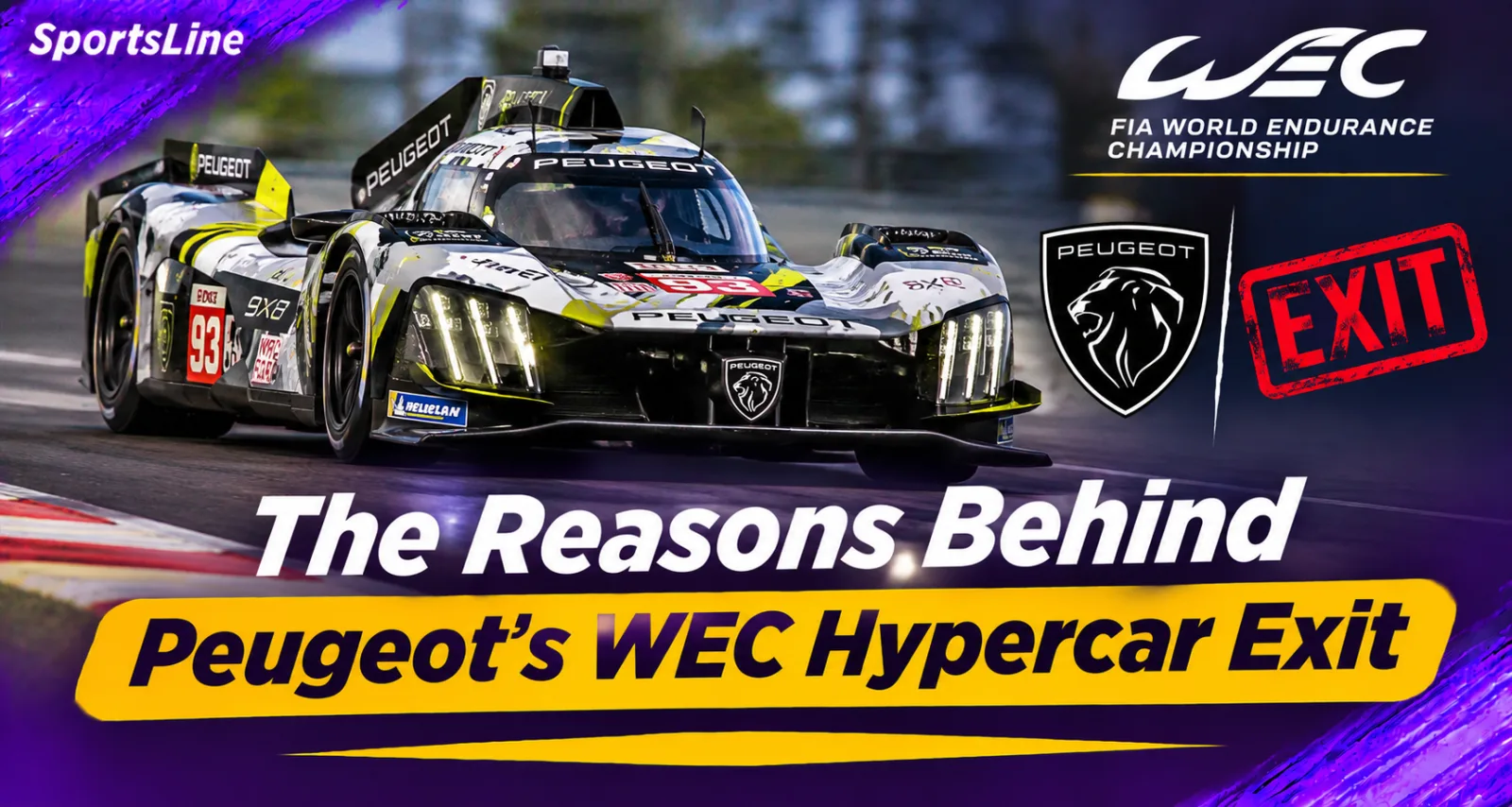
Key points
- Stellantis confirmed on 23 November 2026 that Peugeot would withdraw from the WEC Hypercar class with immediate effect.
- The group said it would refocus motorsport resources on customer racing and high-performance road-car development.
- Peugeot’s 9X8 competed in the WEC from 2022 but did not record a race victory, achieving four podiums and one pole position.
- A major 9X8 update for 2027 had reached an advanced development stage before the programme was stopped.
- Citroën and Opel will wind down their Formula E programmes after the first Gen4 season in 2027.
- Stellantis said affected motorsport employees would be retained and redeployed where possible.
Peugeot’s exit from the World Endurance Championship’s Hypercar class is not simply a reaction to a disappointing run of results. The decision reflects a wider change in priorities at parent company Stellantis, which is pulling back from factory-backed motorsport programmes in Europe and redirecting resources towards customer racing and road-car development.
The announcement, confirmed by Stellantis on 23 November 2026, brought an abrupt end to Peugeot’s modern endurance-racing project. The timing was striking: the team had been preparing a major evolution of its 9X8 Le Mans Hypercar for 2027, had completed much of its driver planning and was still working towards further winter testing. The programme was stopped at group level before that work could reach the track in competition.
Autosport’s explanation points to several connected factors: Stellantis’ cost-cutting and profitability drive, the high expense of competing in the Hypercar category, the 9X8’s inability to deliver the results expected of a factory project, and a change in the group’s leadership priorities. Stellantis’ public statement emphasised a strategic refocus rather than identifying one single cause.
Stellantis’ financial reset is the central factor
The most important context is the position of Stellantis as a global automotive group. The company has been working to improve profitability after substantial financial pressure and expensive strategic adjustments in its vehicle business. In that environment, factory motorsport programmes that require large annual budgets but do not directly generate customer sales become harder to justify.
Stellantis said it was refocusing motorsport resources on customer racing and high-performance vehicle development. The group intends to use expertise developed in competition to support exclusive high-performance models for Alfa Romeo and Maserati, as well as new versions of vehicles across brands including Alfa Romeo, Peugeot, Lancia and Opel.
This approach does not mean every form of motorsport activity is disappearing. Customer-focused projects can continue where the business case is different. Lancia’s rally programme, for example, is based on cars sold to customers, while Dodge’s planned NASCAR Cup Series entry in 2027 operates independently through Stellantis North America. The distinction is between factory programmes funded primarily by the manufacturer and activities with a customer or separately managed commercial structure.
Autosport also notes the scale of the wider retreat: Peugeot is leaving the WEC, while Citroën and Opel will wind down their Formula E involvement after the first Gen4 season, scheduled to conclude in 2027. The phased Formula E exit gives those programmes a short continuation period, but the strategic direction is clear.
A costly Hypercar project that never reached its target
Peugeot returned to the top level of endurance racing with the 9X8, which made its WEC debut in 2022. Its original design attracted attention for its unusual aerodynamic concept, including the absence of a conventional rear wing. The car was subsequently revised, including a significant 2024 update, as the team tried to close the gap to established rivals.
The results, however, did not match the ambition of a major manufacturer programme. The 9X8 did not secure a WEC race victory during its five-year period in the championship. It achieved four podium finishes and one pole position, according to Motorsport.com’s account of the programme. In an increasingly competitive Hypercar field, those returns made it difficult to demonstrate the sporting value of continued factory investment.
The financial demands of the category added to the challenge. Hypercar development involves specialised engineering, testing, personnel, logistics and continuous performance upgrades. Peugeot had also committed significant resources to evolving the 9X8, using development opportunities to address weaknesses in the original concept. Motorsport.com reported that the manufacturer had been preparing another major update for 2027.
The timing leaves a nearly completed 2027 plan behind
The suddenness of the decision is one of the most striking parts of the story. Peugeot had been developing a heavily revised 9X8, with the next phase of testing planned before the car’s expected homologation. The programme had reached an advanced stage, and the team had already made moves to shape its driver line-up for the next campaign.
That preparation could not overcome the decision taken by Stellantis’ senior leadership. The withdrawal was confirmed around the deadline for 2027 WEC entries, bringing the project to a halt just as the team was preparing for another attempt to become competitive. It is a reminder that factory racing programmes ultimately depend on corporate approval and long-term funding, not only on the work carried out by engineers and drivers.
The consequences extend beyond the car itself. Drivers who had expected to race the Peugeot Hypercar in 2027 must now assess their options, while employees at the Satory motorsport operation face redeployment or the possibility of seeking work elsewhere in racing. Stellantis has said staff will be retained and redeployed where possible, but the future roles of all affected personnel have not been fully detailed.
What Peugeot’s departure means for the WEC
Peugeot’s exit follows Alpine’s decision to end its own Hypercar programme after 2026. The departure of both French manufacturers removes two factory-backed projects from the category, although the championship is still expected to have a strong manufacturer presence in 2027, with new programmes from McLaren and Ford joining established competitors.
For the WEC, the loss is significant because Peugeot was among the early manufacturers to commit to the current Hypercar era. Its withdrawal illustrates the vulnerability of manufacturer participation when the economics of racing collide with wider corporate priorities. A technically ambitious car and a committed team cannot guarantee continuity if the parent company changes direction.
For Peugeot, the immediate priority is no longer another attempt to unlock the 9X8’s potential. Stellantis is choosing to concentrate its resources on customer racing and technology that can be carried into future road cars. The sporting disappointment matters, but the decisive explanation is broader: a company-wide financial and strategic reset has taken precedence over the costs and uncertain returns of a factory WEC programme.
Frequently asked questions
Why is Peugeot leaving the WEC Hypercar class?
Peugeot is leaving as part of parent company Stellantis’ wider decision to reduce factory-backed motorsport activity and redirect resources towards customer racing and high-performance vehicle development. Financial pressure, the cost of Hypercar competition and the 9X8’s lack of race wins form the wider context.
When will Peugeot leave the World Endurance Championship?
Stellantis confirmed Peugeot’s withdrawal on 23 November 2026, with the WEC Hypercar programme ending with immediate effect. The decision came as Peugeot was preparing an extensively revised 9X8 for the 2027 season.
How successful was the Peugeot 9X8 in the WEC?
The Peugeot 9X8 made its WEC debut in 2022 but did not secure a race victory during its five-year programme. Motorsport.com reported that its highlights included four podium finishes and one pole position, despite several development updates.
What happens to Citroën and Opel in Formula E?
Stellantis plans to wind down the Citroën and Opel factory Formula E programmes after the first Gen4 season, which is scheduled to finish in 2027. Their exit is part of the same wider reduction in European factory motorsport activity.
Will all Stellantis motorsport programmes stop?
No. Stellantis has said it is refocusing on customer racing and high-performance vehicle development. Lancia’s customer-oriented rally activity is set to continue, while Dodge’s 2027 NASCAR Cup Series entry is separately managed by Stellantis North America.