
Key points
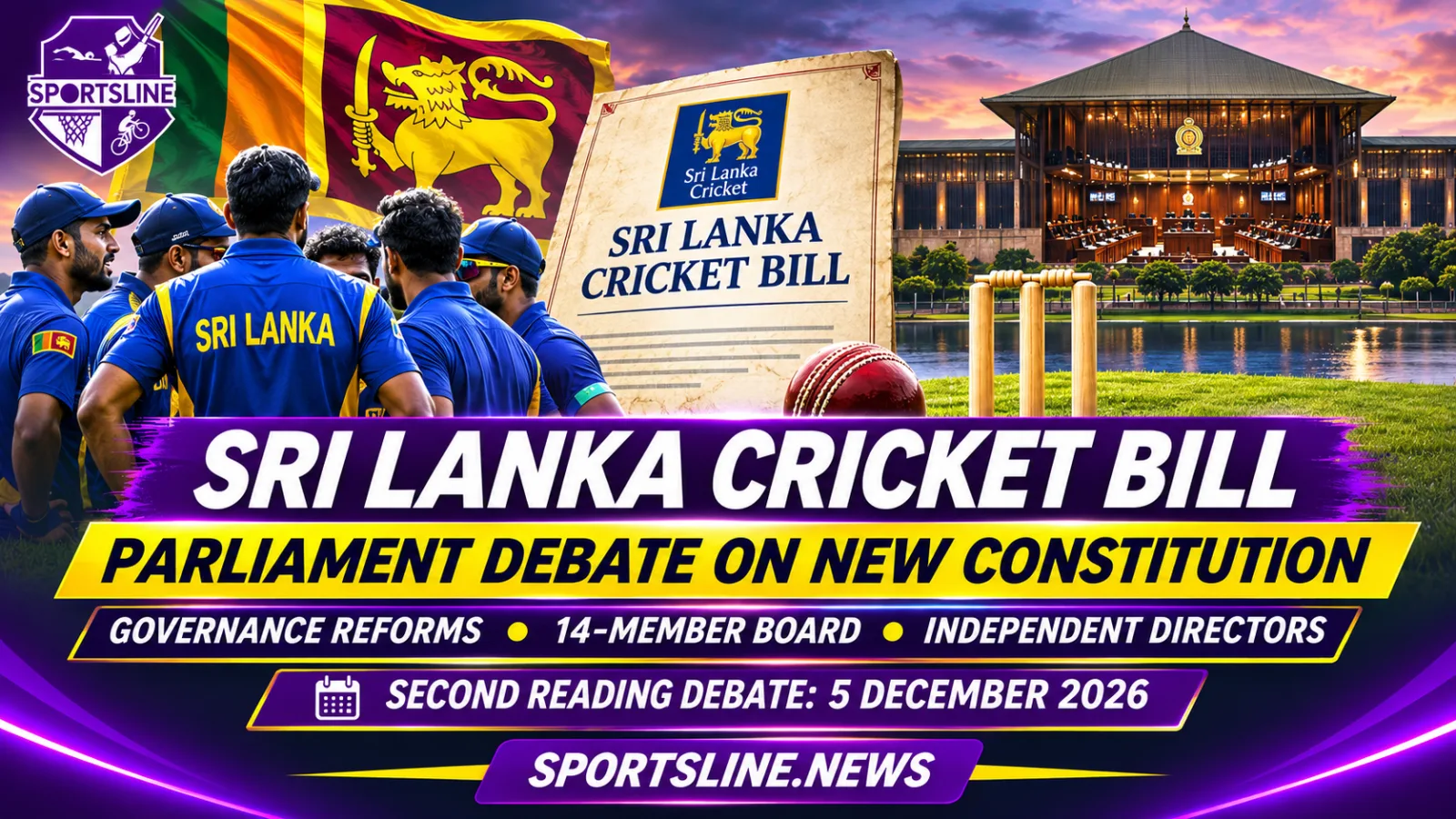
- Sri Lanka’s Parliament has scheduled the Second Reading debate on the Sri Lanka Cricket Bill for December 5, 2026, from 6pm to 9pm.
- The Supreme Court determined that two clauses require amendments, after which the Bill can be passed by a simple parliamentary majority.
- The proposed law would establish Sri Lanka Cricket as a statutory body with a 14-member Board comprising seven Independent Directors and seven Elected Directors.
- At least two Independent Directors would have to be women, and the Chairperson would be selected from the Independent Directors.
- The Bill proposes a three-tier membership and voting structure and parliamentary scrutiny of audited accounts and annual reports.
- The legislation was presented to Parliament on October 6, 2026, and has not yet become law.
Sri Lanka’s proposed overhaul of cricket administration is moving towards a crucial parliamentary stage, with the Second Reading debate on the Sri Lanka Cricket Bill scheduled for December 5, 2026. The debate will take place from 6pm to 9pm, following the day’s scheduled discussion on the expenditure heads of the Ministry of Youth Affairs and Sports and the Ministry of Women and Child Affairs.
The timetable was confirmed by Parliament’s Committee on Parliamentary Business after its meeting on November 20. The Bill, which seeks to establish a new statutory framework for the governance, regulation and development of cricket in the country, is one of the key reform measures being pursued after years of controversy surrounding the administration of Sri Lanka Cricket (SLC).
The parliamentary debate comes after the Supreme Court reviewed the proposed legislation and identified two clauses that require amendments. Parliament was informed of the Court’s determination on November 12. The Court said that once the specified changes are made at the Committee Stage, the relevant constitutional inconsistencies would cease and the Bill could be passed by a simple majority.
Supreme Court clears most provisions, seeks two amendments
According to the determination announced by Speaker Jagath Wickramaratne, Clause 29 and Clause 7(1) of the Bill were found inconsistent with constitutional provisions in their original form. The Court stated that Clause 29 infringed Article 14(1)(c), while Clause 7(1) infringed Article 12(1) of the Constitution.
Both clauses can be amended at the Committee Stage in line with the changes proposed by the Court. If those amendments are made, the Bill can proceed with a simple majority. If the inconsistencies are not corrected, the relevant provisions would require the special majority provided for under Article 84(2).
The Court’s broader determination was favourable to the proposed framework: subject to the two identified clauses, it found no other provision of the Bill inconsistent with the Constitution. Sri Lanka Cricket described the decision as an important milestone in the effort to reform the sport’s governance and administration.
The Supreme Court review followed petitions challenging the Bill. The issues raised included the proposed membership and voting system, the role of the Sports Minister, the transfer of existing assets and the potential implications for the independence of the cricket administration. The Court’s determination has now provided a route for Parliament to consider the legislation after the required amendments.
What the proposed Sri Lanka Cricket Bill will change
The Bill proposes establishing Sri Lanka Cricket as a body corporate responsible for controlling, governing, regulating, promoting, developing and administering cricket in the country. Its stated objectives include good governance, integrity, transparency, accountability, inclusivity, equal opportunity and protection of participants from corruption and other improper conduct.
At the centre of the proposed structure is a 14-member Board, split equally between seven Independent Directors and seven Elected Directors. At least two of the Independent Directors must be women. The Chairperson would be selected from among the Independent Directors, while the Deputy Chairperson would be chosen from the Elected Directors.
The Bill also proposes four-year terms for directors and an eight-year cumulative limit for Elected Directors. Independent Directors would be selected through a nominations process based on professional qualifications and experience. The eligibility provisions seek to prevent conflicts of interest by disqualifying specified categories of people from holding Board positions.
A three-tier membership and voting structure is another major element. Tier A members would receive two votes each, while Tier B members and Provincial Cricket Associations would receive one vote each. Tier C members would be allowed to attend meetings as observers but would not have voting rights. District Cricket Associations would operate through Provincial Cricket Associations rather than participating directly in the proposed decision-making structure.
Financial accountability and transition to a new administration
The proposed legislation places emphasis on financial transparency. Audited accounts and annual reports would have to be submitted to Parliament and made available online. The Sports Minister would be able to initiate audits and inquiries where credible allegations of corruption, financial irregularities or governance failures arise, subject to the procedures set out in the legislation.
The Bill also contains provisions for the transfer of the existing cricket body’s assets, liabilities, contracts, employees and pending proceedings to the new statutory institution. It provides for elections within six months of the law coming into force, while the transition process is intended to move the organisation from its current interim arrangements to an elected administration.
The proposed law was published in the Gazette in late September and presented to Parliament on October 6, 2026, by the Minister of Youth Affairs and Sports. It is designed to replace the cricket-related provisions of the Sports Law of 1973 with a separate legal framework for the sport.
Importantly, the Bill has not yet become law. The December 5 sitting is scheduled for the Second Reading debate, after which Parliament must proceed through the remaining legislative stages, including consideration at Committee Stage and the Third Reading. The amendments identified by the Supreme Court will be central to that process.
The debate will be a significant test of the government’s plan to restructure Sri Lanka Cricket. If Parliament passes the legislation and it is enacted, the new Board, voting system and accountability provisions could reshape how the country’s most prominent sporting institution is governed. Until then, the existing arrangements remain in place and the proposed changes should be treated as legislation under consideration, not rules already in force.
Frequently asked questions
When will Sri Lanka Parliament debate the Cricket Bill?
The Second Reading debate on the Sri Lanka Cricket Bill is scheduled for Saturday, December 5, 2026, from 6pm to 9pm. Parliament’s Committee on Parliamentary Business confirmed the timetable after its meeting on November 20.
What did Sri Lanka’s Supreme Court decide about the Cricket Bill?
The Supreme Court found two clauses inconsistent with constitutional provisions in their original form. It said those inconsistencies would cease if the specified amendments were made at the Committee Stage, allowing the Bill to pass with a simple majority.
How will the proposed Sri Lanka Cricket Board be structured?
The Bill proposes a 14-member Board made up of seven Independent Directors and seven Elected Directors. At least two Independent Directors must be women. The Chairperson would be selected from the Independent Directors, while the Deputy Chairperson would come from the Elected Directors.
Has the Sri Lanka Cricket Bill become law?
No. The Bill has been presented to Parliament and is scheduled for its Second Reading debate on December 5, 2026. It must complete the parliamentary process and be enacted before its provisions take legal effect.
What changes does the Bill propose to Sri Lanka Cricket elections?
The proposed legislation introduces a three-tier membership and voting structure. Tier A members would have two votes each, Tier B members and Provincial Cricket Associations one vote each, while Tier C members could attend as observers without voting rights.