
Key points
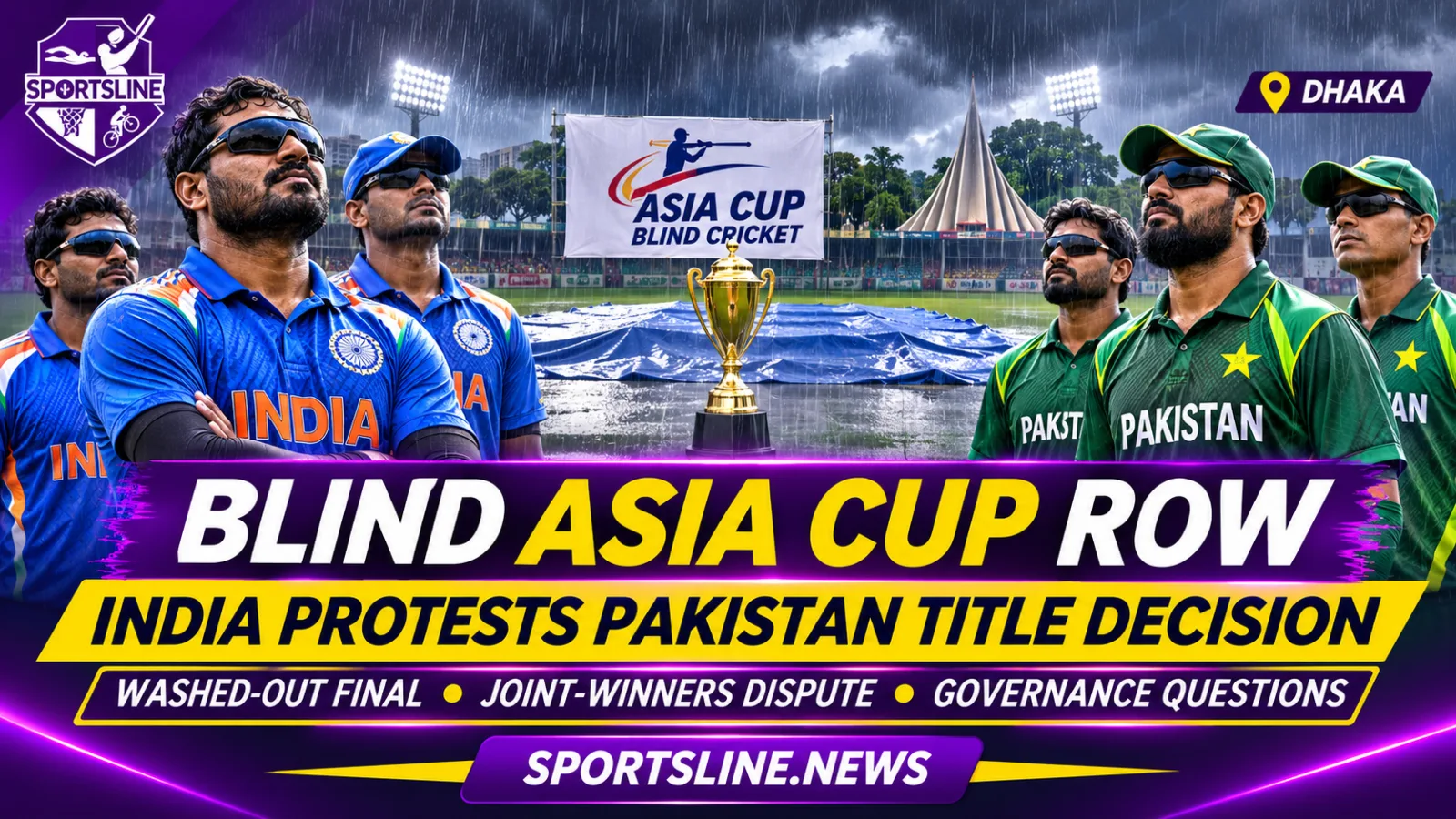
- Pakistan were declared winners of the Men's Asia Cup for the Blind 2026 after the final against India was washed out in Dhaka without a ball being bowled.
- India protested the decision and boycotted the trophy presentation, arguing that the teams should have been declared joint champions.
- CABI alleged a conflict of interest involving WBCC technical director Tahir Butt, who it says also serves as Pakistan's team physio.
- CABI also questioned the role of WBCC president Sultan Shah, who is also president of the Pakistan Blind Cricket Council.
- India captain T Durga Rao said the team was informed Pakistan would win on the basis of run rate and that its questions about the ruling did not receive satisfactory answers.
- CABI has indicated it will challenge the decision, while reports say the association is considering a boycott of future matches against Pakistan.
The Men's Asia Cup for the Blind 2026 has been overshadowed by a major governance controversy after Pakistan were awarded the title following a rain-abandoned final against India in Dhaka. The match did not see a ball bowled, but Pakistan were declared champions on the basis of a superior run rate, a decision that prompted the Indian team to boycott the trophy presentation.
The Cricket Association for the Blind in India (CABI) has challenged the outcome and raised concerns about the decision-making process within the World Blind Cricket Council (WBCC). The dispute has also brought allegations of a conflict of interest involving a tournament official who, according to the Indian side, held a separate role with the Pakistan team.
India's complaint centres on the interpretation of the tournament's playing conditions and the authority behind the final decision. CABI maintains that the two finalists should have been declared joint winners after the washout. Its officials have alleged that an initial technical committee position in favour of joint winners was subsequently overturned.
Conflict of interest allegation puts WBCC officials under scrutiny
India team manager Dhiraj Sequeira, speaking to Sports Now, questioned the dual role of WBCC technical director Tahir Butt. Sequeira alleged that Butt was also the physio of the Pakistan team, arguing that a person involved in tournament administration should not simultaneously serve a competing side.
Sequeira described the arrangement as a conflict of interest and said it had contributed to the controversy surrounding the final decision. These claims have been made by the Indian team management and should be understood as allegations; no independent investigation or formal finding establishing misconduct has been reported in the sources available.
CABI has separately questioned the role of WBCC president Syed Sultan Shah, who also heads the Pakistan Blind Cricket Council. According to CABI's account, the WBCC Technical Committee initially agreed that India and Pakistan should be declared joint winners, but the decision was later changed. CABI alleges that Shah overruled the committee's position and that the match referee was then instructed to announce Pakistan as champions.
The governing bodies and officials named in the allegations have not been shown in the cited reports to have issued a detailed response addressing each claim. The dispute therefore remains a contested account of how the tournament regulations were interpreted and how the final ruling was reached.
Why India objected to the run-rate decision
The final was washed out by rain in Dhaka, leaving neither side with an opportunity to compete for the trophy on the field. The decision to award Pakistan the title on run rate became the central point of disagreement. CABI cited Section 27 of the tournament's technical regulations and argued that the provision should have resulted in the teams sharing the championship.
India captain T Durga Rao said the team had been waiting at the ground since around 10am as rain continued to delay the match. He said the players and officials were informed later that Pakistan would be declared winners because of their run-rate advantage. Rao questioned how that calculation could decide a final in which not a single delivery had been bowled.
Rao also said the Indian team wanted an explanation from the match officials but did not receive satisfactory answers. He maintained that the team would have accepted an outcome reached under clearly communicated regulations, but felt the ruling did not reflect the rules as they understood them.
There is also a relevant tournament context: Pakistan had beaten India by one wicket in their league-stage meeting and finished the group stage strongly. India, meanwhile, reached the final after beating Bangladesh. Pakistan's league-stage advantage is part of the background to the run-rate decision, but it does not resolve the disagreement over how the final's playing conditions should be applied.
India's protest could affect future fixtures against Pakistan
The fallout has moved beyond the presentation ceremony. CABI has strongly condemned the decision and has indicated that it will pursue the matter through the relevant cricket bodies. Reports have also said the association is considering refusing future matches against Pakistan until the dispute is addressed.
Rao said the players would follow the association's direction on future participation. The captain's comments suggest that the immediate decision about any boycott rests with CABI rather than individual players. A prolonged stand-off could affect future blind cricket competitions and reduce opportunities for players from both countries to compete internationally.
India entered the tournament as defending champions, having won the inaugural Men's Blind Cricket Asia Cup in 2016. The team and its officials say the title should be decided in accordance with the competition's regulations and that the process must be transparent to all participating teams.
The central questions now concern the precise wording of Section 27, the authority of the WBCC Technical Committee, and the process by which the final ruling was changed. An independent and transparent review would help establish whether the regulations were applied correctly and whether the officials involved followed appropriate governance standards.
Until the governing body provides a clear explanation, the controversy is likely to remain unresolved. For the players, the dispute is about more than the trophy: it concerns confidence in the rules, the neutrality of tournament officials and the credibility of international blind cricket administration.
Frequently asked questions
Why did India boycott the Blind Asia Cup trophy presentation?
India's blind cricket team stayed away from the presentation after Pakistan were declared champions despite the final being washed out without a ball being bowled. The Indian side argued that the teams should have shared the title and objected to the use of run rate to decide the final.
What conflict of interest has CABI alleged?
CABI and team officials have questioned the position of WBCC technical director Tahir Butt, alleging that he also works as Pakistan's team physio. They argue that holding a tournament administration role while serving a participating team raises concerns about impartiality. These are allegations, not an independently established finding.
Why were Pakistan awarded the 2026 Blind Asia Cup title?
Pakistan were announced as winners after the final in Dhaka was abandoned because of rain, with the decision reportedly based on their superior run rate. India disputed that interpretation of the playing conditions and maintained that a washed-out final should produce joint winners.
What did India captain T Durga Rao say about the decision?
Durga Rao said the Indian team was informed that Pakistan would be declared winners on the basis of run rate after the rain delay. He questioned how the rule could apply when no delivery had been bowled and said the team did not receive clear answers when it challenged the decision.
Will India refuse to play Pakistan in blind cricket in future?
CABI has indicated that future fixtures against Pakistan may be boycotted until the dispute is resolved. Captain Durga Rao said the players would follow the association's decision. Any formal future boycott or sanction would depend on the association's subsequent action.