
Key points
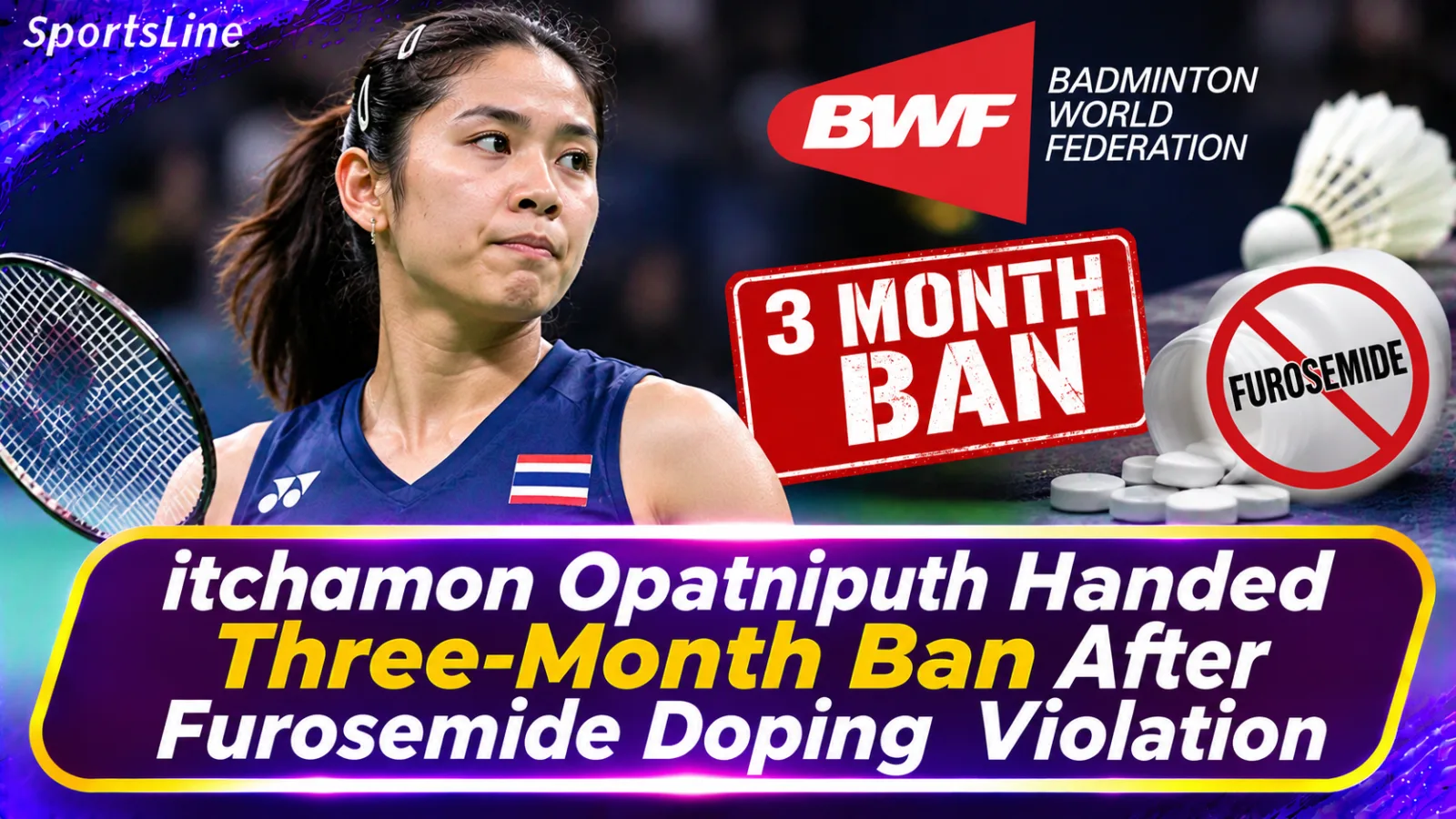
- The BWF confirmed a three-month period of ineligibility for Thai badminton player Pitchamon Opatniputh on November 27, 2026.
- The suspension is backdated to the start of her provisional suspension and expires on December 20, 2026.
- The ITA collected the sample during out-of-competition testing in Nagoya, Japan, on September 17, 2026.
- The substance detected was furosemide, listed by WADA under S5 Diuretics and Masking Agents and prohibited at all times.
- Opatniputh requested B-sample analysis; the sample was opened on September 24 and confirmed the presence of furosemide.
- The 19-year-old was excluded from the 2026 Asian Games in Aichi-Nagoya following the anti-doping finding.
- Thailand’s badminton player Pitchamon Opatniputh, the 2023 world junior champion, has been handed a three-month period of ineligibility by the Badminton World Federation (BWF) after an anti-doping case involving the prohibited substance furosemide. The BWF confirmed the outcome on Friday, November 27, bringing the case to a conclusion at the international federation level.
The suspension is backdated to the date her provisional suspension began and will expire on December 20, 2026. That means the 19-year-old is eligible to return to competition from December 21, subject to the applicable competition and eligibility rules. The case arose from an out-of-competition test conducted shortly before the Aichi-Nagoya 2026 Asian Games in Japan.
How the anti-doping case emerged
According to the International Testing Agency (ITA), acting on behalf of the Olympic Council of Asia (OCA), a sample was collected from Pitchamon during an out-of-competition anti-doping control in Nagoya on September 17, 2026. The sample returned an adverse analytical finding for furosemide, a substance included in the World Anti-Doping Agency’s (WADA) Prohibited List.
The ITA announced the apparent anti-doping rule violation on September 21 and said the player had been provisionally suspended with immediate effect. Under that provisional measure, she was not permitted to compete, train, coach or take part in activities during the Asian Games while the case was being resolved.
Pitchamon exercised her right to request analysis of the B-sample. The ITA said the B-sample was opened and analysed on September 24 in the presence of an independent witness. The analysis confirmed the presence of furosemide, matching the finding in the initial sample.
In its October 19 update, the ITA said the player accepted the consequences of the anti-doping rule violation under the OCA anti-doping rules. Those consequences included the finding of the violation, exclusion from the Aichi-Nagoya Asian Games and loss of her Games accreditation. The ITA also stated that the matter was considered concluded from the OCA’s perspective and had been referred to the BWF to determine any further consequences.
What is furosemide and why is it prohibited?
Furosemide is a diuretic, a type of medicine that increases the removal of water from the body. It appears in section S5, Diuretics and Masking Agents, of the WADA Prohibited List. The ITA clarified that it is prohibited at all times, both in and out of competition, and is classified as a specified substance.
The ITA notes that furosemide can be used to excrete water for rapid weight loss. Diuretics can also raise anti-doping concerns because they may be used as masking agents, potentially affecting the detection of other prohibited substances. The substance remains prohibited across sports, irrespective of whether a sport has weight categories.
The official anti-doping announcements establish the substance detected and the procedural outcome. They do not provide a detailed public explanation of how furosemide entered Pitchamon’s system. It is therefore important not to speculate about intent or the circumstances beyond what the authorities have confirmed.
What the suspension means for the young Thai player
Pitchamon had emerged as one of Thailand’s promising women’s singles players after winning the world junior championship in 2023. Her progress had included appearances in finals on the international circuit. Reports on her 2026 season noted runner-up finishes at the Indonesia Masters Super 500 and Orleans Masters Super 300, alongside two Super 100 titles in her career.
The Asian Games suspension meant she missed an important multi-sport event representing Thailand. The BWF’s three-month sanction now sets a defined end date for the period of ineligibility. With the suspension expiring on December 20, the next step for the player will be a return to competition after the period has been served.
The case also underlines the importance of anti-doping awareness for athletes, support staff and national federations. Medicines, supplements and other products can contain substances that appear on prohibited lists, so athletes must check ingredients and seek advice through appropriate medical and anti-doping channels before using them. Under the anti-doping framework, athletes are responsible for ensuring that prohibited substances are not present in their samples.
For Thailand badminton, Pitchamon’s return will be watched with interest given her status as a former world junior champion. The immediate facts of the case are now clear: the sample was collected in September, the B-sample confirmed the finding, she was excluded from the Asian Games, and the BWF has imposed a three-month suspension ending on December 20, 2026.
Frequently asked questions
What ban has Pitchamon Opatniputh received?
The Badminton World Federation confirmed a three-month period of ineligibility for Thai player Pitchamon Opatniputh on November 27, 2026. The suspension is backdated to the start of her provisional suspension and is due to expire on December 20, 2026.
Which substance was detected in Pitchamon’s sample?
The substance was furosemide, a diuretic listed under S5 Diuretics and Masking Agents in the World Anti-Doping Agency’s Prohibited List. The ITA states that it is prohibited at all times, both in and out of competition.
When and where was the sample collected?
The International Testing Agency collected the sample during an out-of-competition anti-doping control on September 17, 2026, in Nagoya, Japan. The test took place two days before the opening ceremony of the Aichi-Nagoya Asian Games.
Was the B-sample also positive?
Yes. After Pitchamon requested the B-sample analysis, the sample was opened and analysed on September 24, 2026, in the presence of an independent witness. The ITA reported that the B-sample analysis confirmed the presence of furosemide.
Did Pitchamon compete at the 2026 Asian Games?
No. Following the adverse analytical finding and provisional suspension, Pitchamon was excluded from the Aichi-Nagoya 2026 Asian Games. The ITA said the athlete accepted the consequences under the Olympic Council of Asia anti-doping rules.
When can Pitchamon return to badminton competition?
Her three-month period of ineligibility expires on December 20, 2026. Reports of the BWF decision state that she can return to competition from December 21, subject to the applicable rules and any other eligibility requirements.