
Key points
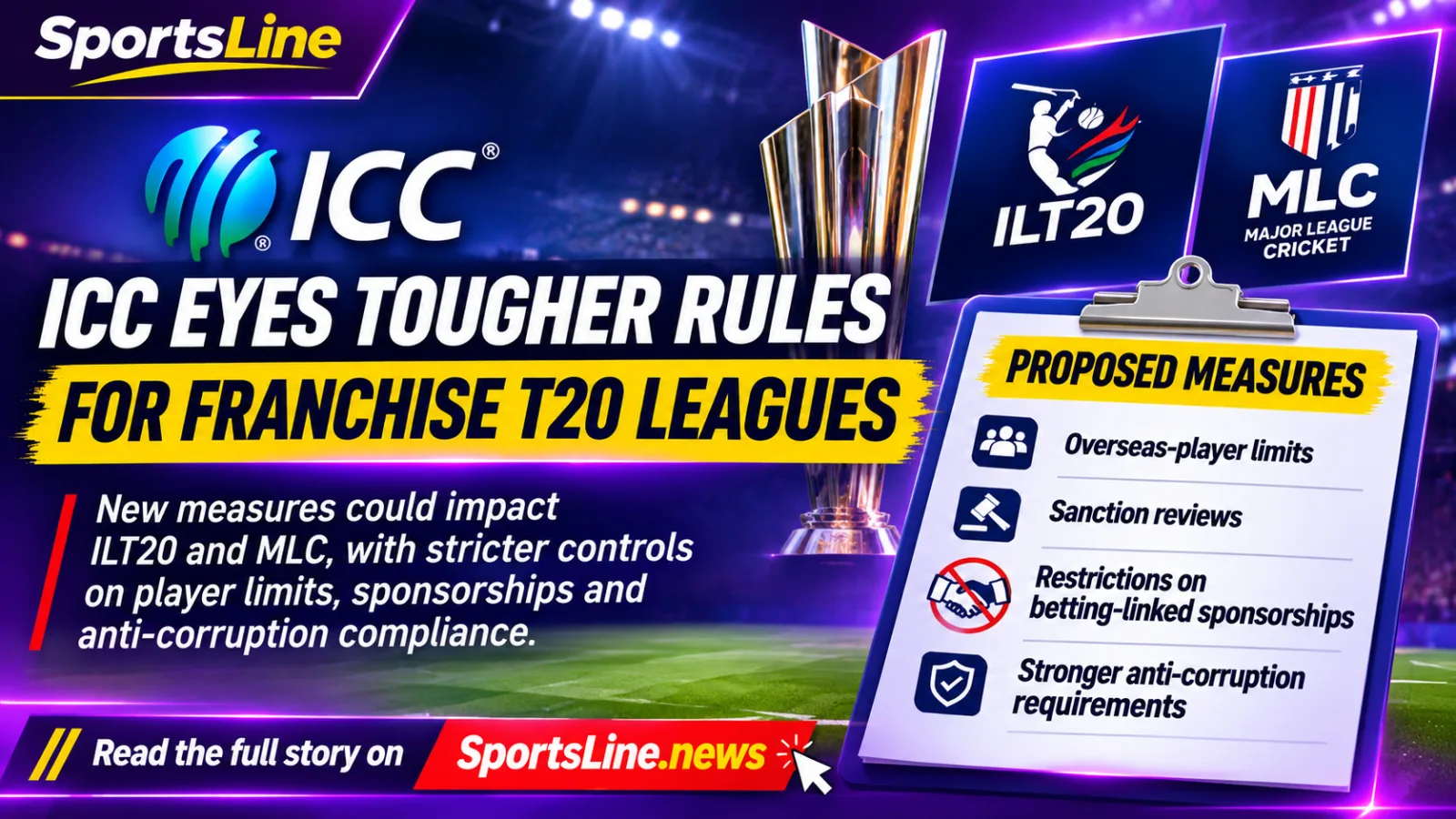
- The ICC is reportedly considering a package of tougher rules for franchise T20 leagues, rather than announcing a final set of regulations.
- One proposal would require existing leagues to comply with overseas-player limits in playing XIs, potentially affecting the ILT20 and Major League Cricket most directly.
- The reported proposals include wider ICC powers to review or audit league sanctions granted by Full Member boards.
- The ICC is also reportedly considering restrictions on sponsorships linked to betting companies or their surrogates where they facilitate betting in countries where it is illegal.
- Future league sanctions could be conditional on using the ICC Anti-Corruption Unit or another unit approved by the governing body.
- A fee for granting league sanctions is also among the reported proposals; no final implementation timetable has been confirmed in the cited reporting.
The International Cricket Council (ICC) is considering a tougher regulatory framework for franchise T20 leagues, with the UAE’s International League T20 (ILT20) and the United States’ Major League Cricket (MLC) potentially among the competitions most affected. The reported proposals cover overseas-player limits, the scrutiny of league approvals, betting-related sponsorships, anti-corruption arrangements and fees for granting sanctions.
The measures are being discussed as proposals and should not be treated as rules already approved or in force. The details were reported by NDTV on November 12, 2026; the ICC has not been cited as having formally announced the full package.
Overseas-player rules could put ILT20 and MLC under pressure
One of the central proposals is to ensure that existing franchise leagues comply with the current overseas-player cap in a playing XI. The NDTV report says this could hit the ILT20 and MLC hardest because their team compositions have allowed a larger overseas presence than several established competitions.
The issue has been debated for some time. A BBC Sport report in July described concerns about the growing influence of franchise competitions and the need to harmonise them with the international calendar. Earlier reporting on the regulatory debate also highlighted the difference between leagues that field a relatively high number of overseas players and competitions with tighter limits.
Any change would have practical consequences for franchise recruitment, team selection and the value of overseas-player contracts. However, the available report does not establish whether any proposed cap would apply immediately, from a future season, or through a transition period. Those details remain to be clarified if the ICC proceeds.
ICC could seek greater control over league sanctions
Another proposal would expand the ICC’s ability to review or audit a sanction granted to a league by a Full Member cricket board. Under the arrangement described in the report, the ICC currently has a more direct approval role in certain cases involving Associate Member territories, while a league sanctioned by a Full Member board does not face the same additional approval process.
Greater review powers could give the governing body a wider view of how competitions are approved and whether they meet the standards expected of sanctioned cricket. The reported proposal is significant because franchise leagues operate across different national jurisdictions, with local boards often responsible for granting permission.
The ICC already has event-sanctioning regulations that set out responsibilities for sanctioning bodies, including ensuring that events are properly organised and that appropriate integrity safeguards are in place. The new proposal, if adopted, would appear to strengthen central oversight rather than replace the role of national boards.
Betting sponsorships and anti-corruption safeguards in focus
The reported package also includes restrictions on sponsorships from betting companies, or businesses acting as surrogates for betting brands, where the arrangement enables customers to place bets in countries where gambling is illegal. The concern is that sponsorship structures can create links between cricket competitions and betting markets that are restricted in some jurisdictions.
Anti-corruption arrangements form another part of the discussion. The ICC is reportedly considering making the use of its Anti-Corruption Unit, or another unit approved by the ICC, a condition of sanctioning a league. A consistent integrity framework could make it easier to establish reporting, monitoring and investigation standards across competitions.
The ICC’s existing Anti-Corruption Code already covers domestic cricket played under the auspices of the ICC and its Members. It identifies offences such as match-fixing, spot-fixing, betting on cricket and misuse of inside information. For domestic matches, responsibility for dealing with corrupt conduct rests in the first instance with the relevant National Cricket Federation.
Sanction fee also among proposals; final decision awaited
A further reported idea is to charge a fee when the ICC provides sanction for a league. The report does not specify the proposed amount, how it would be calculated or whether it would apply to every competition. These details would need to be established before any fee could become operational.
For the ILT20, the timing is notable. Its official information lists the fifth season as a six-team tournament running from November 21 to December 20, 2026. Its published squad framework includes an 18-to-23-player roster and minimum representation requirements for several national groups. Any broader ICC rule changes would need to be considered alongside existing league regulations and the season’s arrangements.
For MLC, the key question would be how any new overseas-player requirements interact with its current competition structure and contracts. The reported proposals do not yet provide a detailed implementation plan for either league.
What happens next?
The proposals point to a possible shift towards more consistent global supervision of franchise cricket. They also reflect the challenge of balancing the commercial growth of T20 leagues with the integrity of competitions and the authority of national boards.
Until the ICC issues a formal decision or publishes revised regulations, the measures remain reported proposals. Franchise owners, players and supporters will be watching for clarification on the overseas-player cap, the scope of sanction reviews, sponsorship restrictions and the anti-corruption conditions that could apply to future seasons.
Frequently asked questions
What new rules is the ICC reportedly considering for franchise leagues?
The reported proposals include enforcing overseas-player limits in existing leagues, expanding ICC powers to review or audit sanctions, restricting certain betting-linked sponsorships, requiring approved anti-corruption arrangements and charging a fee for league sanctions. The measures have been reported as proposals and are not confirmed as adopted regulations.
Why could the ILT20 and MLC be affected by the proposed rules?
The NDTV report identifies the ILT20 and Major League Cricket as leagues that could be hit hardest by a requirement for existing competitions to comply with overseas-player limits in a playing XI. The exact cap, timing and transition arrangements have not been specified in the cited report.
Will the ICC directly approve every franchise league?
One reported proposal would allow the ICC to review or audit sanctions granted to leagues by Full Member boards. The report contrasts this with the existing arrangement, under which certain leagues in Associate Member territories require additional ICC approval. A wider approval system has not yet been confirmed.
What betting sponsorships could face restrictions?
The reported proposal concerns sponsorships from betting companies or surrogate businesses that enable customers to place bets in countries where betting is illegal. The report does not provide a final list of affected sponsors, a definition of every prohibited arrangement or a confirmed start date for any restriction.
Could franchise leagues be required to use the ICC Anti-Corruption Unit?
The proposals reportedly include making use of the ICC Anti-Corruption Unit, or another unit approved by the ICC, a condition of league sanction. The ICC's existing Anti-Corruption Code already covers domestic cricket played under the auspices of the ICC and its Members, including franchise competitions.
Have the proposed ICC franchise league rules been approved?
The measures discussed in the report are proposals under consideration, not a confirmed package of regulations. The cited reporting does not provide a final ICC decision or implementation timetable. Further details would be needed on overseas-player limits, sanction reviews, sponsorship rules and any fee before they could be treated as binding.