
Key points
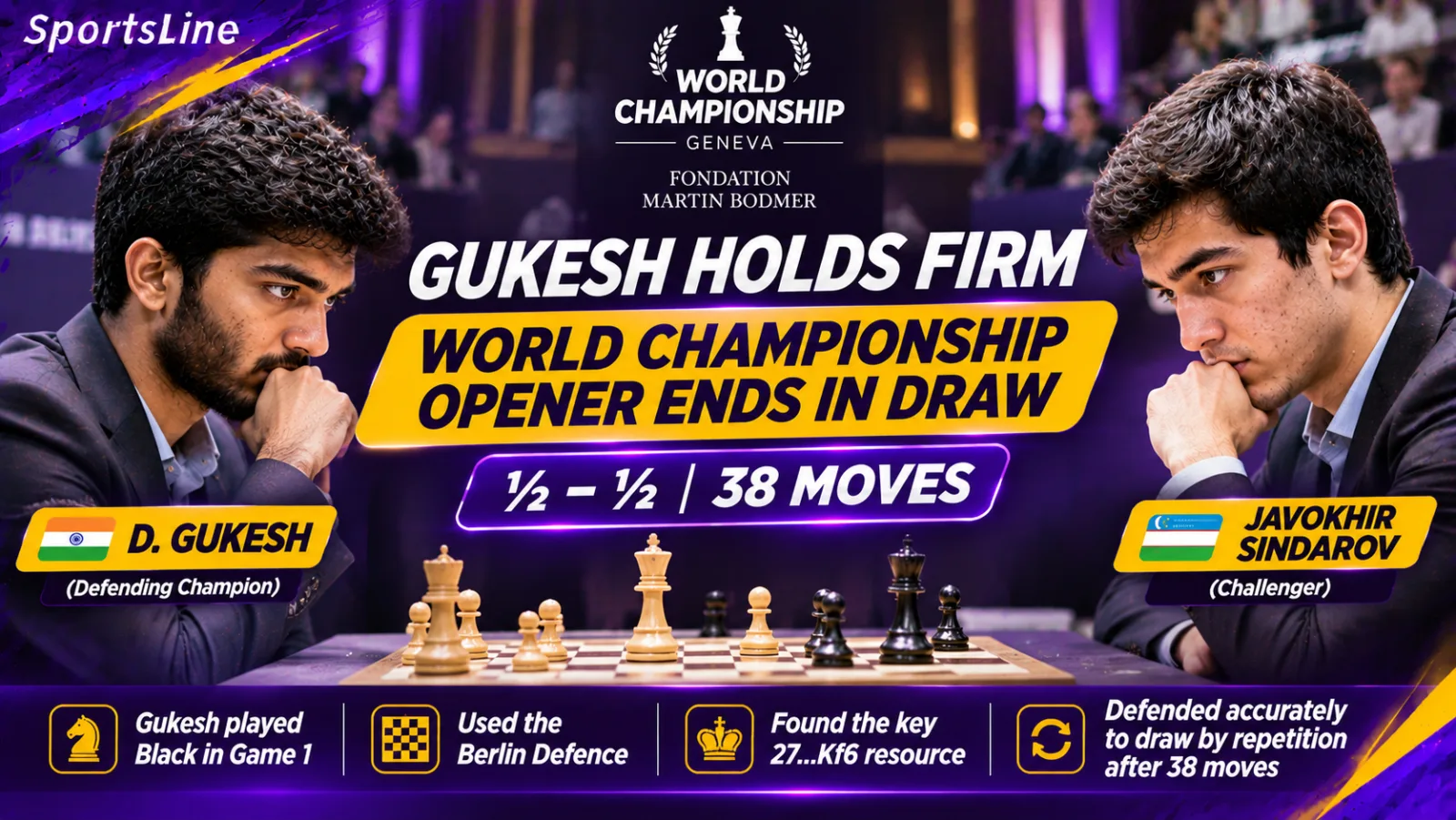
- D. Gukesh drew the 38-move opening game of the 2026 World Chess Championship against Javokhir Sindarov.
- Gukesh played Black and used the Berlin Defence against Sindarov’s Spanish Opening.
- The Indian champion faced severe time pressure, at one point having around six minutes for nine moves.
- The game ended in a draw after repeated rook checks in a same-coloured-bishop endgame.
- Sindarov said Gukesh defended well towards the end, while Gukesh said he felt in control of the position.
- The match is a 14-game contest between two 20-year-old grandmasters.
- Defending world champion D. Gukesh offered a timely reminder of his class and resilience in the opening game of the 2026 World Chess Championship against Javokhir Sindarov. Playing with the black pieces in Geneva, the Indian grandmaster absorbed sustained pressure and navigated serious time trouble before securing a draw in a tense contest that lasted 38 moves.
The result did not give either player an early lead, but the manner in which Gukesh held his ground was significant. Sindarov, the 20-year-old challenger from Uzbekistan, began energetically and appeared to have the initiative for long stretches. Gukesh, however, stayed composed when his clock became a concern and continued to find practical defensive moves. The game ended by repetition, with both players taking half a point.
Gukesh stays composed as the clock becomes an opponent
The game began with the Spanish Opening, also known as the Ruy Lopez. Gukesh chose the Berlin Defence, a line with a long history at the highest level of chess. The opening choice carried a notable historical echo: Viswanathan Anand had used the Berlin Defence in his 1998 match against the computer Fritz, a contest in which the Indian grandmaster famously prevailed.
Sindarov tried to use his opening momentum and the clock to make life uncomfortable for the champion. Gukesh spent considerable time finding his way through the position. At one stage, he had around 24 minutes to make 22 moves, and later faced a sharper squeeze with approximately six minutes for nine moves. The pressure was not merely theoretical; every decision had to be made with the possibility of running short of time in mind.
Gukesh did not panic. He kept the position under control, made the necessary defensive decisions and avoided allowing the challenger to turn his time advantage into a decisive breakthrough. As the game progressed, Sindarov too had to slow down and spend more time calculating. The challenger’s early pace gave way to a more careful approach as the position demanded accuracy.
A hard-fought draw after 38 moves
The players reached an endgame in which both sides had bishops operating on the same colour complex. The position remained difficult to convert into a win, and Gukesh found a way to keep the balance. The game concluded after a sequence of repeated rook checks, with the players agreeing to a draw after 38 moves.
Gukesh said afterwards that he felt he had remained in control of the position. His assessment was that, despite the clock pressure, the position itself had not reached a point where he needed to be seriously worried. Sindarov, meanwhile, explained that he had tried to press at every opportunity because of his time advantage, while acknowledging that Gukesh defended well towards the end.
The draw was a useful statement of temperament from the reigning champion. A World Championship opener can carry an unusual weight, especially when the challenger arrives with strong momentum and the champion is expected to answer questions about form. Gukesh's ability to keep his concentration through a difficult clock situation showed the value of resilience in a match where one mistake can change the direction of the contest.
Why the opening result mattered
The first game was only the beginning of a 14-game classical match, so the draw did not settle any larger question about the title. It did, however, establish the competitive tone. Sindarov had shown that he was prepared to challenge the champion from the start, while Gukesh demonstrated that he could withstand pressure without losing his composure.
The match brought together two 20-year-old grandmasters, making it a notably young contest for the world title. Gukesh was defending the crown he won in 2024, while Sindarov had earned the right to challenge after his rise through the elite circuit. The opening draw ensured that neither player had an immediate scoreboard advantage, leaving the match finely balanced.
For Gukesh, the most encouraging part was not simply the half-point but the manner in which he earned it. The champion had to manage a difficult clock situation, defend accurately and remain patient while Sindarov searched for a breakthrough. In a contest expected to feature deep preparation and intense psychological pressure, that combination of class and resilience offered an early reminder of why Gukesh is world champion.
SportsLine context: The supplied Hindu article page could not be fetched directly. The match details and reported comments in this article have been cross-checked against a contemporaneous newspaper PDF carrying The Hindu’s coverage, along with reporting from The New Indian Express and Indian Express. The story is about Game 1, not the later Game 3 draw.
Frequently asked questions
How did Gukesh perform in the first game against Sindarov?
Gukesh drew the opening game after defending under pressure with the black pieces. He faced serious time trouble but kept the position balanced and eventually agreed to a draw after 38 moves in the 2026 World Chess Championship.
Which opening did Gukesh play against Sindarov?
Gukesh chose the Berlin Defence against Sindarov’s Spanish Opening, also known as the Ruy Lopez. The line has a long history in elite chess and was also associated with Viswanathan Anand’s 1998 match against the computer Fritz.
How many moves did the first Gukesh-Sindarov game last?
The first game lasted 38 moves. It reached an endgame with bishops operating on the same colour complex and concluded after a sequence of repeated rook checks, with the players agreeing to a draw.
What did Gukesh say after the opening game?
Gukesh said he felt he was in control of the position and did not believe it had reached a point where he needed to be seriously worried. His comments reflected his confidence in the defensive decisions he made despite the time pressure.
What is the format of the Gukesh-Sindarov World Championship match?
The 2026 World Championship is a 14-game classical match. The opening draw left the scores level, with neither player gaining an early advantage. The contest brings together defending champion Gukesh and challenger Javokhir Sindarov, both aged 20.