
Key points
- D. Gukesh is set to defend his world title against Javokhir Sindarov in Geneva from November 24, 2026.
- Garry Kasparov has given Gukesh a slight edge, highlighting the Indian champion’s experience in a world-title match.
- Magnus Carlsen has called Sindarov the favourite and praised the challenger as a well-rounded player.
- Carlsen believes the opening games could have a major psychological impact on the match.
- The championship is scheduled for up to 14 classical games, with the first player to reach 7.5 points winning.
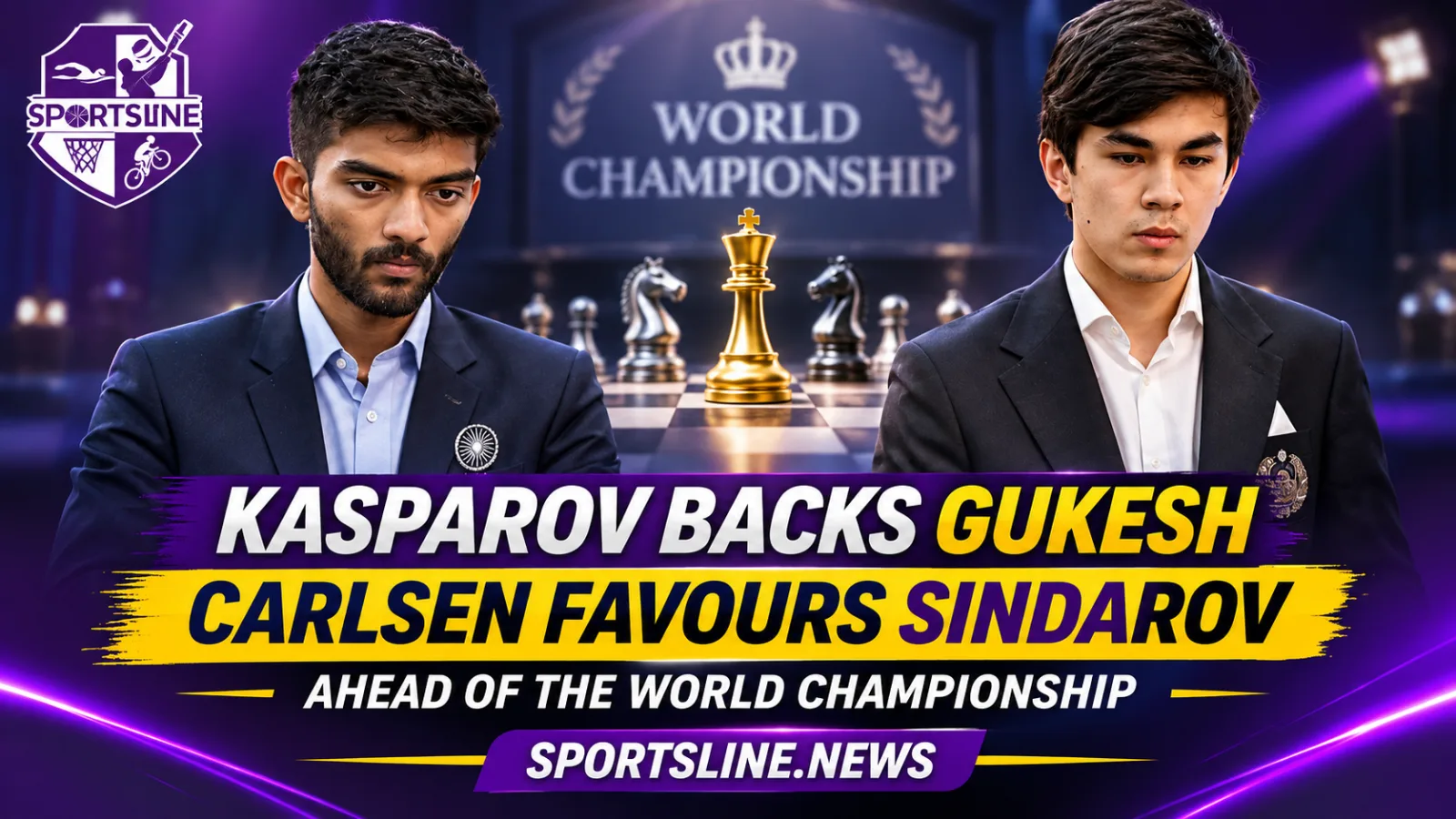
- The build-up to the 2026 World Chess Championship has produced a striking split among some of the biggest names in the game. Reigning champion D. Gukesh will face Uzbekistan’s Javokhir Sindarov in Geneva from November 24, but the question of who holds the edge has drawn different answers from former world champions Garry Kasparov and Magnus Carlsen.
Kasparov has leaned towards Gukesh, placing significant value on the Indian’s experience of winning a world title. Carlsen, by contrast, has described Sindarov as the favourite, pointing to the challenger’s current strength and the psychological importance of the opening games. Their contrasting assessments underline the central tension ahead of a match between two 20-year-olds: proven championship experience against a challenger arriving with formidable recent form.
Kasparov backs Gukesh’s experience
Kasparov’s assessment is rooted in the unusual demands of a world championship match. The former champion has acknowledged Sindarov’s entertaining style, but argued that experience can become decisive when the pressure is sustained over a series of classical games. Gukesh has already faced that environment, having defeated Ding Liren in Singapore in 2024 to become the youngest undisputed world champion.
Kasparov’s view is not that the Indian will have an easy assignment. Rather, his argument is that Gukesh has already crossed a psychological barrier that Sindarov is about to encounter for the first time. A title match brings a different rhythm from an open tournament: the same opponent returns game after game, preparation is highly targeted, and a single mistake can influence the tone of the contest.
That experience could matter particularly in the early stages. A player who has previously navigated the pressure of a championship match may be better equipped to respond after a difficult game, manage expectations and avoid allowing one result to shape the rest of the contest. Kasparov’s prediction places that intangible quality at the centre of the match-up.
Carlsen sees Sindarov as the favourite
Carlsen’s public assessment has been more firmly in Sindarov’s favour. The Norwegian has described the Uzbek challenger as the clear favourite, while also acknowledging that Gukesh has demonstrated a very high ceiling. Carlsen’s point is that the Indian must rediscover the level he produced during his historic 2024 campaign if he is to turn the contest around.
Carlsen has also highlighted the psychological swing that can follow an early lead. In a relatively short match, he believes the first few games can have an outsized impact. If Sindarov takes the lead, the champion could find the task considerably harder; if Gukesh strikes first, the momentum and pressure could shift sharply in the other direction.
The former world champion has described Sindarov as a well-rounded player without obvious weaknesses. That assessment reflects the challenger’s strong recent results, including his Candidates Tournament victory and his rise among the world’s leading players. Carlsen has also questioned whether Gukesh’s tendency towards optimistic evaluations could encourage him to take unnecessary risks, especially if confidence is not at its best.
A match shaped by form, nerve and preparation
The contrast between Kasparov and Carlsen is a reminder that rankings and recent results do not tell the whole story of a world championship. Sindarov enters with substantial momentum and the backing of Carlsen, while Gukesh can draw on the experience of having already won chess’s biggest title. The challenger’s challenge will be to transfer tournament form into a long head-to-head contest; the champion’s task will be to show that his championship instincts remain as sharp as they were in Singapore.
The match is scheduled for up to 14 classical games in Geneva, with the first player to reach 7.5 points claiming the title. If the score is level after the classical portion, tiebreaks are scheduled. The format gives both players time to recover from setbacks, but it also creates a sustained test of preparation, stamina and emotional control.
For Gukesh, the opening games will be an opportunity to challenge the favourite narrative and make his match experience count. For Sindarov, they will be a chance to demonstrate that his recent form can withstand the unique pressure of a world title contest. The opinions of Kasparov and Carlsen offer two different lenses on the same question, but the answer will only emerge over the board.
What to watch when the contest begins
Preparation choices, time management and the players’ response to the first decisive result could all prove important. Gukesh may look to keep the match balanced while waiting for opportunities to use his tactical ambition. Sindarov will want to establish his confidence without allowing the occasion to disrupt the consistency that has carried him to the title match.
Neither prediction guarantees an outcome. Kasparov’s confidence in experience and Carlsen’s preference for Sindarov’s current level show how finely balanced the debate remains beneath the favourite label. With two young grandmasters facing the defining challenge of their careers, the championship is set to test not only their opening preparation and calculation, but also their ability to handle pressure when every game matters.
Frequently asked questions
Who does Garry Kasparov favour in the Gukesh vs Sindarov match?
Kasparov has given Gukesh a slightly better chance, stressing that experience is often decisive in a world championship match. The Indian has already played and won a title match, while Sindarov is preparing for his first.
Who is Magnus Carlsen backing to win the 2026 World Championship?
Carlsen has described Javokhir Sindarov as the favourite. He has praised the challenger’s all-round game and believes the early games could be especially important in shaping the match’s psychological balance.
When does the Gukesh vs Sindarov World Championship begin?
The match is scheduled to begin in Geneva on November 24, 2026. It is planned as a contest of up to 14 classical games, with tiebreaks scheduled if the score remains level after the classical portion.
How does a player win the World Championship match?
The first player to reach 7.5 points wins the title. A win scores one point and a draw scores half a point. If the players are level after the scheduled classical games, the match proceeds to tiebreaks.