
Key points
- Ferrari team principal Frederic Vasseur said written rules of engagement would not necessarily prevent incidents between Charles Leclerc and Lewis Hamilton.
- Vasseur believes the central requirement is mutual respect and professional conduct between team-mates.
- The latest clash came at the Las Vegas Grand Prix, two weeks after the Ferrari drivers' costly incident in Mexico.
- Ferrari had held discussions with both drivers in Sao Paulo after the Mexico incident, with the team believing limits had been communicated.
- Vasseur said Leclerc apologised after the Las Vegas race but stressed that an apology did not undo the mistake.
- The team principal said Ferrari's drivers must put the interests of the wider team and its 2,000 Maranello staff ahead of individual interests.
- Ferrari faces further work to resolve the issue as it looks towards mounting a stronger title challenge in 2027.
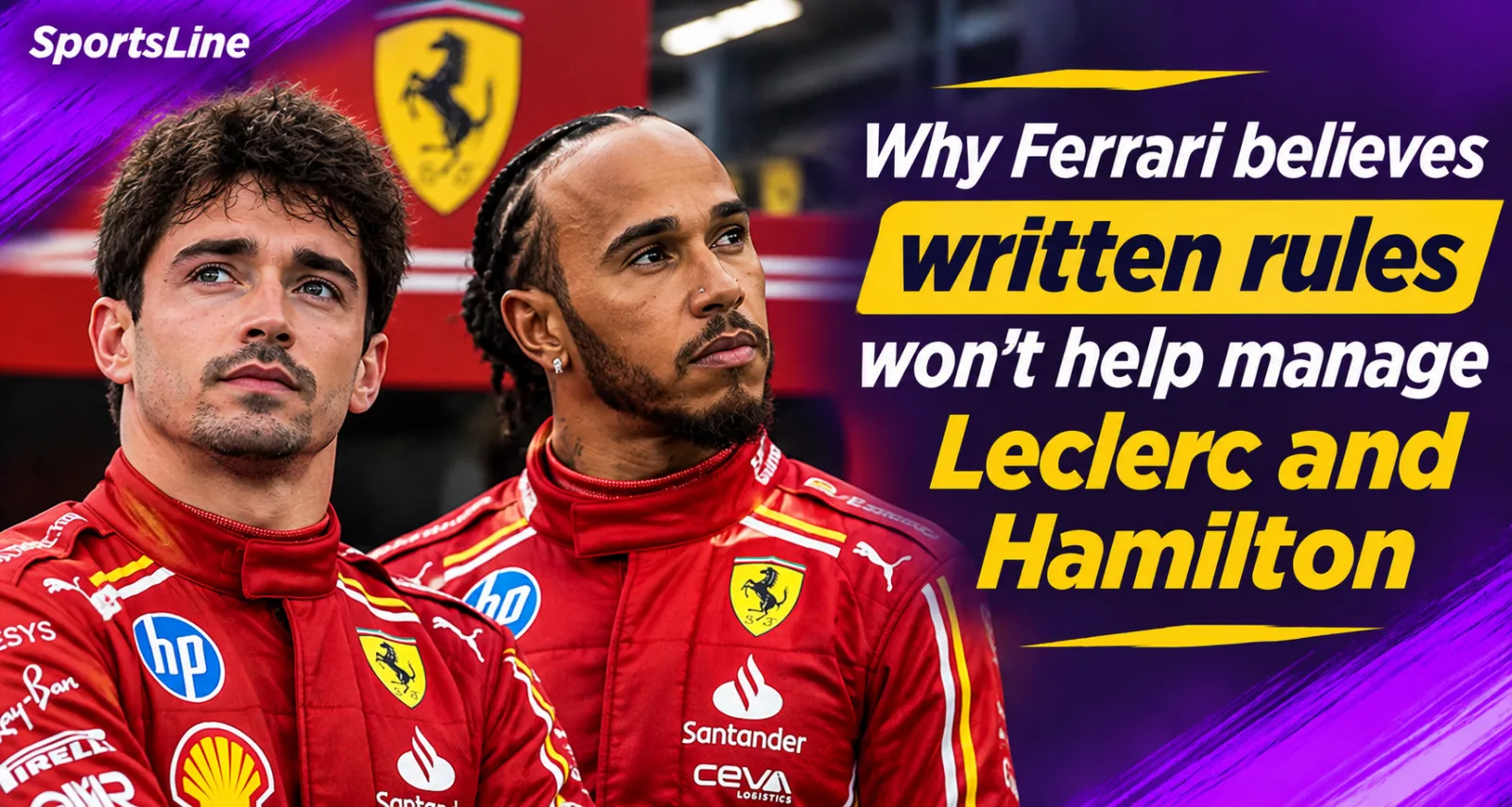
Ferrari team principal Frederic Vasseur believes written rules of engagement are not the answer to the repeated on-track friction between Charles Leclerc and Lewis Hamilton. Instead, the Frenchman has placed the emphasis on mutual respect and professional behaviour after the team-mates were involved in another incident at the Las Vegas Grand Prix, renewing a debate that Ferrari had hoped to settle following the previous round in Mexico.
Vasseur puts respect ahead of a written rulebook
The latest post-race media session brought the Ferrari team principal back to a familiar subject. Asked whether he felt powerless after the message delivered to the drivers in recent discussions appeared not to have prevented another clash, Vasseur acknowledged the point and said he wanted to speak with both drivers again after having time to assess what happened.
For Vasseur, the issue is not simply a matter of adding more clauses to an internal document. He argued that no written set of instructions can anticipate every possible situation that may develop during a Grand Prix. His central question was what additional rules could achieve beyond the basic requirement that team-mates respect one another.
Vasseur reiterated that the drivers must respect their team-mates. He believes the necessary approach must be part of their mindset and must remain in place regardless of the pressure or circumstances of a race. A document, in his view, cannot replace sound judgement once the helmets are on and the competition intensifies.
Mexico discussions failed to prevent another incident
The Las Vegas episode was particularly frustrating for Ferrari because it came only two weeks after the clash in Mexico. Following that race, the team had discussions in Sao Paulo involving the drivers and management. Vasseur described those conversations as constructive, with the parties believing that the limits and expectations had been made clear.
The repeat trouble in Las Vegas therefore raised questions about whether the message had been understood in the heat of competition. Vasseur said the interests of individual drivers must never come before those of the wider organisation. He pointed to the approximately 2,000 people working at Maranello, along with the team's sponsors, as stakeholders who should not be let down by actions on track.
Vasseur also explained that his immediate exchange with Leclerc after the race was not a full discussion. He said he spoke to the Monegasque, who apologised and appeared to understand the concern, but the team principal was clear that an apology does not change the result or remove responsibility for a mistake. More substantial conversations were expected to follow.
Ferrari rejects track conditions as an excuse
The characteristics of the Las Vegas circuit and the powerful slipstream effect were part of the context surrounding the battles. Leclerc had previously pointed to the opening sequence of corners in Mexico as a factor in the close contest, while the long straights in Las Vegas encouraged overtaking attempts.
Vasseur was not prepared to treat those circumstances as an adequate explanation. He noted that other teams had managed wheel-to-wheel battles during the same race without allowing them to develop into similar problems. He cited the exchanges involving Mercedes drivers Kimi Antonelli and George Russell, McLaren's Lando Norris and Oscar Piastri, and other competitors as examples of team-mates racing each other while avoiding the same kind of controversy.
His argument is that difficult racing conditions are part of Formula 1 and that drivers must respond professionally. Ferrari cannot expect every race to follow a predictable script, but it can expect its drivers to recognise the broader consequences of their decisions.
2027 ambitions add pressure to resolve the issue
The repeated incidents arrive at an important time for Ferrari as it considers what is required to challenge for the championship in 2027. A team with two highly competitive drivers needs both to score strongly, but it also needs them to avoid turning close battles into lost opportunities.
Vasseur's position suggests Ferrari is not convinced that a strict written code would solve the problem. The team instead wants Leclerc and Hamilton to demonstrate that they understand their shared responsibility. That approach places considerable importance on trust, communication and discipline, particularly when both drivers are fighting for position.
The next round of internal discussions will be significant. Ferrari has already tried to address the issue after Mexico, only for the subject to return in Las Vegas. Whether the team's emphasis on respect can produce a different outcome on track will be one of the important questions surrounding the Scuderia as it looks ahead to its 2027 campaign.
Sources
Frequently asked questions
Why does Ferrari oppose written rules for Leclerc and Hamilton?
Ferrari team principal Frederic Vasseur believes a written rulebook cannot cover every possible racing situation. He argues that the drivers must instead show mutual respect, understand their responsibilities and act professionally when competing against one another on track.
What happened between Charles Leclerc and Lewis Hamilton in Las Vegas?
The Ferrari team-mates were involved in another on-track clash at the Las Vegas Grand Prix, renewing concerns about how the team manages their battles. The incident followed their costly collision in Mexico, which had already prompted discussions with the drivers.
What did Frederic Vasseur say after the Las Vegas Grand Prix?
Vasseur described himself as extremely frustrated and said he wanted further discussions with both drivers. He explained that respect for a team-mate matters more than written rules and said Ferrari could not accept actions that let down its staff and sponsors.
Did Charles Leclerc apologise after the Las Vegas incident?
According to Vasseur, Leclerc apologised and understood the team's concerns after the race. However, the Ferrari team principal stressed that accepting responsibility does not erase the consequences of a mistake, and more detailed talks were planned.
When did Ferrari last discuss the drivers' conduct before Las Vegas?
Ferrari held discussions in Sao Paulo after the clash between Leclerc and Hamilton at the Mexico Grand Prix. Vasseur said the conversations were constructive and that the limits had been established, making the repeat incident in Las Vegas especially frustrating.
What is Ferrari asking Leclerc and Hamilton to prioritise?
Vasseur wants both drivers to put the interests of Ferrari ahead of individual ambitions during close racing. He specifically highlighted the responsibility they have towards the approximately 2,000 people working at Maranello and the team's sponsors.