
Key points
- India A lost to Pakistan A by 48 runs while chasing 314 in the DP World Asia Cup Rising Stars 2026.
- Tilak Varma scored 100 off 149 balls, while Shahbaz Ahmed made 56.
- Tilak and Shahbaz added 112 runs for the seventh wicket after India A slipped to 129/5.
- Tilak said Shahbaz's dismissal came when India A were looking to accelerate the chase.
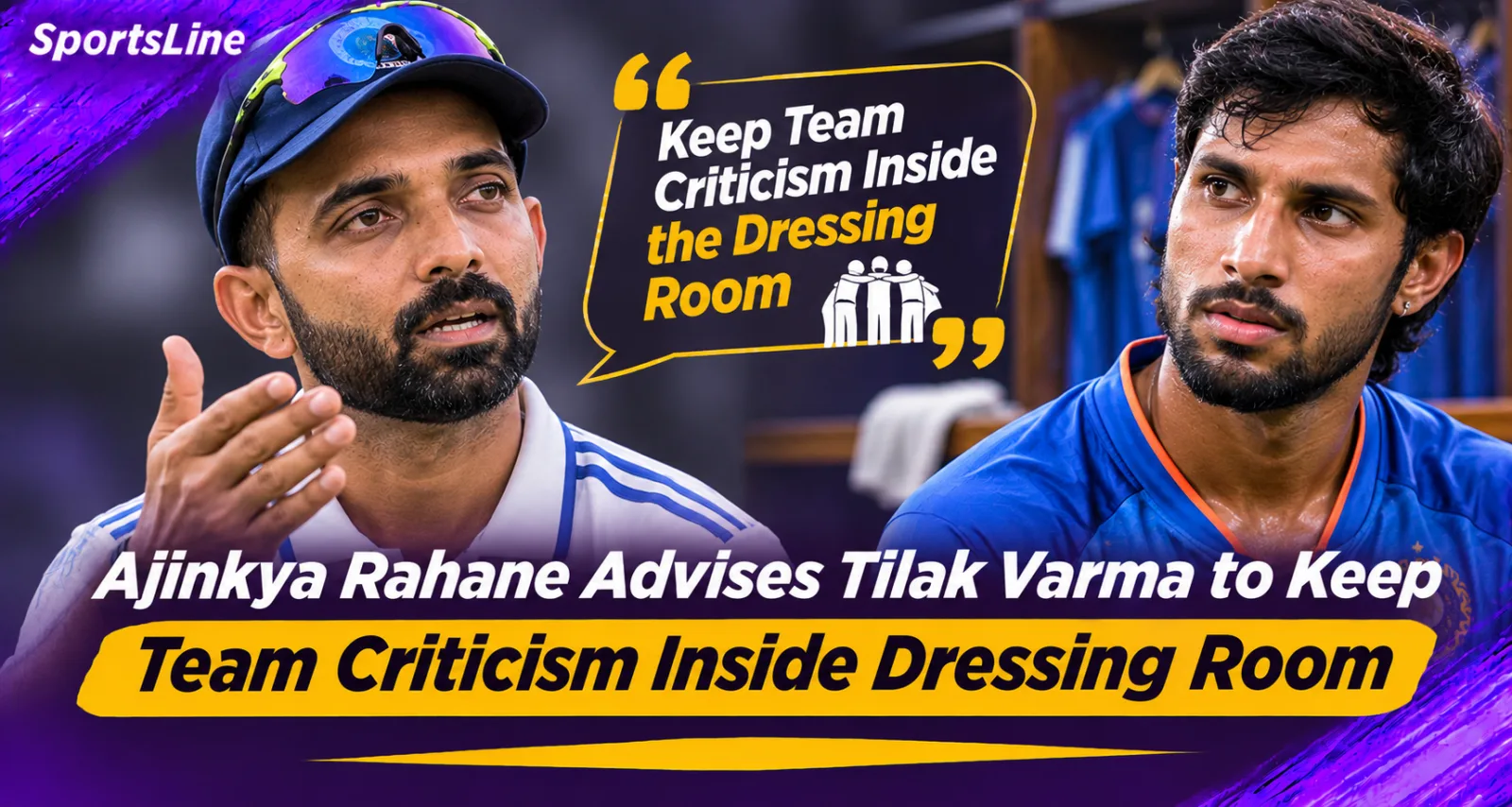
- Ajinkya Rahane said criticism of teammates should be delivered in the dressing room to protect confidence.
- Rahane described the incident as a learning experience for the young India A captain.
- Former India captain Ajinkya Rahane has urged India A skipper Tilak Varma to keep criticism of teammates inside the dressing room after the left-hander's post-match comments about Shahbaz Ahmed attracted attention following India A's defeat to Pakistan A in the DP World Asia Cup Rising Stars 2026. Rahane said that publicly singling out a teammate can affect confidence and that difficult conversations are better handled privately.
India A fell 48 runs short while chasing a target of 314, being bowled out for 265 in 49.1 overs. Tilak produced a fighting century, scoring 100 from 149 balls, but the chase unravelled after a key seventh-wicket partnership with Shahbaz ended. Tilak's remarks about the timing of Shahbaz's dismissal prompted Rahane's response during a discussion on Sony Sports Network.
What Tilak Varma said about Shahbaz Ahmed
India A had been under pressure at 129/5 when Tilak and Shahbaz came together. The pair added 112 runs for the seventh wicket and gave the chase renewed hope. Shahbaz made 56, providing support while Tilak tried to bat deep and keep India A in contention.
Shahbaz fell in the 43rd over as India A looked to lift the scoring rate. His dismissal was followed by a collapse, with the remaining wickets falling before the team could reach the target. Tilak was left unbeaten on 100, but the effort was not enough to prevent a 48-run defeat.
During the post-match presentation, Tilak acknowledged the value of the partnership but also reflected on the moment the stand ended. He said: “The way Abhishek started and in between again the way Shahbaz has given a partnership with me, that was crucial. But unfortunately, when we wanted to accelerate, Shahbaz got out. Otherwise, if he could have stayed for another two overs, something like that, then I could have finished the game.”
Tilak's comments were interpreted as placing attention on Shahbaz's dismissal at a decisive stage of the chase. The context, however, was a partnership that had helped India A recover from a difficult position. The remarks became a talking point because they came from the captain in a public post-match interaction, rather than as part of an internal team discussion.
Ajinkya Rahane's blunt advice: keep it in the dressing room
Rahane disagreed with the decision to discuss a teammate's contribution in front of the media. Speaking on Sony Sports Network, the former India captain said: “Nobody wants you to talk about your player in front of the world. If you want to say something, go say in the dressing room - it builds their confidence.”
Rahane's point was not that captains should avoid accountability or difficult feedback. Rather, he stressed that a team environment depends on how that feedback is delivered. A player can be questioned about a decision or performance, but a private conversation gives the captain and teammate an opportunity to understand the situation without the added pressure of public scrutiny.
The former India skipper also recognised that post-match presentations can be difficult, especially immediately after a defeat. Captains are expected to explain the result while processing several moments from the game. Rahane suggested that what a player intends to communicate may not always come out in the same way when emotions and disappointment are involved.
He added that Tilak should treat the episode as a learning experience. Rahane said he was sure the young captain would learn how to handle such situations and manage communication with teammates. His comments offered a measured message: leadership involves taking responsibility for the team's result as well as protecting the confidence and trust of the players in the group.
Tilak's century could not rescue the chase
Tilak's 100 came from 149 deliveries, and he reached the milestone in 140 balls. The innings was a determined attempt to take the chase deep, but its tempo became part of the wider discussion after the defeat. His half-century had taken 95 balls, while Abhishek Sharma had provided a much faster start at the other end. The contrast meant the asking rate continued to rise during the middle overs.
Shahbaz's 56 from 49 balls was important in rebuilding the innings after the early wickets. The 112-run stand brought India A back into the contest, but the team needed a strong finish once the partnership was broken. Instead, the dismissal triggered a late collapse and India A were dismissed for 265 in 49.1 overs.
Tilak later emphasised that personal milestones mattered less to him than winning. He said that the best phase of his batting career would be defined by victories, not individual runs, and explained that he had wanted to take the game as deep as possible. He also spoke about the responsibility he felt as captain to carry the chase.
A leadership lesson for India A
The exchange has placed the focus on the responsibilities that come with leading a young side. A captain must be candid about mistakes, but the manner and setting of that conversation can shape the team's response. Publicly identifying a teammate after a defeat can create an unwanted headline, while a direct discussion in the dressing room can preserve trust and allow the group to move forward.
For Tilak, the immediate challenge is to channel the disappointment of the Pakistan A defeat into the next match and maintain the unity of the squad. For Shahbaz, his contribution to the recovery partnership remains an important part of the innings, even though his dismissal came at a crucial point. Rahane's advice underlines a simple principle of team sport: criticism may be necessary, but it should help a teammate improve rather than undermine confidence.
India A's defeat will be remembered for the missed chase and Tilak's century, but the post-match discussion has also become a lesson in captaincy. Rahane's message was clear: take responsibility, address concerns honestly, and keep sensitive team conversations where they belong — inside the dressing room.
Frequently asked questions
What did Ajinkya Rahane say to Tilak Varma?
Rahane advised Tilak to address concerns about a teammate inside the dressing room rather than publicly after a match. He said that speaking about a player in front of the world can affect confidence and that private feedback is better for the team.
Why did Tilak Varma's comments about Shahbaz Ahmed attract attention?
After India A's defeat to Pakistan A, Tilak said Shahbaz's dismissal came when the team wanted to accelerate and suggested that another two overs from him might have helped finish the chase. The comments were discussed because they publicly highlighted a teammate's dismissal.
How did India A perform against Pakistan A?
India A were chasing a target of 314 but were dismissed for 265 in 49.1 overs, losing by 48 runs. Tilak Varma scored 100 from 149 balls, while Shahbaz Ahmed contributed 56 during a 112-run seventh-wicket stand.
What was the partnership between Tilak Varma and Shahbaz Ahmed?
Tilak Varma and Shahbaz Ahmed added 112 runs for the seventh wicket after India A had slipped to 129/5. The partnership revived the chase, with Shahbaz scoring 56 before his dismissal in the 43rd over.
What was Rahane's broader message about captaincy?
Rahane acknowledged that post-match presentations can be difficult after a defeat and that words may not always come out as intended. He encouraged Tilak to learn from the experience and stressed that a captain must handle teammates and sensitive feedback carefully.