
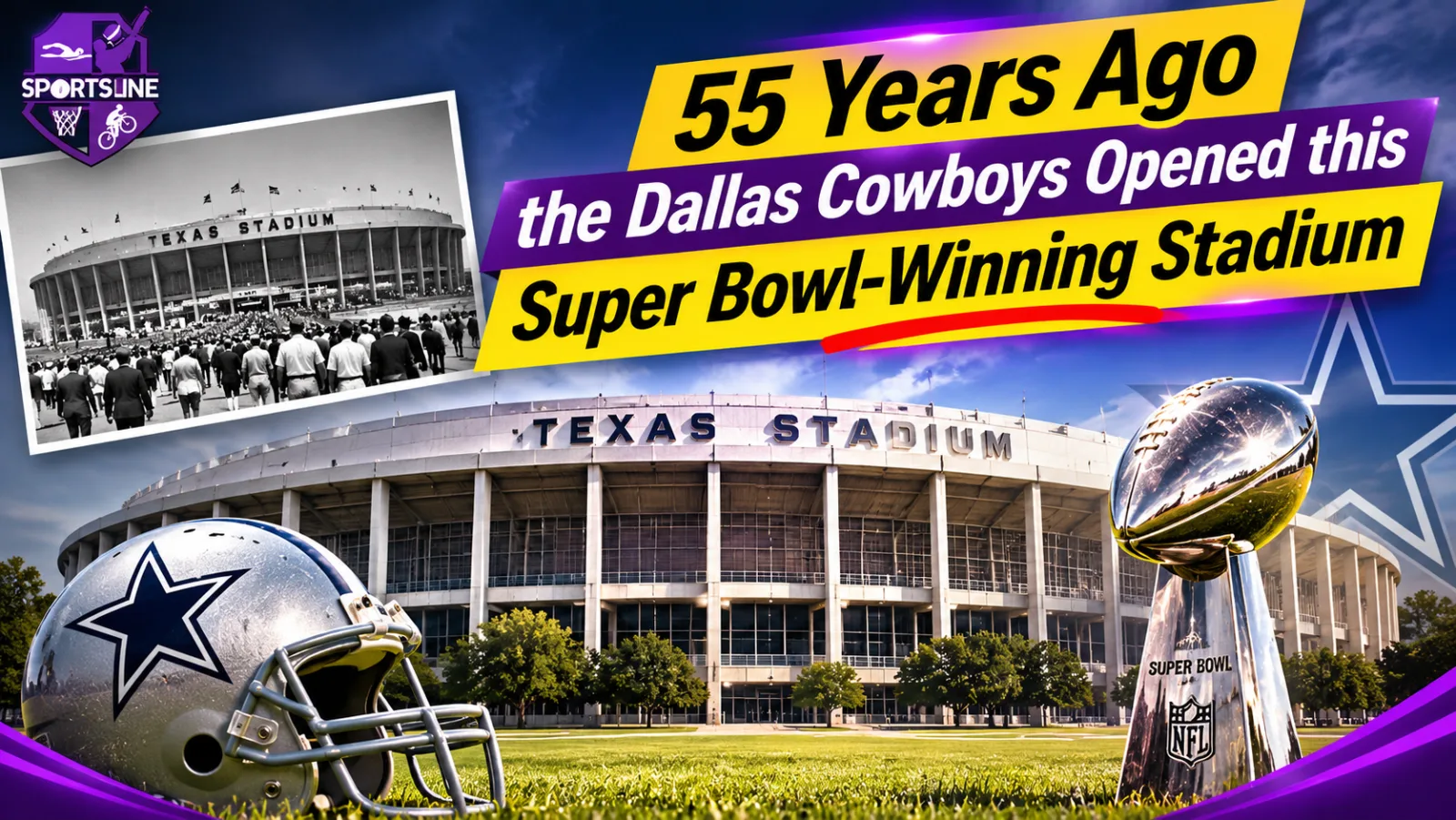
Key points
- Texas Stadium opened on October 24, 1971, with Dallas beating the New England Patriots 44-21.
- The Cowboys moved to Texas Stadium after playing at the Cotton Bowl from 1960 through the early part of the 1971 season.
- Dallas played at Texas Stadium from 1971 through 2008 before moving to the current AT&T Stadium.
- The Cowboys won all five of their Super Bowl championships while Texas Stadium was their home venue.
- Dallas reached seven Super Bowls and 13 NFC Championship Games during the Texas Stadium era.
- Texas Stadium was demolished in 2010, two years after the Cowboys moved out.
For 37 seasons, Texas Stadium was more than the Dallas Cowboys’ home ground. It was the setting for the franchise’s rise into one of American football’s most recognisable teams, the home of unforgettable playoff nights and the venue associated with every one of the club’s five Super Bowl championships. The stadium opened on October 24, 1971, and its legacy remains central to the Cowboys’ history.
A new home and a new chapter in 1971
The Cowboys began life in 1960 and initially played their home games at the Cotton Bowl. The move to Texas Stadium in Irving represented a major step for a franchise that had steadily grown into a contender. The new venue opened with a game against the New England Patriots on October 24, 1971. Dallas won 44-21 in front of an attendance of 65,708.
Running back Duane Thomas made the opening day memorable by scoring the first touchdown at the stadium. His 56-yard run came just two minutes and 16 seconds after the opening kickoff, giving the new home an explosive start. The 1971 season would become historic for the team: Dallas finished 11-3, won the NFC title and then defeated the Miami Dolphins 24-3 in Super Bowl VI to claim its first world championship.
The stadium quickly became a symbol of the Cowboys’ growing stature. The team’s success, national profile and carefully cultivated identity helped establish the franchise as a major presence in the NFL. Texas Stadium was the backdrop as Dallas built a reputation that extended far beyond the state of Texas.
The venue behind five Super Bowl championships
The Cowboys’ strongest years at Texas Stadium included championship seasons in the 1970s and a remarkable return to dominance in the 1990s. Dallas won Super Bowls VI and XII before adding three titles in the 1990s: Super Bowls XXVII, XXVIII and XXX. All five championships came during the period when Texas Stadium served as the team’s home.
The venue also hosted the franchise through a sustained run of postseason appearances. Dallas reached 13 NFC Championship Games and seven Super Bowls during the Texas Stadium era. The stadium became closely associated with stars and teams that shaped the league, from Roger Staubach’s championship side to the teams led by Troy Aikman, Emmitt Smith and Michael Irvin.
Texas Stadium was not simply a place where the Cowboys collected victories. It was the stage for dramatic finishes, defining performances and the rituals of generations of supporters. Its identity became inseparable from the team’s image during the period when the Cowboys were widely known as “America’s Team.”
From Texas Stadium to a new era
The Cowboys played their final seasons at Texas Stadium in 2007 and 2008 before moving to the new stadium in Arlington in 2009. Texas Stadium was demolished in 2010. The move marked the end of a 37-season chapter, but the venue’s place in the franchise’s story remained secure.
A historical comparison of the two home eras highlights the strength of the Cowboys’ record in Irving. Dallas went 346-240 at Texas Stadium from 1971 through 2008, winning approximately 59 percent of its games. The team has continued to win regularly at its newer home, but its postseason achievements have not matched the championship run associated with the older venue.
The comparison is a reminder that a stadium’s legacy is built by the moments created inside it. Texas Stadium witnessed five Super Bowl-winning seasons, seven trips to the championship game and 13 NFC title-game appearances. It also hosted the everyday work of teams that helped make Dallas a national sporting institution.
Why the stadium still matters to Cowboys fans
Stadiums change, teams move and generations of players come and go. Yet certain venues remain part of a club’s identity long after the final game. For the Cowboys, Texas Stadium represents the period in which the franchise established its championship pedigree and became a fixture of American football culture.
Its opening in October 1971 began a chapter that included some of the most celebrated teams in NFL history. More than half a century later, the venue is gone, but the championships, performances and memories created there continue to define the Cowboys’ legacy.
Frequently asked questions
When did the Dallas Cowboys open Texas Stadium?
Texas Stadium opened on October 24, 1971. The Cowboys marked the occasion with a 44-21 victory over the New England Patriots. Duane Thomas scored the first touchdown in the new venue on a 56-yard run early in the game.
Where was Texas Stadium located?
Texas Stadium was located in Irving, Texas, in the Dallas–Fort Worth area. It became the Cowboys’ home after the franchise moved from the Cotton Bowl, where it had played since its founding in 1960.
How many Super Bowls did the Cowboys win during the Texas Stadium era?
The Cowboys won all five of their Super Bowl championships while Texas Stadium was their home venue. Their titles came in the 1971, 1977, 1992, 1993 and 1995 seasons, spanning the franchise’s dominant periods in the 1970s and 1990s.
When did the Cowboys leave Texas Stadium?
The Cowboys moved out of Texas Stadium after the 2008 season and began playing at the new AT&T Stadium in Arlington in 2009. Texas Stadium was demolished in 2010, ending the physical presence of the venue that had hosted the franchise for 37 seasons.
What was the Cowboys’ record at Texas Stadium?
Dallas recorded 346 wins, 240 losses and no ties at Texas Stadium from 1971 through 2008, according to the historical comparison reported by the San Antonio Express-News. That works out to a winning percentage of about 59 percent.