
Key points
- Fernando Alonso retired on the final lap of the 2026 Las Vegas Grand Prix after reporting a broken engine over team radio.
- Honda inspected the power unit data and carried out physical maintenance checks but found no evidence of an engine fault.
- Honda trackside representative Shintaro Orihara said the manufacturer respects Alonso’s feedback and will monitor the engine again during Friday running in Qatar.
- Alonso said the power unit had lacked performance throughout the Las Vegas weekend and had deteriorated further in the closing laps.
- Aston Martin’s Mike Krack said the increased electrical contribution from the 2026 MGU-K system can make power delivery feel different to drivers.
- Honda acknowledged that its 2026 engine performance has not consistently given its drivers confidence.
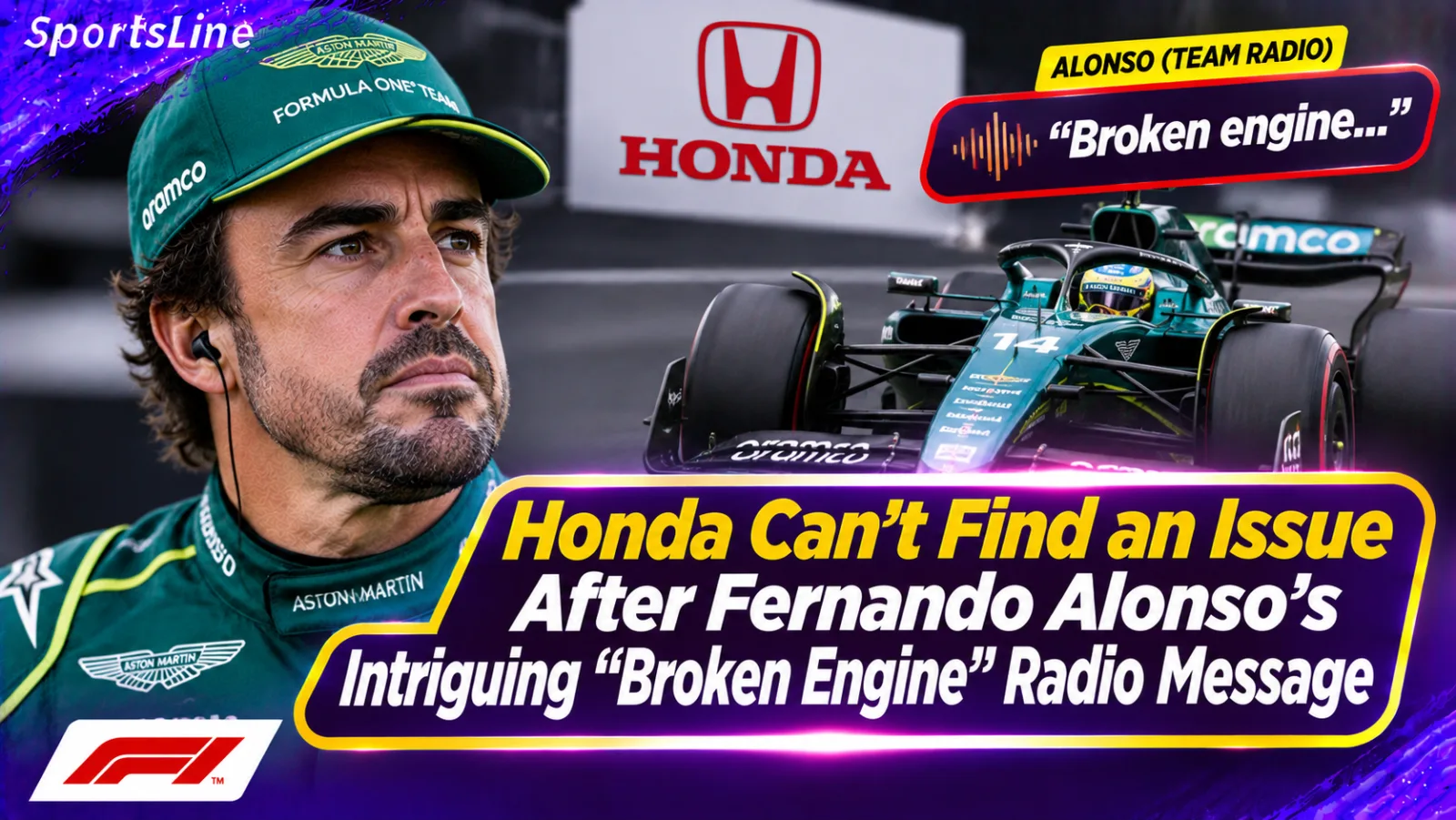
Fernando Alonso’s frustration with Aston Martin’s Honda power unit has produced another disagreement between driver feedback and the manufacturer’s technical findings. After reporting a “broken engine” during the closing stages of the 2026 Las Vegas Grand Prix, the two-time world champion brought his car into the pit lane on the final lap. Honda, however, says it has not found evidence of a mechanical failure after reviewing the data and inspecting the engine.
The episode has renewed attention on Aston Martin’s difficult first season with Honda. Alonso felt that the power unit was losing performance throughout the Las Vegas weekend, particularly on the long straights of the Strip Circuit. Honda’s checks have so far failed to identify a specific fault that explains the symptoms he described.
Alonso reports a failing engine in Las Vegas
Alonso’s race ended in unusual fashion. Running towards the back of the field, the Spaniard reported over team radio that the engine was broken and subsequently entered the pit lane instead of completing the final lap and crossing the finish line. He had already been critical of the car’s straight-line performance during qualifying and said after the race that the power unit had been below its expected level throughout the event.
The Las Vegas circuit placed particular emphasis on acceleration, energy deployment and top speed. Alonso said he was losing substantial time on the straights, even when he felt the Aston Martin was competitive through the corners. He described the final part of the race as especially difficult and believed the engine’s performance had deteriorated further in the closing laps.
His comments also reflected a wider frustration with Aston Martin’s 2026 campaign. The team has struggled to extract consistent performance from its Honda package, and the Las Vegas weekend offered little relief. Alonso’s immediate assessment was that the power unit would need to be changed before the next event in Qatar.
Honda’s inspection finds no evidence of a fault
Honda’s investigation has not supported the diagnosis Alonso made from the cockpit. Shintaro Orihara, the manufacturer’s lead trackside representative, said the team had examined the available data and carried out physical checks during maintenance. Neither process had revealed an engine issue at the time of his comments.
Orihara stressed that Honda was not dismissing the driver’s concerns. The manufacturer had studied Alonso’s feedback carefully and respected his experience, but the information gathered so far did not show a mechanical problem. Honda planned to continue its assessment when the car returned to the track during Friday running at the Qatar Grand Prix.
The distinction is important: Honda has not claimed that Alonso did not experience a loss of performance. Its position is that the checks have not identified a fault in the power unit that would explain the driver’s description. Further running and comparison of telemetry may help the engineers understand whether the sensation can be reproduced.
Why the 2026 power unit may feel different
Aston Martin trackside chief Mike Krack pointed to the complexity of the current power-unit regulations as one possible reason for the gap between driver impression and engineering data. The 2026 package places a much greater emphasis on electrical power, with the MGU-K capable of delivering up to 350kW. The way that energy is deployed can vary around a lap and may change how the car responds to the throttle.
Krack explained that a variation in electrical deployment can feel to a driver like a problem with the internal-combustion engine. Separating the two sources of power is therefore more complicated than it was under previous regulations. The Las Vegas circuit added further complications, with slipstreaming and different energy-management approaches affecting straight-line comparisons between cars.
Honda also acknowledged that its engine performance has not consistently provided the confidence its drivers want. Orihara said the overall performance level may leave drivers feeling that the engine is not delivering what they expect, even when the manufacturer’s measurements do not indicate a specific failure. That admission underlines the difference between a confirmed mechanical defect and a power unit that is simply not competitive enough.
A wider reliability challenge for Aston Martin and Honda
The Las Vegas incident is not the first time this season that Alonso has reported a problem which Honda has struggled to verify. Similar questions emerged around the turbo during the Singapore weekend and after the Azerbaijan Grand Prix. In those cases, Honda reviewed the available information but did not find evidence matching the severity of the driver’s initial concerns.
That does not mean the Honda programme has been free of genuine problems. The manufacturer has faced reliability and driveability challenges at different events during the season, including battery-related concerns and other power-unit difficulties. Aston Martin and Honda have therefore had to balance investigations into specific complaints with the broader task of improving performance and reliability.
Honda said countermeasures introduced in Las Vegas helped the car complete almost the full race distance without a battery-related issue. The manufacturer was still considering whether another measure could be introduced for the Abu Dhabi finale, while a more substantial internal update is planned for 2027. Those steps form part of a longer effort to make the package more dependable.
Qatar running could provide the next answers
The Qatar Grand Prix offers Honda another opportunity to monitor the engine under race-weekend conditions. The manufacturer intends to review the unit’s behaviour and compare the data with Alonso’s feedback. The outcome may clarify whether the Las Vegas symptoms were linked to a problem that could not be reproduced during inspection, to energy deployment characteristics, or to the broader performance limitations of the package.
For Aston Martin, the immediate priority is to understand what happened without assuming that a fault has been proven. Alonso’s experience remains an important diagnostic input, while Honda’s telemetry and physical inspections provide another part of the picture. Until further checks identify a cause, the Las Vegas retirement remains a case of conflicting assessments rather than a confirmed engine failure.
The episode nevertheless highlights the pressure facing the partnership. Honda has acknowledged that its current performance is not giving its drivers the confidence they need, and the team is already looking towards further development. Qatar will not resolve the wider challenge on its own, but the Friday running should provide the next evidence in the investigation.
Frequently asked questions
Why did Fernando Alonso retire from the Las Vegas Grand Prix?
Alonso reported that his engine was broken during the closing stages of the race and brought his Aston Martin into the pit lane on the final lap rather than taking the chequered flag. He later said the power unit had been underperforming throughout the event and had deteriorated further near the end.
Did Honda find a problem with Alonso’s engine?
No. Honda said it reviewed the available power-unit data and physically inspected the engine during maintenance but found no evidence of a fault. The manufacturer said it would continue monitoring the unit during Friday running at the Qatar Grand Prix.
What did Honda say about Alonso’s complaints?
Honda trackside representative Shintaro Orihara said the team had carefully analysed and respected Alonso’s feedback. He explained that the checks had not identified an issue so far, while stressing that Honda would gather further information from the car’s running in Qatar.
Could the 2026 power-unit regulations explain the difference in opinion?
Aston Martin trackside chief Mike Krack said the larger electrical contribution under the 2026 regulations can complicate a driver's assessment of power delivery. Changes in MGU-K deployment may feel like a combustion-engine problem even when the data does not show a conventional mechanical failure.
What has Honda admitted about its 2026 engine performance?
Honda acknowledged that its engine performance this season has not been sufficient to give drivers consistent satisfaction or confidence. The manufacturer also said it was working on reliability improvements, including battery-related countermeasures and planned changes for 2027.